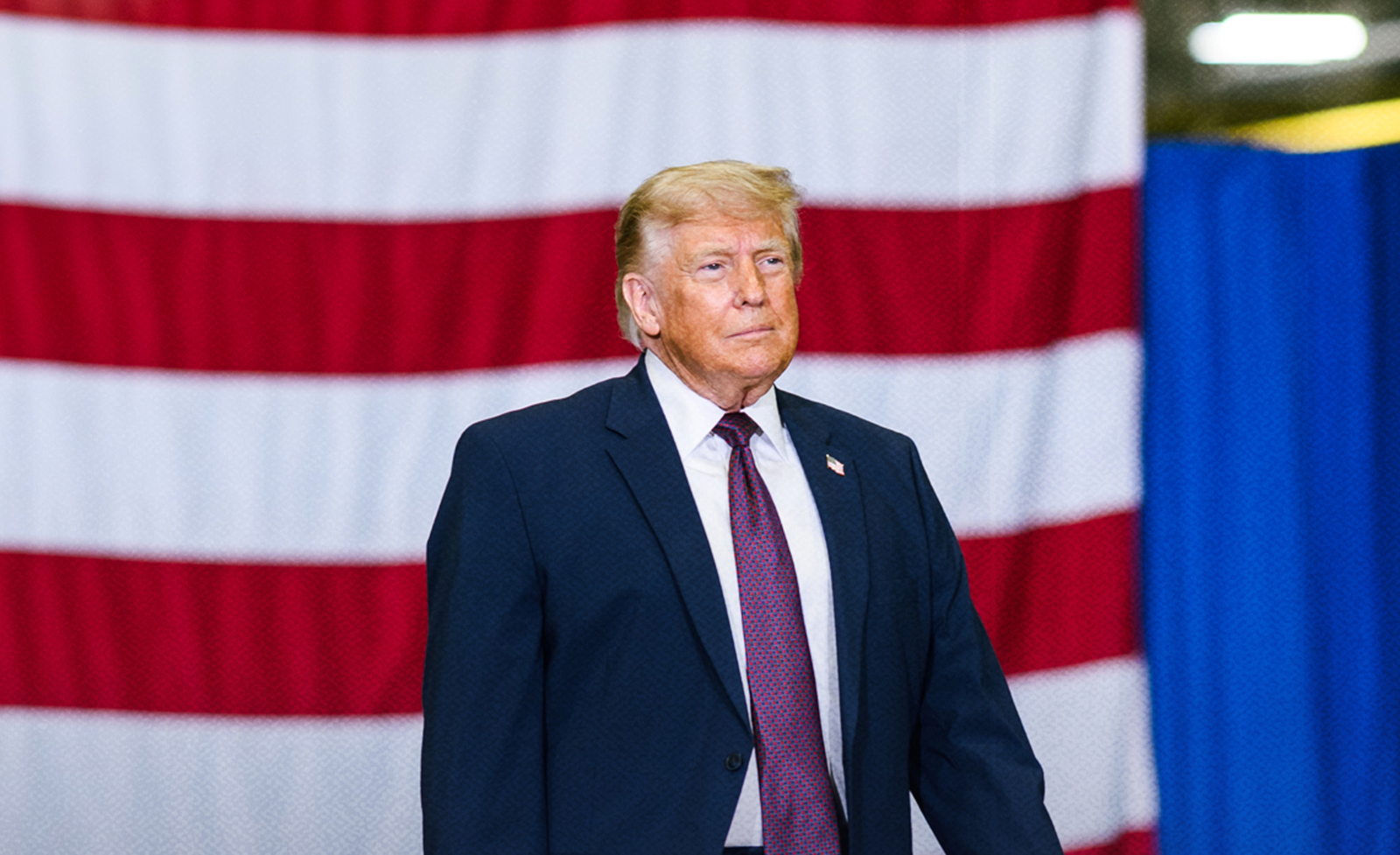
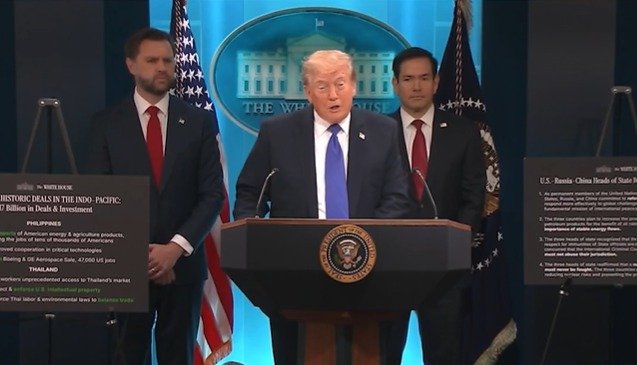
Washington, November 2026 : US President Donald Trump on Friday cited India's reported 7 per cent economic growth to strengthen his demand for lower interest rates, arguing that the American economy could expand at a much faster pace if the Federal Reserve reduced borrowing costs.
Speaking at a news conference in Washington after returning from a four-day visit to Asia, Trump said the United States should be able to borrow at lower interest rates than any other country. He claimed that reducing rates could push American economic growth to 14 or 15 per cent, and potentially even 20 per cent.
“If you look at India, they have low interest rates and they have a 7 per cent GDP. We'd have a 14, 15, maybe even a 20 per cent GDP,” Trump said.
He put US economic growth at 4 per cent but did not specify the period covered by the figures cited for either country. He also did not explain the scale of interest rate reductions required to achieve his growth projection.
Trump's criticism focused on what he described as the Federal Reserve's tendency to raise interest rates when economic indicators show strength. He argued that stronger economic performance should improve the country's creditworthiness and enable it to borrow more cheaply.
“When you have good numbers, you have better credit,” he said.
Describing the Federal Reserve as “very political”, Trump said his criticism was directed at the institution as a whole. He praised former Fed Chairman Alan Greenspan, claiming that Greenspan had been willing to reduce interest rates even when economic conditions were favourable.
The President also linked his demand for lower borrowing costs to the government's debt-servicing burden. He estimated that a reduction of one percentage point in interest rates could generate savings of $650 billion. According to Trump, faster economic growth would also help the administration reduce the national debt more quickly. However, he did not provide a timeframe for the projected savings or explain how the estimate had been calculated.
To support his argument that the American economy was performing well despite what he considers excessive borrowing costs, Trump pointed to manufacturing activity and investment in industrial facilities.
He claimed that manufacturing had expanded for 10 consecutive months and that investment in new equipment had increased by 21 per cent this year. He credited his administration's tariff policies with encouraging automobile manufacturers to expand production in the United States.
Among the investments he cited were a $4 billion plan by Audi and a $5 billion Toyota plant. He also referred to a Ford facility in Detroit that the company had previously considered closing, claiming that it was now operating around the clock, seven days a week.
Trump further highlighted falling energy prices, saying crude oil prices had declined by 20 per cent since the beginning of November. He claimed that petrol prices for American consumers were 60 cents lower per gallon than a month earlier.
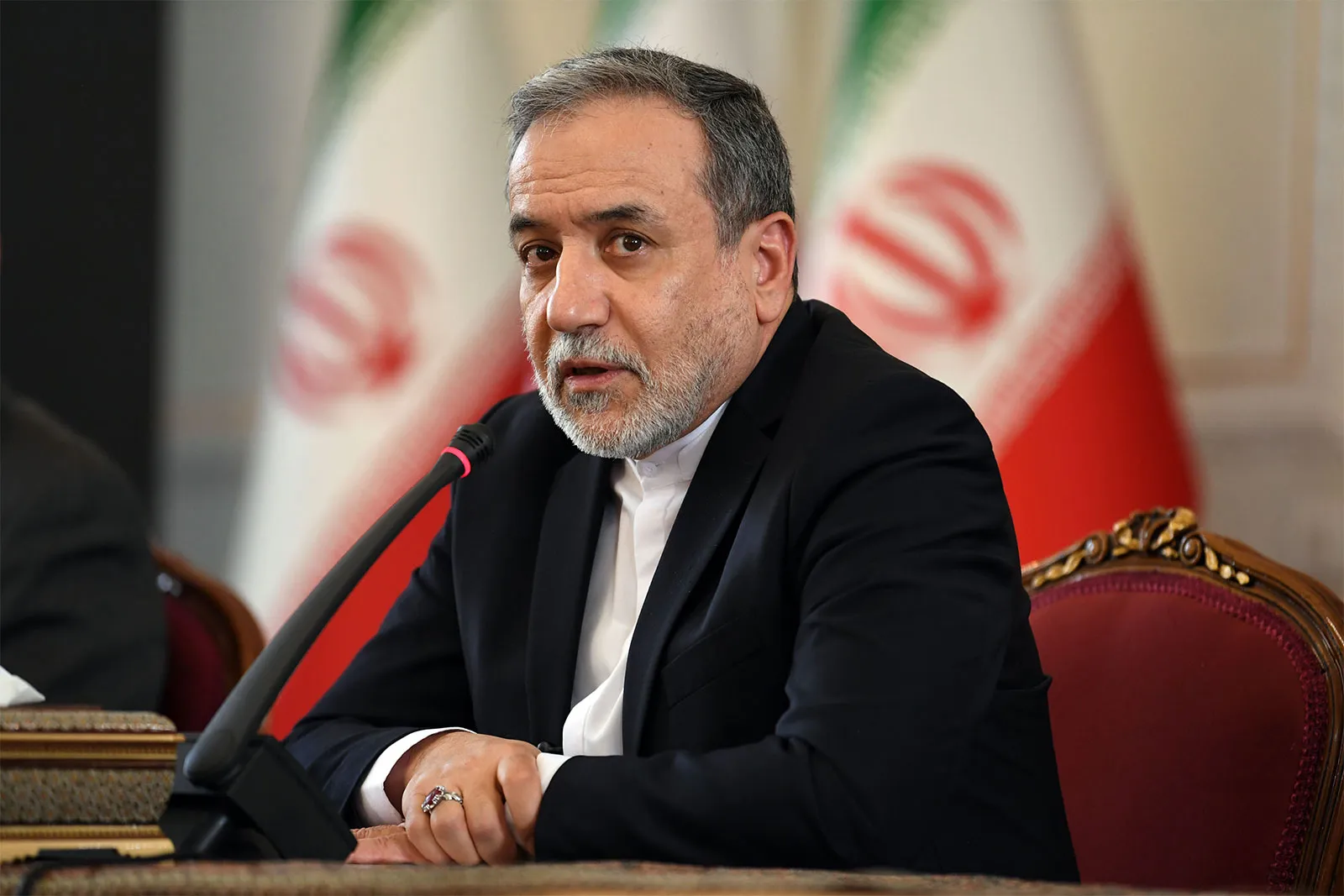
He added that the future direction of petrol prices would depend partly on whether Washington reached an agreement with Iran.
The Federal Reserve conducts US monetary policy under a congressional mandate to promote maximum employment and maintain stable prices. Its rate-setting committee considers inflation trends and labour market conditions while deciding whether to adjust its target for overnight lending between banks.
Changes in the benchmark rate influence borrowing costs across the economy, affecting consumers, businesses and government finances. Trump's latest remarks add to his repeated calls for the central bank to reduce rates and align monetary policy with his administration's economic growth ambitions.
Disclaimer: This review is based on the reviewer’s individual perspective. Audience opinions may vary.