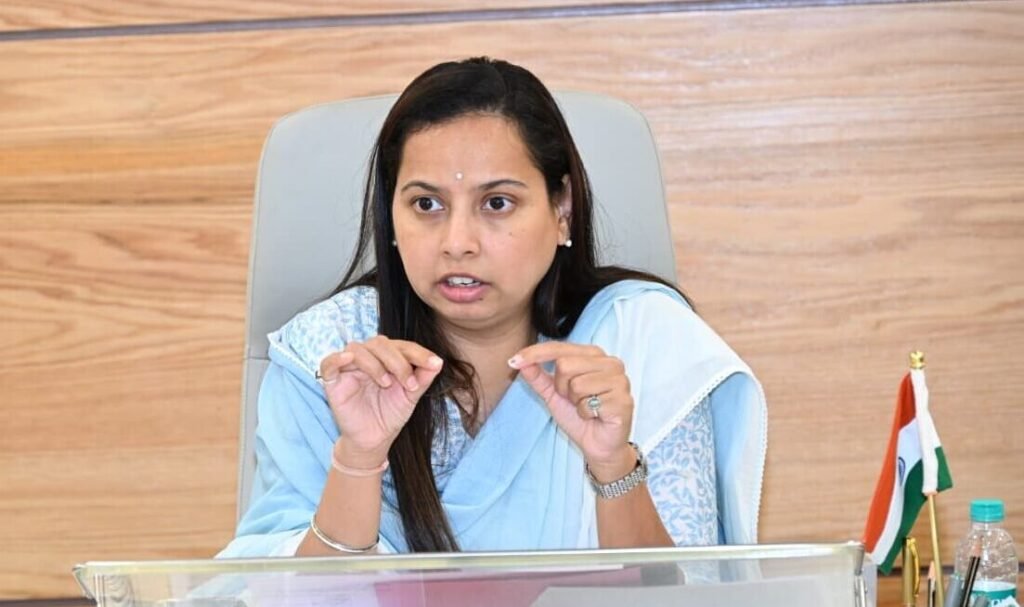
Mumbai, October 2026: The Women and Child Development Department is implementing a range of measures to protect the health and nutritional well-being of children, pregnant women, lactating mothers and adolescent girls in drought-affected areas of Maharashtra, Minister Aditi Tatkare said.
Changing weather patterns, rising temperatures and inadequate rainfall have created drought-like conditions in several parts of the state. The impact extends beyond agriculture and the economy, affecting the daily lives of rural families, food security, healthcare and nutrition. Young children, pregnant women, nursing mothers and adolescent girls are particularly vulnerable to the adverse effects of drought.
The department is working to ensure that no child is deprived of supplementary nutrition and that the health needs of mothers and adolescent girls receive appropriate attention, even during difficult conditions.
The state government has declared drought in 305 talukas and is implementing relief measures through various departments. The Women and Child Development Department has an important role in these efforts.
Through Maharashtra's Integrated Child Development Services (ICDS) scheme, nutrition and other essential services are provided to eligible beneficiaries through more than one lakh Anganwadi centres. The state has 1,08,627 Anganwadi workers and 1,05,470 helpers, who deliver nutrition, healthcare and childcare services at the grassroots level. Their role becomes especially important during drought conditions.
Regular supply of food at Anganwadi centres
Given the possibility of disruptions in the availability of food grains, water and fuel, the department has planned measures to ensure the regular supply of meals through Anganwadi centres.
Necessary precautions are being taken to ensure that children receive freshly cooked hot meals, Take-Home Rations (THR) and Amrut Aahar on time.
District-level food supply committees have been instructed to review food grain stocks, water availability and fuel supplies and coordinate their efforts. If shortages arise locally, temporary changes to meal menus may be made as required to prevent interruptions in food distribution to beneficiaries.
Access to clean water for cooking and drinking is essential at Anganwadi centres. Accordingly, coordination is being undertaken with gram panchayats and water supply committees to ensure that centres in villages dependent on water tankers receive priority supplies.
Advance arrangements are also being made to provide the necessary water and fuel to women's self-help groups preparing freshly cooked meals. The primary objective is to ensure that children's nutrition is not disrupted even when drought places additional pressure on basic facilities.
Regular health check-ups for children and mothers
Water scarcity and contaminated drinking water during droughts can increase the risk of diarrhoea, jaundice, typhoid and dehydration. These risks are particularly serious for young children and pregnant women.
Under the guidance of the Health Department, the administration is emphasising the use of chlorine for water purification, maintaining adequate stocks of oral rehydration salts (ORS) packets and zinc tablets at Anganwadi centres, and promptly identifying centres facing severe shortages of water and fuel.
In coordination with the Health Department, arrangements are also being made for regular health check-ups for children, pregnant women and lactating mothers, along with the provision of essential medicines, vitamins and healthcare services.
Close monitoring of children's growth and nutritional status
To prevent an increase in malnutrition, children's growth and nutritional status will be monitored regularly.
Anganwadi workers will measure children's height and weight every month and record the data on the Poshan Tracker platform. These records will help identify children facing nutritional difficulties and enable authorities to take appropriate corrective measures.
Priority will be given to providing additional energy-dense nutritional food to severely malnourished children through Village Child Development Centres (VCDCs) and Urban Child Development Centres (UCDCs).
Children with serious health problems will also be referred to Nutrition Rehabilitation Centres for appropriate treatment. Sick or malnourished children will be referred to primary health centres or the relevant healthcare personnel to ensure that they receive timely medical attention.
Welfare scheme benefits for eligible women
Drought can also adversely affect the nutrition of pregnant women, lactating mothers and adolescent girls. Special counselling sessions will therefore be organised to address their dietary requirements, health and nutritional needs.
Particular attention will be paid to ensuring that eligible women receive benefits under the Pradhan Mantri Matru Vandana Yojana and other government welfare schemes on time.
Measures will be implemented according to local requirements through coordination among ASHA workers, auxiliary nurse midwives (ANMs), Anganwadi workers, and officials from the health, water supply and revenue departments.
Special arrangements for migrant families
Drought often forces sugarcane cutters, brick-kiln workers and other labourers to migrate in search of employment. Such migration can disrupt children's education and limit families' access to nutrition and healthcare services.
The department is making special arrangements to ensure that children, pregnant women, lactating mothers and adolescent girls from migrant families continue to receive benefits under the ICDS scheme.
Details of migrant beneficiaries will be accurately recorded in the migration tracking system. Coordination will also be established with cooperative institutions and sugar mills to obtain lists of workers migrating during the sugarcane harvesting season.
Families will be provided supplementary nutrition, health check-ups and other essential services through rural or urban Anganwadi centres located near their places of residence. This is intended to ensure that children's nutrition, maternal health and the needs of adolescent girls are not neglected during migration.
Accurate records of migrant beneficiaries and coordination between local authorities will be essential to ensure the uninterrupted delivery of government scheme benefits.
Focus on protecting vulnerable communities
The department emphasised that drought is not merely a problem of water scarcity or agricultural losses; it is a wider challenge affecting household food security, public health and living standards.
In such circumstances, protecting the nutrition of children, mothers and adolescent girls becomes an important social responsibility.
Through the Anganwadi network, the Women and Child Development Department is focusing on the uninterrupted supply of nutritional food, targeted interventions for malnourished children, health check-ups, access to clean water and continued services for migrant families.
The department is coordinating its efforts to protect the health and nutritional well-being of vulnerable groups during the drought, prevent any deterioration in their living conditions and ensure that no child or mother is deprived of essential services.