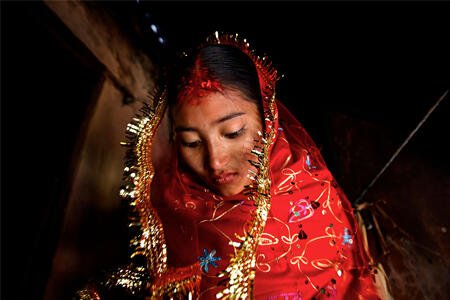
Dhaka, November 2026 : Bangladesh continues to record the highest rate of child marriage in South Asia, with 47.2 per cent of women aged 20–24 having been married before reaching the age of 18, according to data from the Bangladesh Bureau of Statistics (BBS) and the United Nations Children’s Fund (UNICEF), cited by local media on Friday.
The figures highlight the continuing scale of child marriage in the country, despite the existence of legislation aimed at preventing the practice. Globally, around 12 million girls are married every year before turning 18. An estimated 650 million women and girls alive today were married during childhood, the Bangladesh-based Dhaka Tribune reported.
UNICEF data indicates that child marriage disproportionately affects girls from economically disadvantaged households, those with limited education and those living in rural areas. Poverty, unequal access to schooling and entrenched social attitudes remain among the major factors contributing to the practice.
Significant Regional Differences Across Bangladesh
The prevalence of child marriage varies considerably across Bangladesh’s administrative divisions and districts. According to the Multiple Indicator Cluster Survey (MICS) 2025 District Atlas, published in October 2026 by BBS and UNICEF, Rajshahi recorded the highest rate among women aged 20–24 who were married before turning 18, at 58.16 per cent.
Khulna followed with 55.57 per cent, while Rangpur recorded 54.57 per cent and Barisal 51.97 per cent. The corresponding figures were 50.35 per cent in Mymensingh, 47.29 per cent in Dhaka and 40.69 per cent in Chittagong. Sylhet reported the lowest prevalence among the divisions, at 20.95 per cent.
The district-level figures reveal even sharper disparities. Chapainawabganj recorded the highest rate in the country at 73.26 per cent, followed by Chuadanga at 67.94 per cent and Bhola at 64.96 per cent.
Sirajganj reported a prevalence of 63.10 per cent, while the figures for Kushtia and Satkhira stood at 62.90 per cent and 62.28 per cent, respectively. Magura also recorded a high rate of 61.09 per cent, according to the Dhaka Tribune.
Bangladesh Has 41.6 Million Child Brides
The scale of the problem was further highlighted by a review released last month by United Nations agencies. It estimated that Bangladesh is home to approximately 41.6 million women and girls who were married during childhood. Of these, around 22.3 million were married before turning 15.
The review by the United Nations Population Fund (UNFPA) and UNICEF described the figures as evidence of the continuing child marriage crisis in Bangladesh, which has one of the world’s highest prevalence rates.
It also raised concerns about the effectiveness of the country’s Child Marriage Restraint Act (CMRA), 2017. Nearly a decade after its enactment, the legislation continues to face difficulties arising from legal loopholes, inconsistencies and weak enforcement, the Bangladesh-based The Daily Star reported.
The review identified two major areas requiring attention: weaknesses in the legal framework and shortcomings in its implementation.
Legal Loopholes and Weak Enforcement
According to the assessment, child marriage prevention committees frequently fail to fulfil their responsibilities. Officials tasked with enforcing the law often lack adequate training, resources and logistical support.
The review also pointed to difficulties faced by survivors in accessing shelters and legal assistance. These gaps leave vulnerable girls without sufficient protection and make it harder for them to seek support or challenge forced marriages.
Section 19 of the Child Marriage Restraint Act was identified as a particular concern. It permits marriage below the legal age with court approval under certain “special circumstances”. However, the provision does not clearly define what constitutes such circumstances, leaving room for possible misinterpretation and misuse, the report noted.
Poverty and Social Norms Continue to Drive Early Marriage
The UN agencies identified poverty, inadequate education, unequal access to schools, harmful gender norms and concerns about girls’ safety as key factors sustaining child marriage.
In economically vulnerable communities, families may view early marriage as a way to reduce financial pressure or secure what they believe will be a safer future for their daughters. Such attitudes are particularly prevalent in climate-affected and remote areas, as well as urban slums.
Concerns about elopement and established social expectations also influence family decisions, the review observed.
UN Agencies Call for Legal Reforms
To address the shortcomings, UNFPA and UNICEF have recommended setting 18 as the minimum legal age of marriage for both men and women. They have also called for the removal of Section 19, which allows exceptions to the minimum marriage age.
The recommendations underline the need for stronger legal safeguards, effective enforcement, better-trained officials and improved support services for survivors.
The latest findings indicate that tackling child marriage in Bangladesh will require more than legislation. Addressing poverty, improving access to education and challenging harmful social norms will also be essential to protecting girls and ensuring they can make decisions about their futures.
(Disclaimer :The content of this article is sourced from a news agency and has not been edited by the Mavericknews30 team.)