Development reaches Bheja village in the Binata Valley as regular bus service completes one year, improving access to markets, hospitals, colleges and government services.
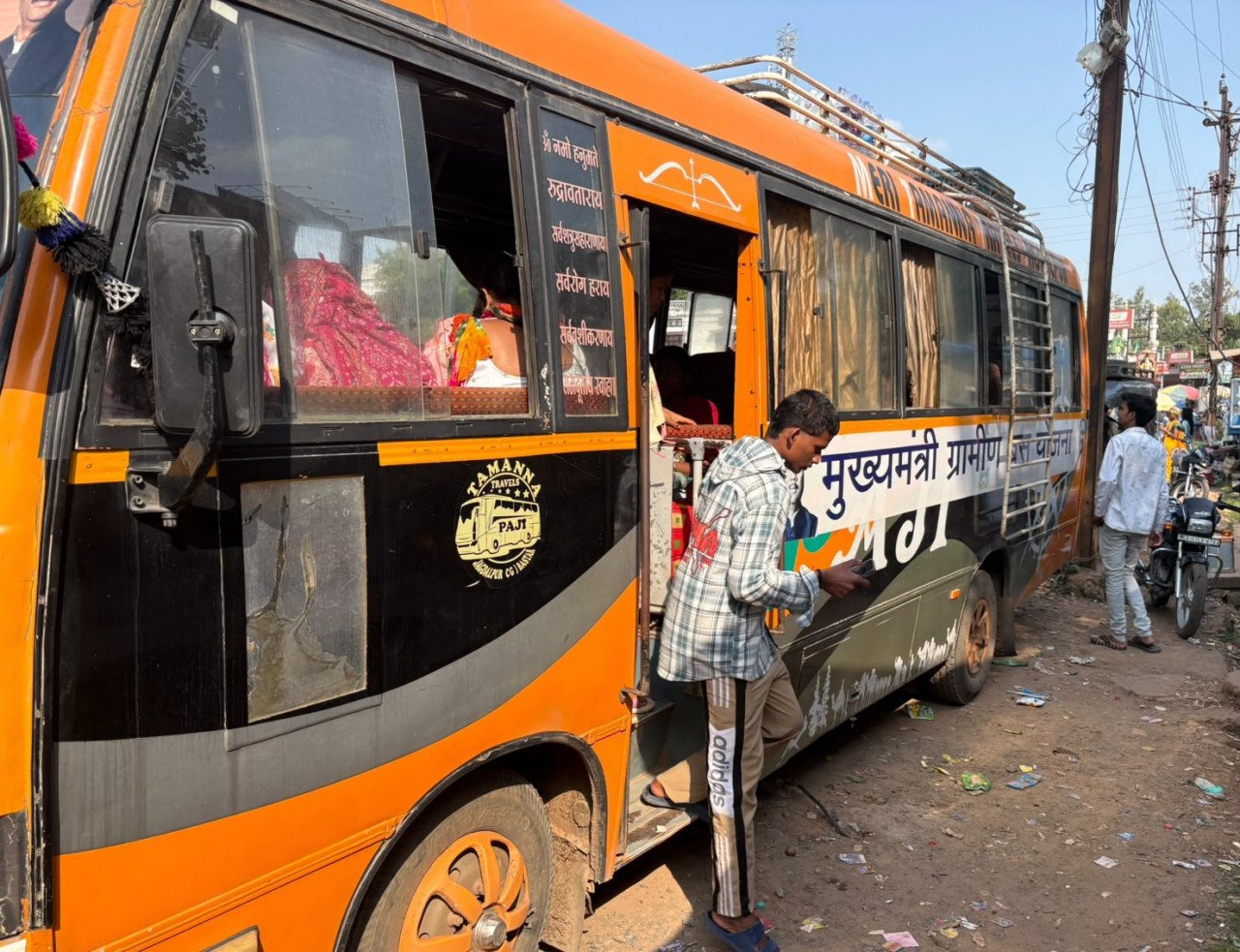
Raipur, October 2026: The Chief Minister’s Rural Bus Service, launched to strengthen public transport in remote and forested areas of the Bastar division, has emerged as a major convenience for residents living in geographically difficult-to-reach regions.
The bus service has been operating continuously for the past year in villages such as Bheja, located in the picturesque Binata Valley along the banks of the Indravati River. These areas were once largely cut off from the mainstream of development because of difficult terrain and the impact of Maoist activities.
The regular passenger bus connecting the Bastar district headquarters, Jagdalpur, through Mardoom to Bheja, located at the end of the route, has completed one year of operations. The service has created an important link between remote villages and the wider network of development, security and social connectivity.
For residents of the region, the bus has brought a significant change to their daily lives.
Villagers such as Seeboram and Dashru Kartam from Kasturpal, Babulal from Matnar and Arun Kumar from Binata have been regularly using the service for the past year.
According to the passengers, villagers had earlier been forced to walk several kilometres or spend large amounts of money on private vehicles because of decades of Maoist influence and limited transportation facilities. Reaching the city for medical treatment or other essential work was particularly difficult.
The regular bus service has changed that situation considerably.
With buses now available according to a fixed timetable, residents have access to safe, affordable and convenient transportation. Travelling to the district headquarters for weekly markets, shopping, medical treatment, college education and essential government-related work has become significantly easier.
The service has also helped strengthen the connection between remote communities and administrative centres, reducing the difficulties faced by residents in accessing essential services.
The successful completion of one year of regular operations has generated renewed confidence among people living in the Binata Valley and along the Indravati River. For many villagers, the bus represents more than just a means of transportation; it has become an important link to education, healthcare, employment opportunities and government services.
The improved connectivity is also giving fresh momentum to the local rural economy by making it easier for residents to travel to markets and for communities to remain connected with nearby towns and the district headquarters.
The continued operation of the rural bus service is thus helping remote villages overcome geographical isolation and become more closely integrated with the broader development process in Bastar.