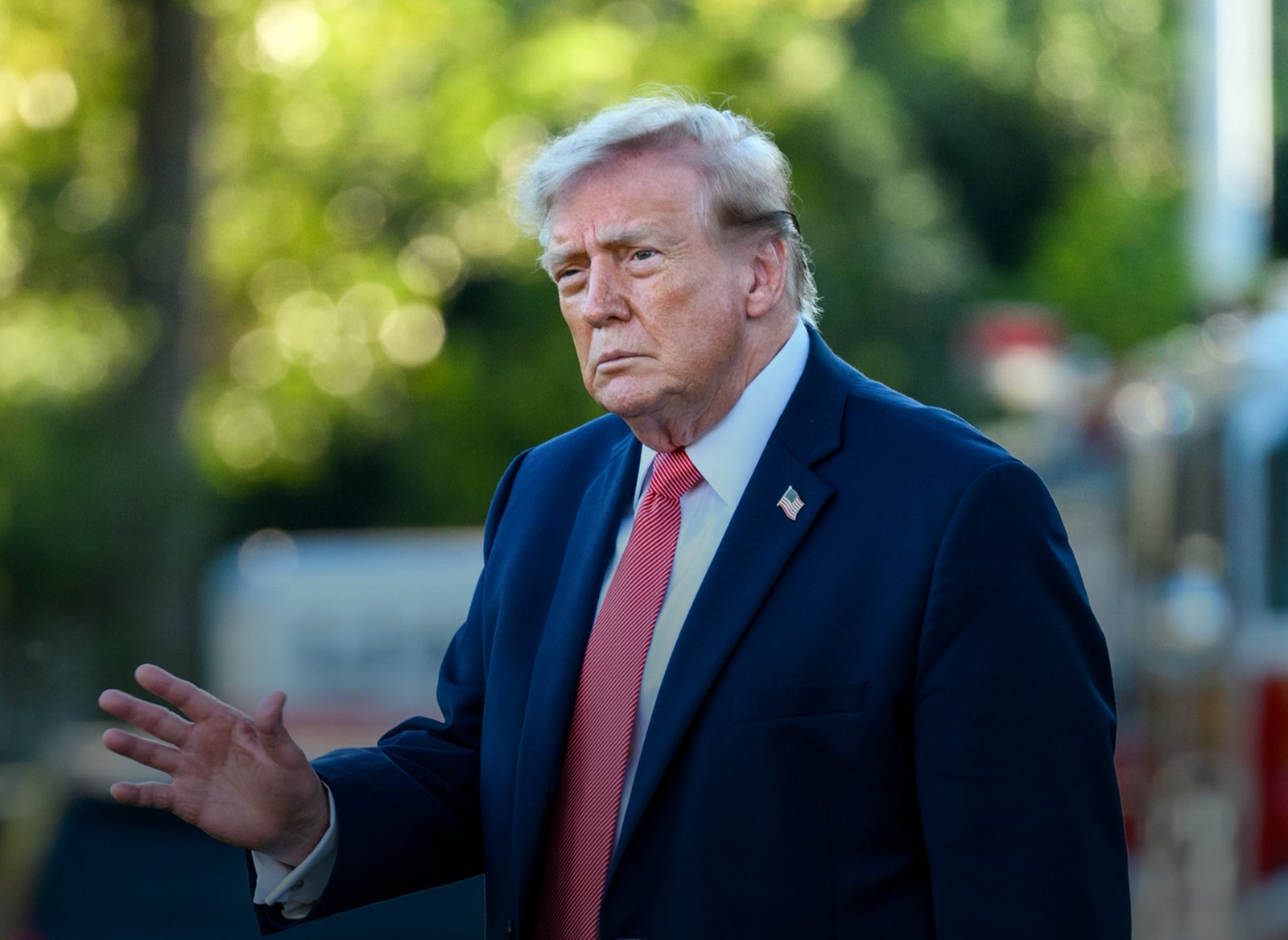
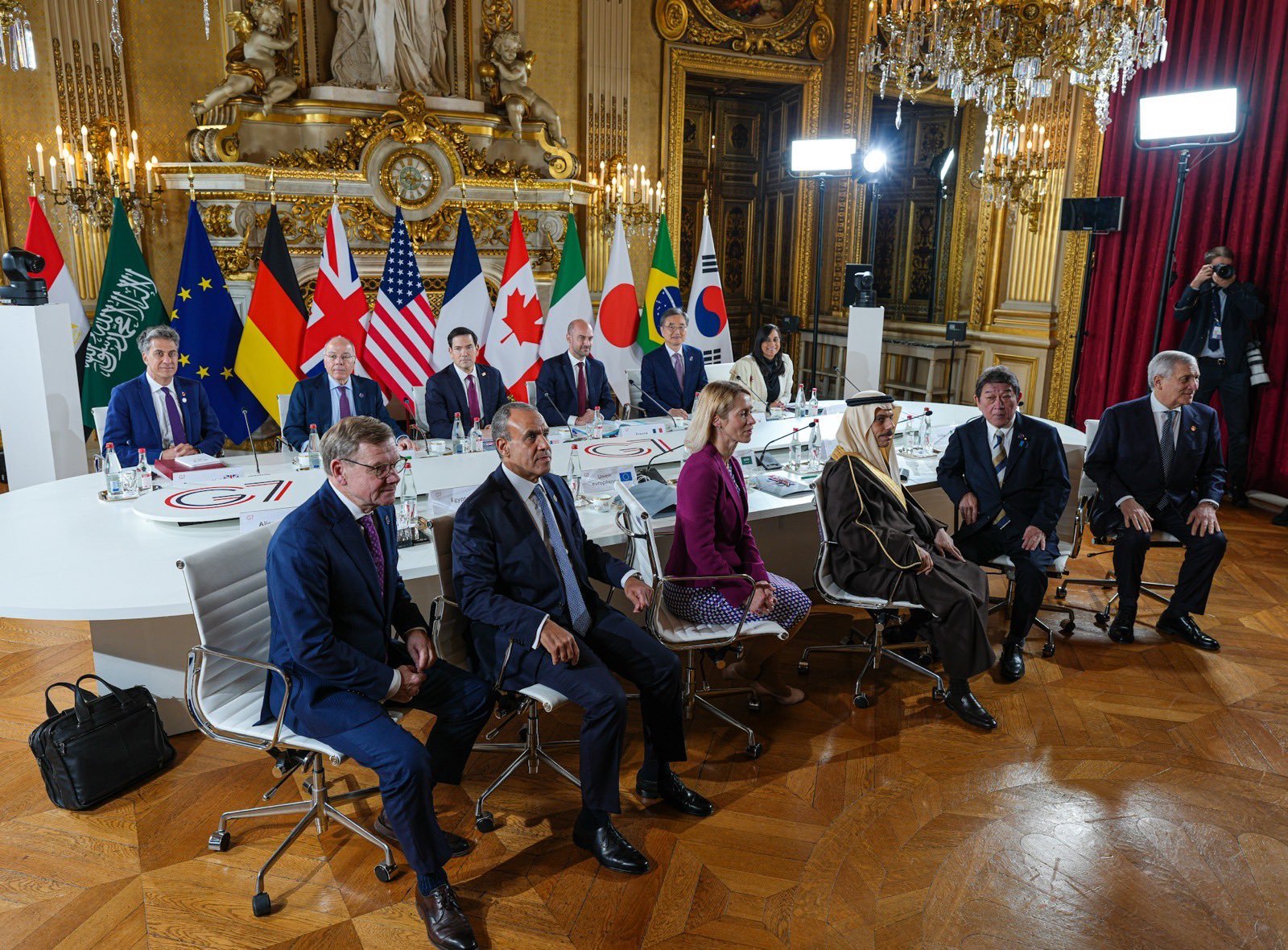
PARIS, November 2026 : Foreign ministers from the Group of Seven (G7) industrialised democracies began two days of high-level discussions in Paris on Monday, with the Russia-Ukraine war, the conflict involving Iran, global energy security, artificial intelligence and international diplomacy expected to dominate the agenda. The meeting comes at a time of mounting global uncertainty and growing questions over whether US President Donald Trump will reconsider aspects of his foreign policy following significant Republican losses in the midterm elections.
US Secretary of State Marco Rubio is attending the November 9-10 discussions alongside foreign ministers from Britain, Canada, France, Germany, Italy and Japan. His participation is being closely watched as Washington's allies seek clarity on the Trump administration's positions on major international challenges, particularly the wars in Ukraine and Iran.
The Paris meeting marks Rubio's first overseas visit since last week's midterm elections, in which Republicans suffered heavy losses and lost control of Congress. Unpopular government policies, including the US involvement in the conflict with Iran, were among the factors contributing to the party's electoral setback.
The talks are also taking place against a backdrop of widespread protests across Europe, including in Paris, reflecting public discontent over political and international developments.
US Midterm Election Results Raise Questions Among Allies
The Republican Party's electoral losses have raised questions about the direction of the Trump administration's foreign policy and its ability to maintain support for key international initiatives. However, there has so far been little indication that the Democrats' gains will lead to an immediate change in the President's approach.
Trump's first major personnel decision following the elections was to appoint Stephen Miller, a prominent hard-line supporter of his domestic and foreign policy positions, as chief of staff.
Rubio is expected to face questions from European and other allied governments about whether Washington intends to adjust its approach to the Russia-Ukraine war, the Iran conflict, energy security and artificial intelligence.
Asked whether America's partners were seeking assurances about the administration's plans after the elections, Rubio said the countries he was meeting understood the complexities of US politics.
"They, too, have experienced divisions in government and divisions in their own system," he told reporters.
Rubio is widely viewed by some international partners as representing a more measured diplomatic approach compared with Trump's often blunt style of dealing with allies and adversaries. However, speculation has also emerged that he could leave the administration before the end of its term to prepare for a possible 2028 presidential campaign. Rubio has denied such speculation.
Russia-Ukraine War and European Security on Agenda
The Russia-Ukraine war is expected to be one of the central issues during the G7 foreign ministers' discussions. Trump has floated the possibility of working with European countries to negotiate an end to the conflict, while his administration continues to explore possible diplomatic arrangements involving Moscow and Kyiv.
US presidential envoys Steve Witkoff and Jared Kushner, Trump's son-in-law, are scheduled to meet Russian and Ukrainian officials in the United Arab Emirates this week. The discussions are expected to focus on possible compromises that could help end the war.
One of the major concerns among European governments is the security arrangement that would be put in place for Ukraine after any peace agreement. Allies are seeking assurances that a settlement would not leave Ukraine vulnerable to further Russian military action and would preserve the broader security of Europe.
Speaking in Florida before travelling to Paris, Rubio said discussions on post-war security guarantees for Ukraine and the rest of Europe had made some progress.
"There's been some advances made in what that architecture could look like post-conflict," he said, adding that no agreement had been finalised. He expressed hope that further progress could be achieved during the proposed discussions in Abu Dhabi.
German Foreign Minister Johann Wadephul stressed that Europe must have a central role in determining the future of Ukraine and the continent's security arrangements.
"Europe must be part of the path to a solution" to the war, he said before travelling to Paris.
He also rejected suggestions that the conflict required an entirely new European security framework, arguing that the priority should be restoring the existing security architecture.
"It is very clear that Europe doesn't need a new security architecture, as Russia would have us believe, but simply the restoration of the existing security architecture," Wadephul said in a statement.
Iran Conflict and Energy Security Concerns
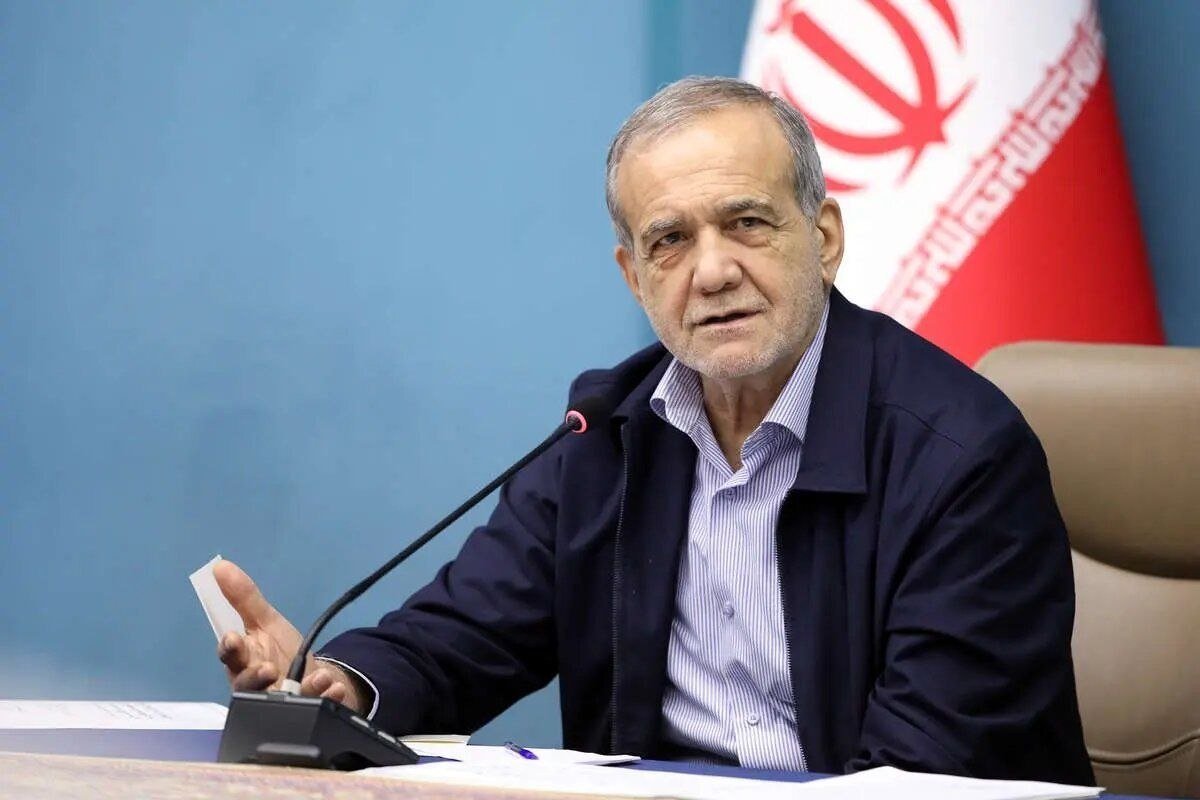
The conflict involving Iran is another major issue confronting the G7 ministers. The war has contributed to volatility in global energy markets, with fuel prices rising amid concerns over the security of important international shipping routes.
The Strait of Hormuz and the Red Sea remain particularly important to global energy supplies and commercial shipping. Any prolonged disruption in these strategic waterways could have wider consequences for international trade, fuel availability and economic stability.
Qatar and other mediators have reportedly proposed an interim arrangement aimed at breaking the diplomatic deadlock over the Iran conflict.
However, Rubio indicated that the parties were not close to reaching a breakthrough. He reiterated that Trump preferred a diplomatic solution but said negotiations had made limited progress because of what Washington considers unacceptable Iranian demands.
He said the US administration expected its G7 partners to raise several questions about the conflict and the next steps.
The discussions are therefore likely to focus not only on the immediate security situation but also on the implications of the conflict for energy security, maritime trade and the wider international economy.
Differences Within G7 Could Prevent Joint Statement
The Paris meeting follows a gathering of G20 foreign ministers hosted by Rubio in Atlanta just over a week earlier. That meeting ended without significant agreement on several major international issues, highlighting the difficulties facing multilateral diplomacy.
Although the G7 brings together seven major industrialised democracies, differences among its members are expected to complicate the discussions. France, which is hosting the meeting, has already indicated that the talks will not conclude with a joint communique.
France has invited Brazil, Egypt, Saudi Arabia and Ukraine to participate in selected discussions. The agenda also includes broader international concerns involving Africa, China, Cuba and Haiti.
According to the French Foreign Ministry, the programme will include a dedicated session on artificial intelligence and a separate discussion on support for Ukraine.
The absence of a joint statement would underline the continuing differences among major Western powers on international conflicts, security arrangements and the future of global cooperation.
United Nations and International Criminal Court Disputes
Shortly after arriving in Paris on Monday, Rubio posted on X that one of his priorities would be "pushing for real accountability at the UN". His remarks indicated that the Trump administration intends to continue pressing for reforms at the United Nations and other multilateral institutions.
Washington has already withdrawn from several UN-related and international organisations, reflecting Trump's broader criticism of multilateral institutions and their role in global governance.
The administration's approach has also unsettled G7 partners over issues such as military and financial support for Ukraine, the future of NATO and opposition to the International Criminal Court (ICC).
All G7 members, except Japan, are members of NATO. Japan maintains a separate security treaty with the United States.
The ICC has emerged as another point of disagreement. The international court investigates and prosecutes individuals accused of genocide, war crimes and crimes against humanity. All G7 members except the United States are parties to the court.
The Trump administration has imposed severe sanctions on the ICC and several of its employees, accusing the court of attempting to investigate American citizens despite the United States not being a member.
Rubio said on Sunday that Washington had communicated its position to allies, asking them to persuade the ICC to recognise the limits of its jurisdiction over citizens of countries that are not members of the court.
The issue is expected to add to the diplomatic tensions during the Paris discussions, particularly as European governments seek to balance their security partnership with Washington against their support for international legal institutions.
With conflicts in Ukraine and Iran, rising energy concerns and disagreements over global institutions dominating the agenda, the G7 foreign ministers' meeting is expected to test the ability of major Western democracies to maintain a common approach to international crises at a time of considerable political uncertainty in the United States.
(Disclaimer :The content of this article is sourced from a news agency and has not been edited by the Mavericknews30 team.)