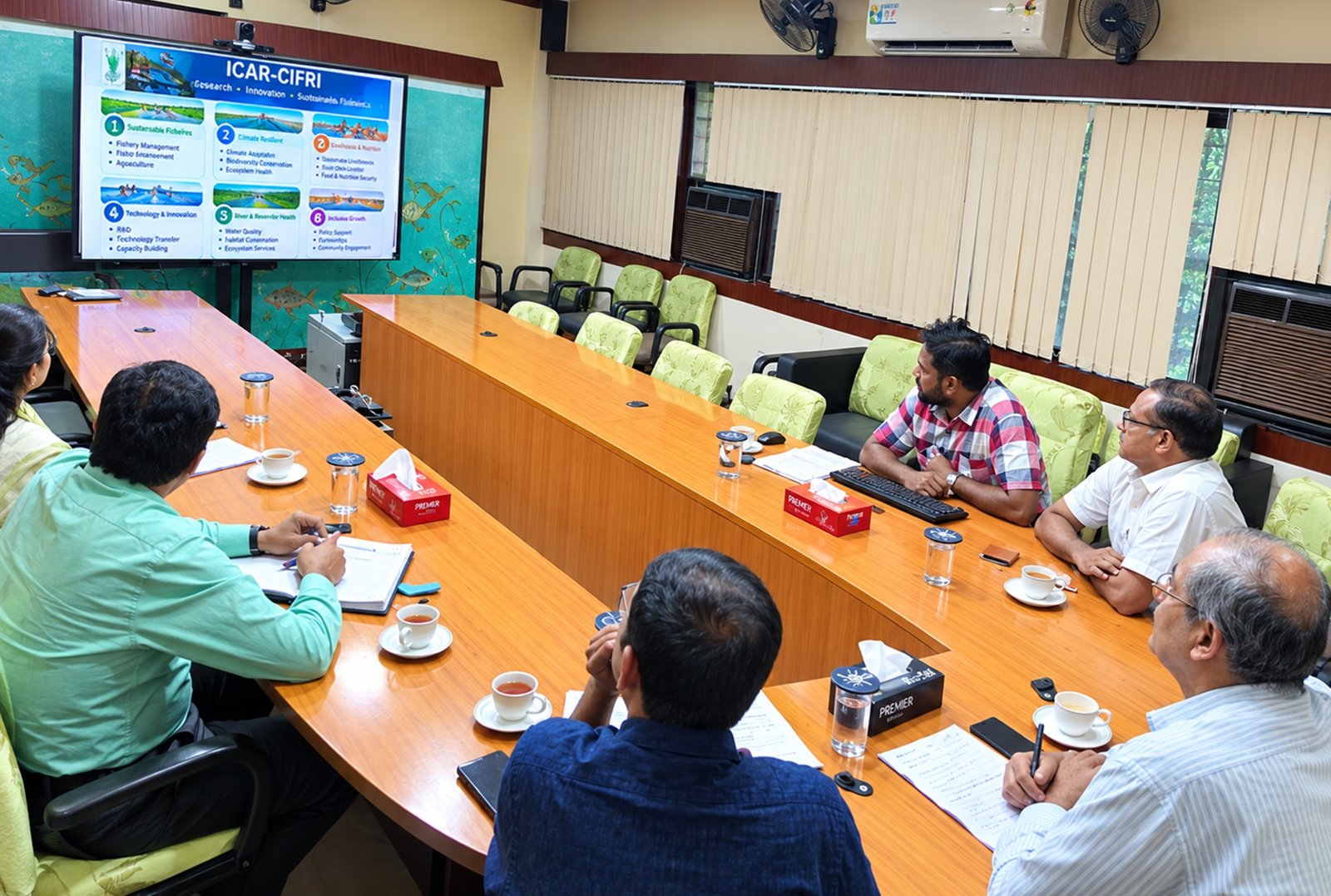
October 2026 : The ICAR–Central Inland Fisheries Research Institute (ICAR-CIFRI), Barrackpore, and Curtin University, Australia, explored avenues for establishing a strategic international partnership in fisheries research, advanced molecular technologies, capacity building and aquatic ecosystem monitoring. An online interaction meeting between the two institutions identified mutually beneficial areas of academic, scientific and technological collaboration.
Dr. Pradip Dey, Director, ICAR-CIFRI, welcomed the Curtin University delegation and highlighted the Institute’s mandate, scientific capabilities and contributions to inland fisheries and aquatic sciences. He envisioned a long-term strategic partnership that would integrate Curtin University’s advanced molecular technologies and bioinformatics expertise with ICAR-CIFRI’s extensive aquatic research network to drive scientific innovation. Dr. Dey emphasised that collaborative research in eDNA, DNA metabarcoding and advanced sequencing could transform aquatic biodiversity assessment, strengthen ecosystem health surveillance and generate science-based solutions for sustainable fisheries management, climate resilience and improved livelihoods, thereby advancing the frontiers of fisheries science through responsible cooperation.
Dr. A. K. Bera, Head, AEB Division, presented the Division’s major research activities, significant findings, achievements and future priorities. Subsequently, Dr. Vikash Kumar and Dr. Suvra Roy outlined potential areas of collaboration and facilitated detailed technical discussions on opportunities for joint research and technological advancement.
Dr. Mattia Sacco, Lecturer and Co-Leader of the Curtin University group, highlighted the University’s expertise in sequencing and bioinformatics and expressed willingness to support collaborative research with ICAR-CIFRI. He proposed developing DNA metabarcoding profiles of aquatic organisms across diverse Indian ecosystems to strengthen biodiversity assessment and environmental monitoring. The potential use of Curtin University’s specialised facilities and transfer of biological samples to Australia for sequencing and analysis were also discussed, subject to mutual agreement, institutional approvals and applicable regulatory requirements, including Material Transfer Agreements wherever required.
Mr. Shane Herbert, Business Manager and Leader, eDNA Frontiers, highlighted the potential of metabarcoding-based approaches for monitoring aquatic ecosystems and assessing the impacts of anthropogenic activities. He emphasised that systematic molecular profiling could strengthen aquatic ecosystem surveillance and provide a rapid, science-based approach to detecting ecological changes.
Prof. Paul Nevill, Leader of the Curtin University group, emphasised the importance of establishing a formal institutional framework for sustained cooperation and proposed developing a Memorandum of Understanding (MoU) between the two institutions. The proposed MoU could facilitate access to specialised research facilities and expertise, collaborative publications, joint research initiatives and the development of scientific and policy outputs under mutually agreed terms.
The discussions also covered a broad range of potential collaborative activities, including the exchange of scientists, researchers, technical personnel and students; short- and long-term research visits; specialised training and capacity-building programmes; joint research publications; and the sharing of laboratory facilities, analytical platforms, field sites, research protocols, databases and technical expertise.
Another important area of discussion was the joint development and submission of research proposals to Indian, Australian and international funding agencies, particularly in emerging areas such as aquatic biodiversity, ecosystem health, molecular surveillance, fisheries management and climate-resilient aquatic systems. A major focus of the interaction was the application of environmental DNA (eDNA), DNA metabarcoding, sequencing and bioinformatics for characterising and monitoring aquatic ecosystems.
The meeting concluded with both institutions expressing keen interest in advancing the identified areas of cooperation and exploring the development of MoU for sustained academic, scientific and technological collaboration, subject to the necessary approvals of the competent authorities of the respective institutions.
The proposed partnership is expected to provide a strong platform for integrating advanced molecular technologies with India’s extensive inland aquatic resources, strengthening biodiversity surveillance and ecosystem assessment, and promoting collaborative innovation in fisheries and aquatic sciences.