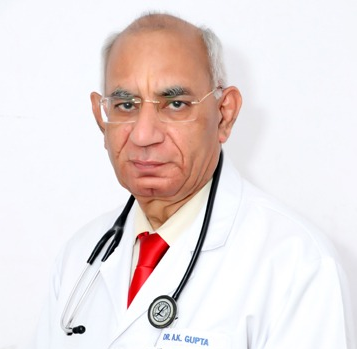
HMAI Secretary General Dr A.K. Gupta says the Prime Minister’s “homoeopathic pill” analogy should be understood in the proper medical context
New Delhi, Oct 2026 : The Homoeopathic Medical Association of India (HMAI) has welcomed Prime Minister Narendra Modi’s recent reference to homoeopathy, saying it is encouraging that the system continues to find a place in the national discourse. At the same time, HMAI Secretary General Dr A.K. Gupta said the reference to a “homoeopathic pill” and the concept of an initial increase in symptoms should be understood in the proper medical and professional context.
Modi had referred to the traditional homoeopathic concept of “initial aggravation” during his address at Shri Ram College of Commerce (SRCC). The Prime Minister used the concept as a political analogy while referring to reactions to an earlier remark he had made from the Red Fort.
According to Gupta, Modi’s reference may have different implications for how the public perceives homoeopathy. While the use of the terminology brings greater visibility to the system, it could also lead to misunderstandings if the medical concept is interpreted too broadly.
How would this affect homoeopathy?
There are two important effects to consider:
- Public perception:
- The phrase “homoeopathic pill” has now been used in a political context, potentially increasing public awareness of homoeopathy.
- Some people may view the reference as recognition of a concept associated with homoeopathy.
- Others may interpret it as suggesting that homoeopathic medicines necessarily make a disease worse before it improves.
- Such an interpretation could reinforce misconceptions about homoeopathic treatment.
- Professional and medical credibility:
- “Homoeopathic aggravation” is a concept discussed in homoeopathic literature as a possible temporary intensification of existing symptoms following administration of a remedy.
- It does not necessarily occur in every patient or every case and should not be generalised to suggest that homoeopathic medicines routinely worsen diseases before producing improvement.
- Any deterioration in a patient’s condition should be taken seriously and clinically assessed.
- It should not automatically be attributed to therapeutic “aggravation”. Proper diagnosis, monitoring, timely intervention and patient safety must remain paramount.
Gupta said the distinction was important because medical terminology should not be reduced to a political sound bite. He noted that concepts discussed within homoeopathic literature should be understood in their appropriate clinical context.
“The term ‘aggravation’ has a specific meaning in homoeopathic literature and has historically been discussed as a possible temporary intensification of existing symptoms following administration of a remedy,” Gupta said.
He added that the concept should not be used to justify ignoring a patient’s deteriorating condition. According to him, healthcare professionals must always prioritise diagnosis, clinical assessment, monitoring and timely intervention.
Opportunity for greater awareness
Gupta said the Prime Minister’s reference could provide an opportunity for the homoeopathic profession to communicate more clearly with the public about its principles, clinical practices and research.
Homoeopathy is a recognised system of medicine in India and has a large professional community. Gupta said discussions about its clinical practices and emerging research should take place through appropriate scientific and professional platforms rather than being defined by political references or analogies.
The HMAI Secretary General said the association remained committed to evidence-informed clinical practice, ethical patient care, professional standards and the responsible advancement of homoeopathic medicine.
He also expressed hope that the Prime Minister’s acknowledgement would encourage greater attention to research, education, clinical infrastructure and appropriate representation of homoeopathy within national healthcare policies and the AYUSH framework.
A request to the Prime Minister
Gupta said the Prime Minister had described his political remark as a “small dose of Homoeopathy” and suggested that even the small dose had triggered an immediate reaction from those he described as engaging in “nefarious activities”.
While acknowledging the Prime Minister’s reference, Gupta said there appeared to be a gap between the possible intention behind the analogy and the choice of medical terminology used to convey it.
“I do not know why the Hon’ble Prime Minister Narendra Modi said what he said, but there is some discrepancy between the intention behind saying it and the choice of words and examples,” Gupta said.
He stressed that what homoeopathy needs from the government is greater attention to its medical and scientific dimensions, particularly in the areas of efficacy, research, education and appropriate representation in national healthcare policies and AYUSH.
The HMAI also sees the reference as an opportunity for policymakers and the homoeopathic fraternity to engage in a more informed discussion about the system and its place within India’s healthcare framework.
Gupta said the profession would welcome greater investment in quality research, professional education and clinical infrastructure, while maintaining ethical standards and patient safety.
“Homoeopathy deserves to be understood on its medical and scientific merits—not merely as a political metaphor,” he said, calling for a move from recognition to meaningful action for homoeopathy.
Dr.A.K.Gupta
(Disclaimer :The content of this article is sourced from a news agency and has not been edited by the Mavericknews30 team.)