
ICAR and CSIR-CRI (Ghana) partner to boost crop yields, post-harvest infrastructure, and commercialization; ceremony graced by External Affairs Ministers of both nations
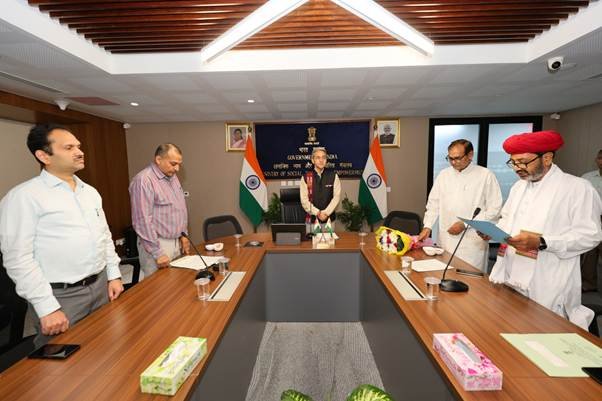
India and Ghana have strengthened cooperation in agricultural research, education and technology transfer with the signing of a Memorandum of Understanding (MoU) between the Indian Council of Agricultural Research (ICAR), New Delhi, and the Crops Research Institute (CSIR-CRI), Accra, Ghana. This MoU will strengthen India’s focus on South-South and India-Africa collaboration. The signing ceremony was graced by Dr. S. Jaishankar, External Affairs Minister of India, and H.E. Samuel Okudzeto Ablakwa, Minister for Foreign Affairs of Ghana.
The five-year MoU provides a framework for cooperation in joint agricultural research, scientific and technological exchange, capacity building and the application and commercialisation of agricultural technologies. The collaboration has been facilitated by Arima Farms Ltd., Ghana, which has been recognised as the commercial partner to CSIR-CRI for specific research and commercialisation activities under the framework.
The first phase of cooperation will focus on vegetable crop research, with particular emphasis on tomato research and development. Under the collaboration, ICAR will support the scaling up of proven agricultural technologies and the introduction of suitable high-yielding tomato lines and varieties to contribute to strengthening domestic tomato production in Ghana.
The partnership will also focus on processing and value addition of cassava, yam and other tuber crops, with the objective of strengthening agricultural value chains. Cooperation will further cover post-harvest management, including technical support and capacity building in cold storage, refrigerated transportation, sorting, grading and processing technologies, aimed at addressing post-harvest losses.
The MoU provides for exchange of scientists and technologists, germplasm and breeding materials, scientific information, methodologies and technical knowledge, besides development and implementation of collaborative research projects. It also envisages institutional linkages between relevant research institutes and centres of the two countries to facilitate sustained scientific cooperation.
The collaboration will be overseen through a Joint Working Group comprising representatives of ICAR and CSIR-CRI, which will review the progress of cooperation and guide implementation. The Joint Working Group will meet periodically in New Delhi and Accra.
The partnership is expected to strengthen the linkage between agricultural research, technology development, capacity building and commercial application, facilitating the adoption of relevant agricultural technologies and contributing to sustainable agricultural development and improved livelihoods in Ghana.