
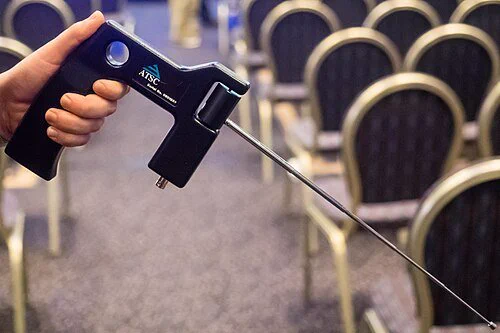
RFI seeks compact systems capable of detecting trace and vapour residues from military, commercial and improvised explosives
The Indian Army has issued an RFI for approximately 350 portable explosive detectors designed to rapidly detect and identify trace and vapour residues from military, commercial and improvised explosives. The systems are intended for field use in explosive ordnance disposal and counter-explosive security operations, with vendors required to respond by the stated November 13 deadline, subject to verification through the authorised procurement channel.
New Delhi, Sept 2026: The Indian Army has issued a Request for Information (RFI) for the prospective procurement of approximately 350 portable explosive detectors, seeking compact and field-deployable systems capable of rapidly detecting and identifying explosive substances.
The proposed acquisition is aimed at strengthening the Army’s capabilities for explosive ordnance disposal operations and other counter-explosive security tasks. The equipment is expected to detect trace and vapour residues associated with military, commercial and improvised explosive materials.
The requirement for around 350 units indicates the potential deployment of the systems across multiple Army formations, including explosive ordnance disposal teams and other operational and security elements. Portable systems of this nature can provide personnel with rapid screening capabilities in situations where conventional laboratory-based analysis may not be practical.
According to the tender information, vendors are required to submit their responses by November 13, 2026, with the technical opening also scheduled for the same day. However, a public tender listing has separately displayed November 14 as a closing date. Prospective bidders would therefore need to verify the final deadline and procedural requirements through the authorised Ministry of Defence procurement channel.
The RFI was published in September and is associated with the Ministry of Defence and New Delhi. An RFI is generally used as a pre-procurement market-engagement exercise, allowing the armed forces to understand available technologies and assess the capabilities of potential manufacturers and suppliers before framing a detailed procurement requirement.
Portable explosive detection systems can be deployed in a range of operational environments. Potential applications include security checkpoints, critical installations, vehicle inspection areas, ammunition facilities, temporary operating bases and locations where post-incident examination is required.
The proposed capability is focused on rapid field screening rather than detailed laboratory analysis. Personnel can use such equipment to examine surfaces, baggage, parcels, vehicles, equipment and suspicious objects for minute traces of explosive material or airborne vapours.
The reference to military, commercial and improvised explosive materials indicates the requirement for a broad detection capability. Such systems could potentially assist personnel in identifying signatures associated with conventional explosive substances as well as materials encountered in improvised explosive device-related threats.
The eventual technical specifications are expected to be important for prospective suppliers. These could include requirements related to detection sensitivity, selectivity, false-alarm rates, warm-up time, analysis speed, portability and battery endurance.
Other considerations may include data storage and recording, environmental operating conditions, calibration requirements, consumables, maintenance support and operator training. Equipment intended for field deployment would also need to demonstrate reliability under demanding conditions, including exposure to dust, heat, humidity and transportation-related vibration.
The RFI’s emphasis on rapid detection and identification of trace and vapour residues suggests that the Army is seeking more than basic explosive screening equipment. Vendors may be required to demonstrate the ability of their systems to identify relevant explosive signatures while minimising interference from common environmental contaminants.
The proposed procurement is part of the broader effort to equip security and explosive ordnance personnel with portable technologies that can support faster identification of potential threats in operational environments.
With approximately 350 systems under consideration, the requirement could represent a significant deployment of portable explosive detection capability across Army formations, subject to subsequent procurement decisions and technical evaluation.
(Disclaimer :The content of this article is sourced from a news agency and has not been edited by the Mavericknews30 team.)