Women in Dhamtari begin harvesting makhana cultivated across 29 acres; scientific training and market access expected to create new livelihood opportunities for self-help groups
Raipur, October 2026: The hard work and determination of rural women in Chhattisgarh to become financially independent are opening up new opportunities in agriculture. Makhana cultivation in the ponds of Dhamtari district has emerged as a promising avenue for women's economic empowerment.
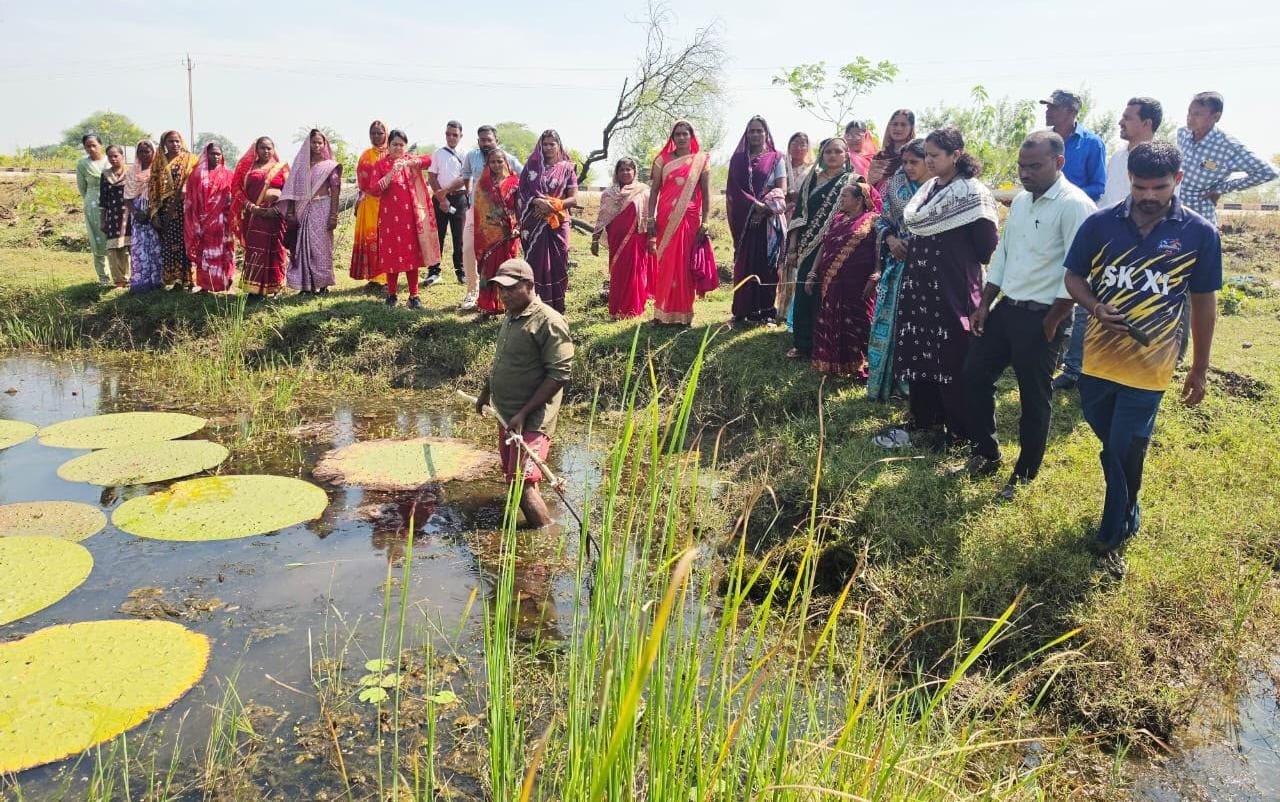
Rural women, traditionally engaged in conventional farming and household responsibilities, are now exploring new opportunities through makhana production, harvesting and processing. The commencement of harvesting from 29 acres of makhana cultivation by women's self-help groups in the villages of Chhati and Dandesara marks an important step in this transformation.
Under the leadership of Chief Minister Vishnu Deo Sai, the state government is promoting agricultural diversification and rural livelihoods. Makhana cultivation in Dhamtari district is gaining momentum as part of these efforts.
Under the Central Sector Scheme for Development of Makhana, the district was assigned a cultivation target of 165 acres for 2025–26. With guidance from the district administration and the Horticulture Department, cultivation has commenced across 105 acres.
Makhana production is being encouraged in Rakhi, Chhati, Dandesara and Piparchhedi villages, as well as Sankara in the Nagri development block.
Women's Hard Work Brings New Prospects for Prosperity
Members of the Shailputri and Nai Kiran women's self-help groups in Chhati and Dandesara are participating in the initiative to explore new livelihood opportunities.
The start of harvesting from ponds where makhana has been cultivated has generated enthusiasm among the women. They hope that access to processing facilities and markets, alongside production, will help make makhana cultivation a reliable source of regular income.
To strengthen their technical skills, a training programme was organised on October 26, 2026, alongside the commencement of makhana harvesting.
Scientific Training to Improve Quality and Market Opportunities
In makhana cultivation, proper harvesting, cleaning and processing are as important as production itself.
The extraction of makhana seeds from ponds is carried out in three stages. The first harvesting stage is known as Lahsar, during which approximately 70 per cent of the seeds are collected. The remaining seeds are harvested in the subsequent Markat and Karkat stages.
The collected seeds are cleaned and dried in sunlight. They are then roasted using prescribed techniques and processed to crack open the seeds, producing the white, crunchy makhana known as lava.
Appropriate processing techniques help maintain product quality and improve the prospects of securing better prices in the market.
The Deputy Director of Horticulture said that members of the women's self-help groups would receive scientific training in post-harvest management at the Krishi Vigyan Kendra in Dhamtari in the coming days.
The training will help the women acquire skills in processing and quality management, enabling them to develop makhana cultivation into a sustainable self-employment activity.
Focus on Women's Economic Empowerment
The Dhamtari Collector said efforts were being made to improve farmers' incomes by making better use of the district's natural resources and to strengthen the economic position of women's self-help groups.
Makhana cultivation could become a viable option in this direction, the Collector said, adding that special attention was being given to scientific techniques, processing, quality control and market linkages so that rural women could derive maximum benefit from the initiative.
The introduction of makhana cultivation in Dhamtari represents more than the adoption of a new crop. It is also a step towards making rural women financially independent and creating new opportunities for entrepreneurship.
With scientific training, quality processing and stronger market connections, the initiative has the potential to strengthen women's entrepreneurship and contribute to the rural economy in the years ahead.