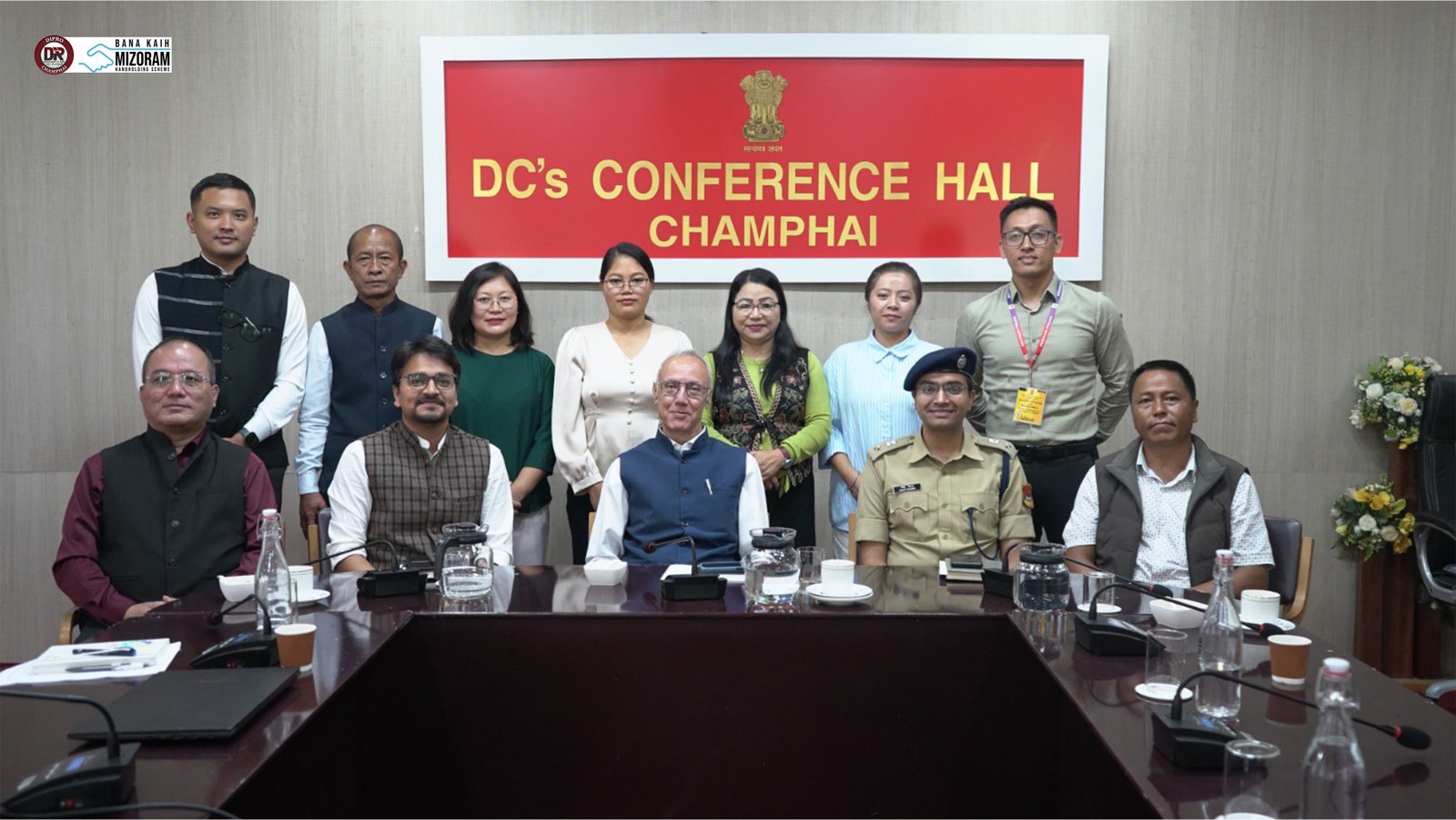
Champhai, September 2026: A meeting chaired by National Human Rights Commission (NHRC) Special Rapporteur Pu Sayeed Ahmed Baba was held today at the DC Conference Hall, Keifang tlang, Champhai.
NHRC Special Rapporteur Pu Sayeed Ahmed Baba emphasized the importance of having a broader perspective and commitment in every effort to protect human rights. He stated that human rights must be given equal importance everywhere, and not only in selected places or situations.
Speaking about the growing mental-health challenges in present-day society, including the increasing prevalence of depression and anxiety, he stressed the need to give greater importance to mental health in order to address these problems.
The Special Rapporteur also emphasized the need to strengthen the Tele-MANAS helpline in Mizoram for people facing mental-health difficulties. He called for wider publicity of the helpline numbers so that the public is aware of them and for stronger communication with counsellors through the helpline, enabling people in distress to receive timely assistance.
He further stressed the importance of providing psychiatrists, psychologists and counsellors at District Hospitals, with effective counselling services for patients in OPDs and wards. He also highlighted the need to consider establishing dedicated wards for the treatment and care of people experiencing mental-health problems.
At the meeting, Champhai Deputy Commissioner (DC) Pu Mohammad Aaquib delivered the welcome address. SDC Pu Lalchhuanawma Ralte gave a PowerPoint presentation outlining the measures being undertaken in the district to protect and promote human rights, as well as various developments in this area.
The meeting was attended by the Champhai SP, CMO, DMS, DIPRO, DSWO, DPO, DCPO, Superintendent of the Prison & Correctional Home, representatives of Sub-Hqrs YMA and MHIP.
After the meeting, the NHRC Special Rapporteur visited the One Stop Centre, Shakti Sadan, Mazuia Memorial Home (TNT), District Jail, and Meta Khen. He interacted with the staff, reviewed their work, discussed ways to further improve their functioning, and also met with the beneficiaries receiving care and support at these institutions.