Minister urges citizens to visit the ‘Shivshastra Shauryagatha’ exhibition
Mumbai, November 2026: Bringing historical weapons such as Chhatrapati Shivaji Maharaj’s legendary tiger claws (Wagh Nakh) and the sword of Senasaheb Subha Raghuji Raje Bhosale back to Maharashtra through international efforts, while adhering to all rules and procedures, was our duty. Preserving and conserving weapons from the era of Chhatrapati Shivaji Maharaj is our responsibility. Citizens should visit the ‘Shivshastra Shauryagatha’ exhibition to understand Maharashtra’s glorious history, said Cultural Affairs, Information Technology and Artificial Intelligence Minister Advocate Ashish Shelar.
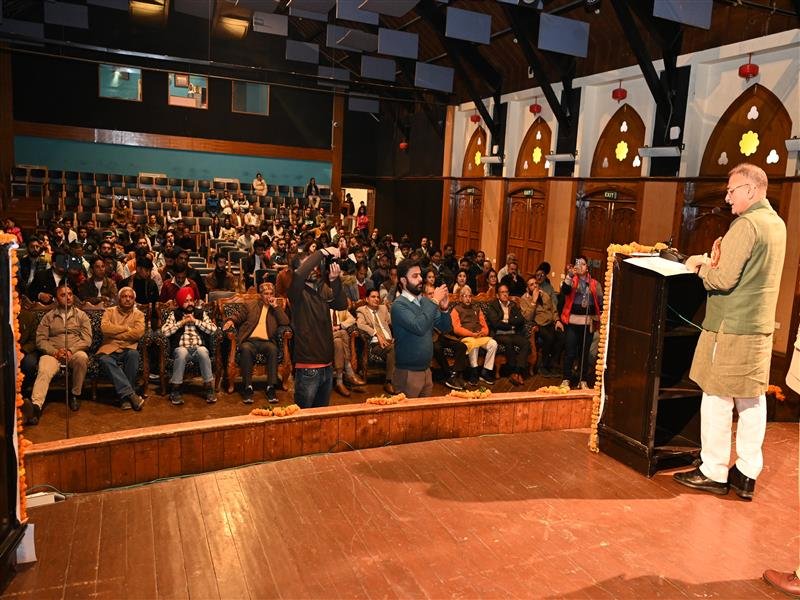
He was speaking at the inauguration of the special exhibition ‘Shivshastra Shauryagatha’, organised jointly by the Department of Cultural Affairs, the Directorate of Archaeology and Museums, and the Chhatrapati Shivaji Maharaj Vastu Sangrahalaya at the museum in Mumbai. Minister Shelar formally inaugurated the exhibition.
Secretary of the Cultural Affairs and Marathi Language Department Dr Kiran Kulkarni, Director General of the Chhatrapati Shivaji Maharaj Vastu Sangrahalaya Dr Sabyasachi Mukherjee, Director of the Directorate of Archaeology and Museums Dr Tejas Garge, Deputy Director Hemant Dalvi, trustee Cyrus Guzder and Shahir Nandesh Umap were among those present.
At the beginning of the programme, Shahir Nandesh Umap presented the historic episode of the killing of Afzal Khan through a traditional Powada performance. The book Dandpatta was also released on the occasion.
Historic Heritage Brought Back to Maharashtra Through International Efforts
Minister Shelar said that weapons are not merely symbols of valour; they also reflect courage, engineering skills, metallurgy and meticulous planning. Chhatrapati Shivaji Maharaj’s Wagh Nakh symbolises a victory achieved through careful planning.
He said that under the leadership of Chief Minister Devendra Fadnavis, the state government and administrative officials had brought this historical heritage back to Maharashtra through prolonged negotiations and tireless efforts, while complying with international rules, practices and conventions.
Sharing the experience of bringing back the sword of Senasaheb Subha Raghuji Raje Bhosale, Shelar said that, with the support of the Union Government under the leadership of Prime Minister Narendra Modi and Chief Minister Devendra Fadnavis, the necessary approvals from the Ministry of External Affairs, the Reserve Bank of India and the Indian Embassy were obtained promptly.
Through appropriate mediation and coordination, the sword was respectfully brought back to Maharashtra as an object belonging to the state and the Marathi people, he said.
Referring to the process of securing a place for 12 forts associated with Chhatrapati Shivaji Maharaj on UNESCO’s World Heritage List, Shelar said that efforts by Prime Minister Narendra Modi and Chief Minister Devendra Fadnavis helped present India’s case through discussions with member countries. As a result, the proposal was approved unanimously.
He also noted that Chhatrapati Shivaji Maharaj’s royal seal now features prominently on the Indian Navy’s flag and uniform.
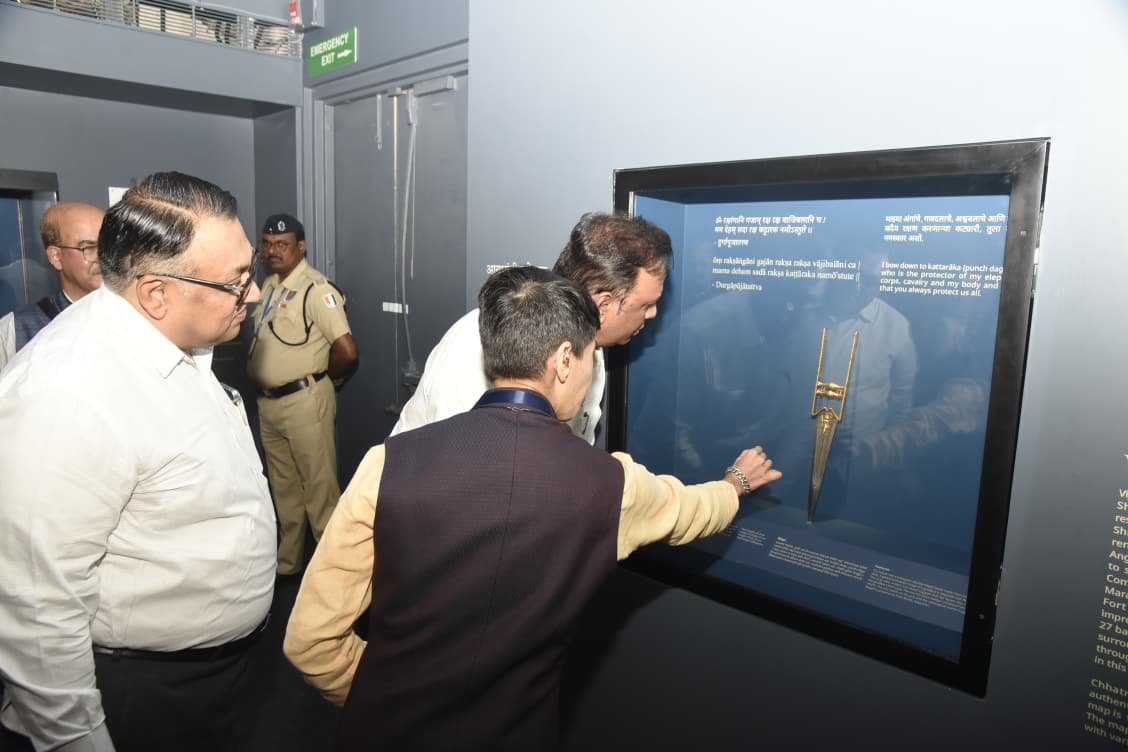
The exhibition offers visitors an opportunity to see several historical weapons from the Shivaji era and subsequent periods. These include Chhatrapati Shivaji Maharaj’s Wagh Nakh, the sword of Raghuji Raje Bhosale, the sword of Commander-in-Chief Prataprao Gujar, the shield of Khanderao Gaekwad and the Dandpatta belonging to Sardar Raste, among other artefacts.
The exhibition will remain open to the public for the next six months. Minister Shelar urged members of the Marathi community, history enthusiasts and patriotic citizens to make it a point to visit the exhibition.
Study of Traditional Weapons Gains an International Dimension: Dr Kiran Kulkarni
Secretary of the Department of Cultural Affairs Dr Kiran Kulkarni said that organising the ‘Shivshastra Shauryagatha’ exhibition in Mumbai had given a new international dimension to the study of Maratha and Shivaji-era weapons and their traditions.
He said the process of bringing the Wagh Nakh and the sword of Raghuji Raje Bhosale back to India involved dialogue and negotiations with foreign institutions. It also demonstrated how the objective could be achieved while upholding the determination and spirit of the Marathi people.
Kulkarni explained that bringing historical artefacts back to India from other countries entails strict preservation rules and standards. These include technical requirements such as temperature control, maintaining safe distances and ensuring appropriate lighting.
The Directorate of Archaeology and Museums and the museum have followed all these international standards while arranging the exhibition. He expressed confidence that the exhibition would remain a major attraction for history enthusiasts and citizens over the next six months.
In his introductory remarks, Director of the Directorate of Archaeology and Museums Dr Tejas Garge said that, on the occasion of the 350th anniversary of Chhatrapati Shivaji Maharaj’s coronation, the state government had entrusted the Department of Cultural Affairs and the Directorate of Archaeology with the responsibility of bringing the historic Wagh Nakh back to India.
The exhibition was developed through a memorandum of understanding with the Victoria and Albert Museum in London. It has already received visits from lakhs of people in Satara, Kolhapur and Nagpur.
Garge said the initiative had established a model for the preservation, conservation and documentation of historical weapons.