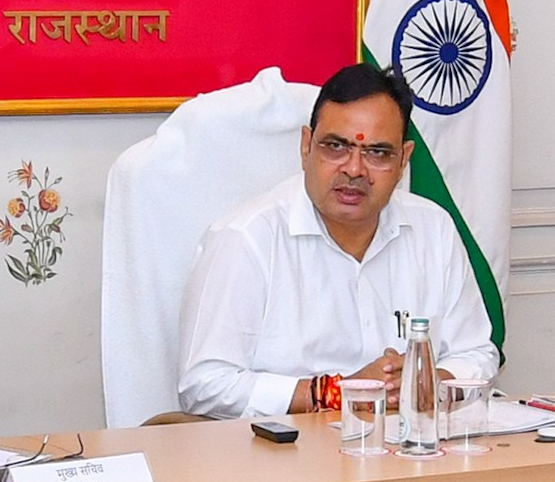
Jaipur, November 2026: Rajesh Verma, Chairman of the Commission for Air Quality Management (CAQM), on Monday directed Rajasthan officials to prepare district-level action plans alongside the state-level strategy to prevent and control air pollution in the National Capital Region (NCR). He also called for greater use of technology to monitor pollution and ensure compliance with environmental regulations.
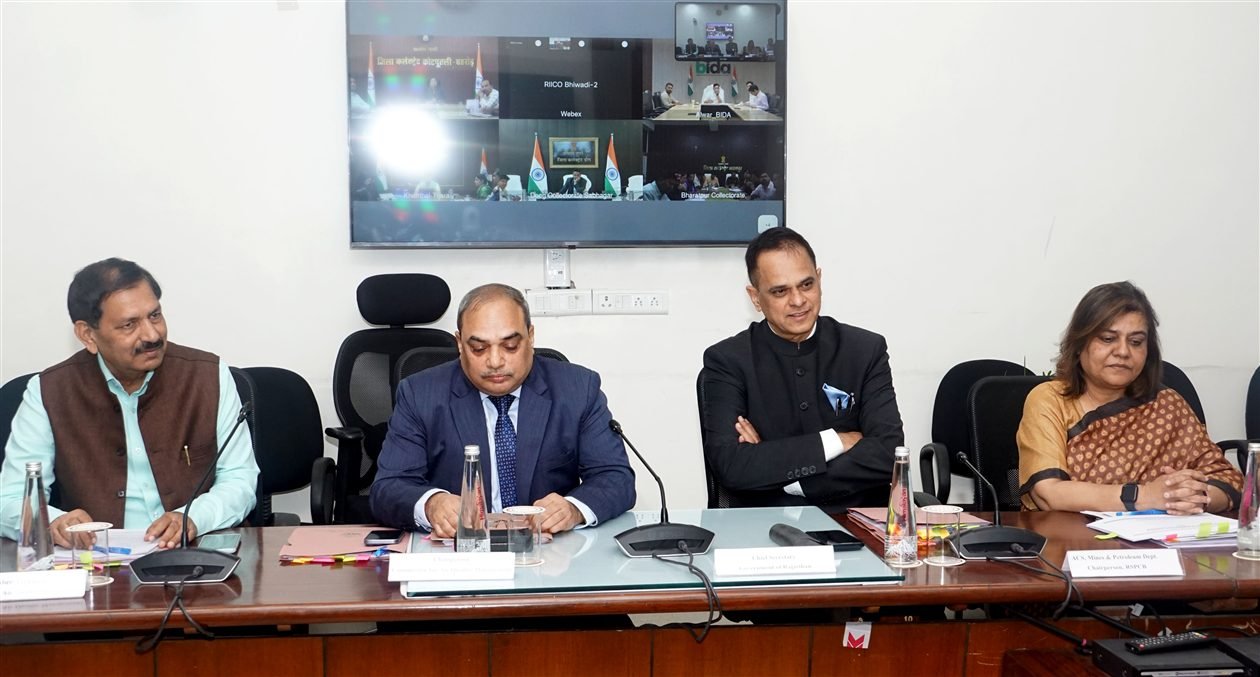
Verma was chairing a high-level review meeting at the Government Secretariat in Jaipur to assess measures being undertaken to improve air quality and control pollution in Rajasthan's NCR districts. Chief Secretary V. Srinivas and senior officials from the concerned departments attended the meeting.
Verma described air pollution in the NCR as a serious concern and called for focused efforts to improve the Air Quality Index (AQI), particularly in Bhiwadi. He reviewed measures to address industrial emissions, vehicular pollution, road dust, construction and demolition waste, stubble and biomass burning, and traffic congestion.
Strict Implementation of 'No PUCC, No Fuel'
The CAQM chairman directed officials to ensure 100 per cent compliance with the 'No Pollution Under Control Certificate (PUCC), No Fuel' rule. He asked for the installation of Automatic Number Plate Recognition (ANPR) cameras at petrol pumps and CNG stations across the NCR to be expedited.
Under the system, vehicles without a valid PUCC must not be supplied with fuel. Verma also called for an effective monitoring mechanism to ensure strict enforcement.
The Principal Secretary of the Transport Department informed the meeting that ANPR cameras were being installed at 362 petrol pumps in the NCR. A total of 76,151 challans had been issued this year for violations of PUCC rules. In addition, 438 vehicles had been scrapped and No Objection Certificates (NOCs) issued for the transfer of 1,526 vehicles.
Verma also called for the early installation of Integrated Traffic Management System (ITMS) cameras at identified locations to strengthen automated challan enforcement. He stressed that vehicles used for online delivery services should be given priority when shifting to electric mobility.
Focus on Effective Implementation of 'Parivartan' Scheme
The CAQM chairman directed officials to ensure effective implementation of the 'Parivartan' scheme. He called for accelerating the replacement of trucks and buses that do not meet BS-VI emission standards with BS-VI-compliant vehicles or cleaner alternatives powered by CNG and electricity.
He also called for strict action against old and highly polluting vehicles in the NCR. Vehicles meeting BS-III or lower emission standards should be scrapped, he said.
The Principal Secretary of the Transport Department informed the meeting that restrictions had already been imposed on the operation of 4,232 out of 5,732 diesel autorickshaws in Alwar and Bharatpur. The replacement of old vehicles under the 'Parivartan' scheme was also progressing.
Measures to Control Road Dust and Construction Pollution
Verma identified road dust as one of the major sources of air pollution in the NCR and directed officials to prioritise mechanised road sweeping and other dust-control measures. He called for speeding up the removal of accumulated dust from roads.
To strengthen monitoring at construction and demolition sites, he directed that all sites covering more than 500 square metres be mandatorily registered online. Such sites should also install cameras and particulate matter sensors to enable remote monitoring of dust pollution.
Continuous Monitoring of Industrial Emissions
The CAQM chairman instructed officials to ensure the proper installation and regular operation of Online Continuous Emission Monitoring Systems (OCEMS) and Air Pollution Control Devices (APCDs) at industrial units.
He stressed the need for continuous monitoring of industrial emissions and strict compliance with prescribed emission standards. He also directed authorities to take action, as per the rules, against stone-crushing units violating the Commission's guidelines.
Stone-crushing units should be mandatorily registered online and equipped with cameras and particulate matter sensors to facilitate remote monitoring, he added.
The meeting also reviewed trends in the average monthly AQI across the NCR.
Rajasthan Targets National Average Air Quality in NCR
Chief Secretary V. Srinivas said the state government was making sustained efforts to control air pollution and improve air quality in the NCR. The government's objective is to bring air quality levels in the region in line with the national average.
He directed the Rajasthan State Pollution Control Board to closely monitor emissions from industrial units and other major pollution sources and take immediate action against violations. All industrial units in the NCR must strictly comply with prescribed emission standards, while stone-crushing units should be monitored regularly.
Srinivas noted that the Central Government was continuously reviewing pollution management efforts in the NCR. He asked all concerned departments to fulfil their responsibilities, regularly assess and report progress against targets, and complete pending work on priority.
Rajasthan State Pollution Control Board Chairperson Aparna Arora briefed the meeting on pollution-control measures being implemented in the NCR and their progress. She said strict action was being taken against industrial units violating pollution-control regulations. She added that industrial emissions were being monitored and compliance with pollution-control requirements was being enforced, with positive results emerging.
Verma also interacted with the District Collectors of Bharatpur, Kotputli-Behror, Khairthal-Tijara, Alwar and Deeg to review progress in implementing action plans and issue further directions.
He directed officials to prepare both state-level and district-level action plans for 2027 to strengthen pollution control and improve air quality across the NCR.
Senior officials present included CAQM technical member Dr S.D. Atri; Technical Director Ram Kumar Agrawal; Additional Chief Secretary, Forest and Environment, Anand Kumar; Additional Chief Secretary, Urban Development and Housing, Alok Gupta; Principal Secretary, Transport, Bhawani Singh Detha; Principal Secretary, Agriculture, Manju Rajpal; Secretary, Local Self Government, Ravi Jain; Secretary, Environment and Climate Change, Shailaja Deval; Rajasthan State Pollution Control Board Member Secretary Kapil Chandrawal; Transport Commissioner Purushottam Sharma; and Director, Local Self Government, Prateek Juveykar.