Under the leadership of Chief Minister Shri Vishnu Deo Sai, Chhattisgarh’s historical and archaeological heritage is gaining global recognition.
Efforts by Tourism and Culture Minister Shri Rajesh Agrawal will provide a new direction to the preservation, promotion and tourism development of the state’s rich heritage.
Sirpur, the ancient capital of Dakshin Kosala situated on the banks of the Mahanadi, will now establish a distinct identity on the world tourism map.
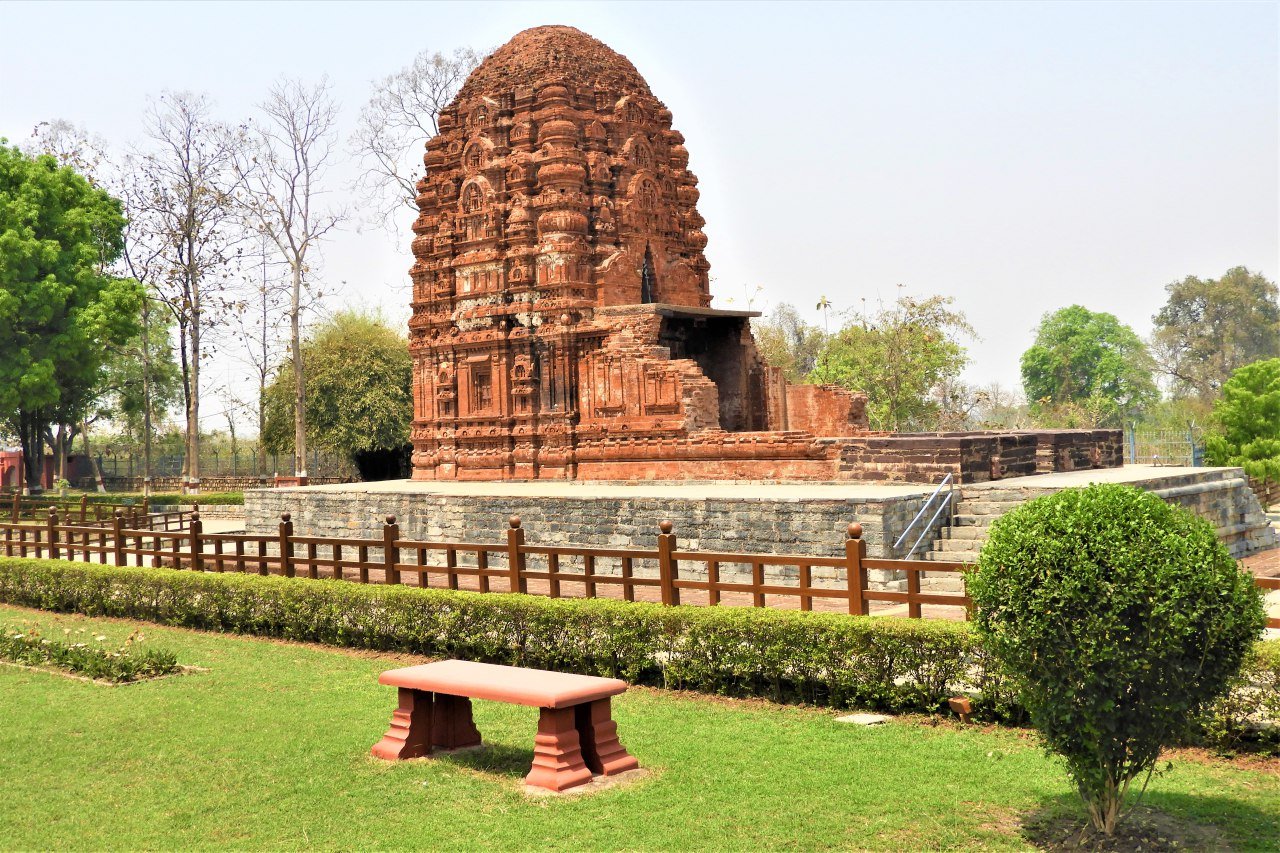
Famous for the Lakshman Temple, Buddhist monasteries, Surang Tila and remarkable architectural art, Sirpur encompasses nearly 1,500 years of glorious history.
Raipur, October 2026 : A significant achievement has emerged in the direction of securing international recognition for Chhattisgarh’s glorious historical, cultural and archaeological heritage. The ancient city of Sirpur, situated on the banks of the sacred Mahanadi River in Mahasamund district, has been included in the Tentative List of UNESCO’s World Heritage Sites.
This achievement marks a historic step towards establishing Chhattisgarh’s rich cultural heritage on the global platform. Famous for its ancient temples, Buddhist monasteries, rare sculptures, architectural splendour and unique tradition of religious tolerance, Sirpur is now moving forward towards obtaining World Heritage status.
Under the leadership of Chief Minister Shri Vishnu Deo Sai, the state government is continuously working to preserve and promote Chhattisgarh’s historical and cultural heritage and establish it on the national and international tourism maps. Under the guidance of Tourism and Culture Minister Shri Rajesh Agrawal, special emphasis is being placed on securing global recognition for the state’s important archaeological sites and expanding the possibilities of cultural tourism.
The inclusion of Sirpur in UNESCO’s Tentative List is being viewed as an important achievement in this direction. This development will provide international recognition to Sirpur’s historical significance and strengthen the prospects for expanding tourism activities in the future.
The Union Tourism and Culture Minister Had Inspected Sirpur
It is noteworthy that Union Culture and Tourism Minister Shri Gajendra Singh Shekhawat inspected Sirpur’s historical and archaeological sites on January 1, 2026. During the visit, he appreciated Sirpur’s rich heritage, ancient monuments and architectural art. He stated that necessary work should be undertaken for their preservation and promotion and that priority efforts should be made to secure Sirpur’s inclusion in UNESCO’s World Heritage List.
Sirpur, the Capital of Dakshin Kosala, Was an Ancient Centre of Religion and Culture
Sirpur’s history encompasses the remarkable heritage of Indian civilisation, religious tolerance, cultural harmony and architectural art. Known as Shripur in ancient times, the city served as the capital of Dakshin Kosala during the rule of the Panduvanshi kings. Situated on the banks of the Mahanadi, it was a major centre of political, religious, cultural and commercial activities.
Important evidence of Sirpur’s antiquity is available from the copper-plate inscriptions of Sharabhapuriya rulers Pravararaja and Mahasudevaraja. During the approximately 57-year-long reign of Panduvanshi ruler Mahashivagupta Balarjuna, Sirpur attained new heights of cultural and architectural development. Numerous temples, Buddhist monasteries, ponds and gardens were constructed during this period.
In the seventh century, the famous Chinese traveller Xuanzang also visited this region. His travel accounts mention the rich tradition of Buddhism here. During that period, the region is described as having approximately 100 Buddhist monasteries and around 10,000 monks belonging to the Mahayana tradition.
The greatest characteristic of Sirpur is the coexistence of Shaivite, Vaishnavite, Buddhist and Jain religious traditions. Despite being a follower of Shaivism himself, Mahashivagupta Balarjuna generously donated to and supported Buddhist monasteries. This fact establishes Sirpur as an important centre of religious tolerance and cultural harmony in ancient India.
Lakshman Temple: An Exceptional Example of Ancient Indian Brick Architecture
Sirpur’s world-famous Lakshman Temple is counted among the finest achievements of Indian architectural art. Constructed around the seventh century, it is one of the finest examples of ancient Indian temples built with bricks. The temple’s grandeur, artistic ornamentation, intricate carvings and construction techniques demonstrate the extraordinary talent of the artisans of that period.
Situated on a stone-built platform approximately seven feet high, this temple follows the Pancharatha style and consists of a sanctum sanctorum, an intermediate chamber and a mandapa. The temple’s outer walls feature chaitya windows, elephants, kirtimukhas, load-bearing figures and various ornamental motifs.
The temple entrance is a particular centre of attraction. Its upper section features an image of Lord Vishnu reclining on the serpent Shesha, while the door jambs beautifully depict various incarnations of Lord Vishnu, episodes from Krishna’s life and other mythological events. An image of the serpent king Shesha is installed in the sanctum sanctorum.
According to historical records, the Lakshman Temple was built by Queen Vasata, the mother of Mahashivagupta Balarjuna, in memory of her deceased husband, Harshagupta. Queen Vasata was the daughter of King Suryavarman of Magadha. The temple is believed to have been constructed around 650 AD. Even today, it remains a living symbol of Sirpur’s architectural talent and cultural richness.
Gandheshwar Mahadev Temple: A Confluence of Faith and History on the Banks of the Mahanadi
Situated on the sacred banks of the Mahanadi, Gandheshwar Mahadev Temple is an important centre of Sirpur’s religious traditions. Known as Gandharveshwar in ancient times, the temple continues to be a major place of faith for devotees.
Architectural fragments obtained from ancient temples and Buddhist monasteries have been used in the construction of this temple. Numerous artistic sculptures and archaeological remains are preserved within the temple complex. The carvings found here provide important information about the artistic traditions, mythological stories and religious life of that period.
Sirpur Was a Major Centre of Buddhism; Its Monasteries Display Remarkable Construction Techniques
Sirpur was an important centre of Mahayana Buddhism in ancient India. Archaeological excavations conducted here have uncovered the remains of numerous Buddhist monasteries. These monasteries had well-organised facilities for meditation, study, teaching and the residence of monks.
Among Sirpur’s prominent Buddhist monasteries, Anandaprabhu Kuti Vihar and Swastik Vihar are particularly noteworthy. Anandaprabhu Kuti Vihar was constructed during the reign of Mahashivagupta Balarjuna by a Buddhist monk named Anandaprabhu. The monastery has been identified on the basis of inscriptional evidence.
This monastery had 14 rooms for monks and was a two-storey structure. An approximately six-and-a-half-foot-high statue of Lord Buddha in the Bhumisparsha Mudra, or earth-touching posture, is installed in the monastery’s main chamber. Sculptures of Avalokiteshvara and other Buddhist figures have also been found here.
The nearby Swastik Vihar is famous for its distinctive ground plan. A statue of Lord Buddha in the Bhumisparsha Mudra has also been found here. The remains of these monasteries testify to the religious, educational and spiritual prosperity of ancient Sirpur.
Tiw ardev Mahavihar: A Magnificent Testament to the Buddhist Architectural Heritage of Ancient Dakshin Kosala
Excavations conducted in Sirpur during 2002–03 under the direction of Dr Arun Kumar Sharma uncovered the remains of the विशाल Tiw ardev Mahavihar. Built over an area of approximately 902 square metres, this Mahavihar is among the major Buddhist architectural sites of Dakshin Kosala.
Located approximately one kilometre east of the Lakshman Temple on the Kasdol road, this Mahavihar holds special significance for its vast size, decorated entrance and remarkable sculptural art.
The entrance of the Mahavihar features intricate depictions of animal figures, stories from the Panchatantra, contemporary social life and various artistic episodes. The famous story of the crocodile and the monkey, scenes involving animals and other ornamental designs demonstrate the imagination and sculptural skill of the artists of that period.
Remains of underground stone drains for water disposal and well-organised rooms have also been found within the monastery complex. These provide information about the advanced construction techniques and urban planning of ancient times.
Surang Tila and Ram Temple: Important Evidence of Architectural Grandeur
Surang Tila in Sirpur is also an important archaeological site because of its distinctive structure and ancient temple architecture. The temple remains, staircases and carvings discovered here provide information about the religious and architectural traditions of that period.
Similarly, the ancient Ram Temple, situated east of the Lakshman Temple, is another important historical structure built with bricks. Its present-day shikhara, or temple spire, has been destroyed, and only the remains of the temple walls survive. Its star-shaped plan and distinctive construction style make it archaeologically significant. The Lakshman Temple and the Ram Temple are believed to have been constructed several decades apart.
More Than 2,000 Archaeological Artefacts Have Revealed the Secrets of Sirpur’s Glorious Past
Archaeological excavations conducted at various stages in Sirpur have uncovered numerous layers of the ancient city’s rich history. More than 2,000 artefacts have been recovered during the excavations.
These include metal sculptures, sculptural panels, tools used for making ornaments, iron utensils, locks, chains, lamps, ritual vessels, earthen pots, glass bangles, baked-clay seals, toys and ancient coins.
A Chinese coin discovered here is particularly important from a historical perspective and is believed to belong to the period of the Chinese emperor Kai Yuan. In addition, coins associated with Sharabhapuriya ruler Prasannamatra and Kalachuri ruler Ratnadeva have also been recovered. These artefacts provide important information about Sirpur’s ancient commercial, economic and cultural contacts.
Sirpur Was a Famous Centre of Metal Sculpture During the Seventh and Eighth Centuries
Sirpur was renowned for producing exquisite metal sculptures during the seventh and eighth centuries. The sculptures created here represent the high tradition of Indian metal sculpture.
An important collection of metal sculptures was discovered at Sirpur in 1939. Prominent among them are statues of Lord Buddha, Avalokiteshvara, Padmapani, Vajrapani, Manjushri, Tara, Rishabhanatha and Lord Vishnu.
The facial expressions, expressive eyes, hand gestures, flowing folds of garments and intricate ornamentation of these sculptures demonstrate extraordinary artistic skill.
Many metal sculptures recovered from Sirpur are preserved in museums and institutions in Raipur, Nagpur, New Delhi and Mumbai. These artworks have also been exhibited in countries such as England, Germany and the United States. This highlights the international significance of Sirpur’s artistic tradition.
Sirpur’s Priceless Heritage Is Preserved in the Archaeological Museum
The museum established by the Archaeological Survey of India within the Lakshman Temple complex is an important centre for Sirpur’s ancient art and culture. Rare sculptures and architectural fragments associated with Shaivite, Vaishnavite, Buddhist and Jain traditions, recovered during excavations, are preserved here.
Particularly noteworthy exhibits in the museum include a four-faced Shivling, Mahishasuramardini, Narasimha, Ambika, Chamunda, Vishnu, Surya, Matrikas, Jain Tirthankaras and Lord Buddha.
In addition, a sculpture depicting the scene of Keshi’s slaying and an artistic statue of a female figure demonstrate the excellence of the sculptural art of that period. These sculptures display a remarkable combination of beauty, spirituality and artistic craftsmanship.
Remains of a Royal Palace Reveal the Grandeur of the Ancient City
Excavations conducted near the banks of the Mahanadi in Sirpur during 2000–01 under the direction of Dr Arun Kumar Sharma uncovered the remains of a vast complex, which was identified as the remains of a royal palace.
Important sculptures of Lord Vishnu and Goddess Lakshmi were also discovered here. These remains provide information about the political, administrative and cultural prosperity of ancient Sirpur.
Various excavations conducted between 2001 and 2004 brought to light the remains of numerous temples, Buddhist monasteries and other structures, further establishing Sirpur’s historical significance.
Global Recognition Will Give New Momentum to Cultural Tourism and the Local Economy
The inclusion of Sirpur in UNESCO’s Tentative List of World Heritage Sites is expected to provide a new direction to the possibilities of cultural, historical, religious and archaeological tourism in Chhattisgarh.
With Sirpur’s global recognition strengthening, the interest of domestic and international tourists, historians, archaeologists, researchers and followers of Buddhism may increase. This will also expand the possibilities of developing tourism services, hotels, homestays, transport, handicrafts, local cuisine and other employment-generating activities at the local level.
Sirpur’s Buddhist heritage, in particular, has significant potential to become part of the international Buddhist tourism circuit. The historical confluence of Shaivite, Vaishnavite, Buddhist and Jain traditions here can provide a distinctive identity to religious and cultural tourism.
An Important Milestone Towards Obtaining World Heritage Status
Inclusion in UNESCO’s Tentative List is an important initial stage in the process of securing World Heritage status for a historical site. Subsequently, detailed nomination documents in accordance with prescribed standards, conservation management arrangements and the evaluation process must be completed.
Sirpur’s rich archaeological heritage, unique brick architecture, ancient Buddhist monasteries, rare sculptures and the historical coexistence of different religious traditions present it as a culturally significant site at the global level.
This achievement is not merely about recognition for an archaeological site; it is also an important step towards establishing Chhattisgarh’s cultural consciousness, artistic talent, religious harmony and historical glory, which have evolved over thousands of years, on the world stage.
Preserving invaluable historical treasures on the banks of the Mahanadi for centuries, Sirpur is now moving forward on a new journey towards global recognition, carrying the radiance of its ancient culture. Along with presenting Chhattisgarh’s glorious past before the world, this achievement also conveys the message of preserving this priceless heritage for future generations.