Maharashtra to Launch Country’s First Sulphur Dioxide Emissions Trading Scheme
MoU Signed with University of Chicago to Use Artificial Intelligence in Environmental Inspections
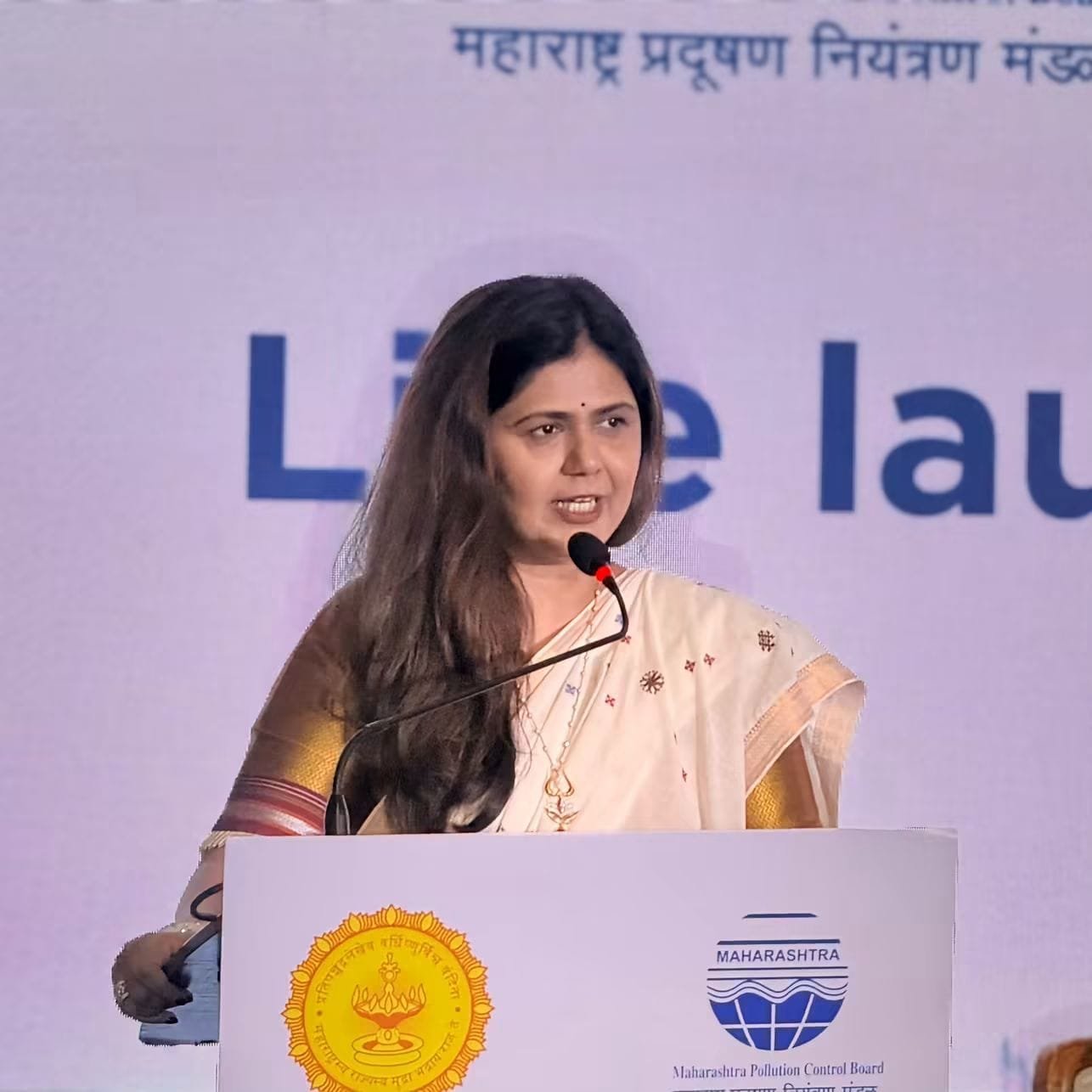
Mumbai, November 2026 : Maharashtra Environment and Climate Change Minister Pankaja Munde has said that the government’s approach is to develop solutions that strike a balance between environmental protection and economic development, in partnership with the industrial sector.
The Maharashtra Pollution Control Board (MPCB) has announced the country's first Sulphur Dioxide (SO₂) Emissions Trading Scheme to improve air quality across the state. The initiative will be implemented in collaboration with the Emissions Market Accelerator and is expected to benefit approximately 13 crore people in Maharashtra through improved air quality.
The scheme was announced at an event in Mumbai in the presence of Minister Pankaja Munde. Highlighting the growing environmental challenges amid rapid urbanisation, technological advancement and industrial development, she stressed the need to adopt modern technologies, including Artificial Intelligence (AI), to effectively monitor industrial pollution and strengthen administrative mechanisms.
The Emissions Market Accelerator is a global organisation operating through a partnership between the Energy Policy Institute at the University of Chicago and the Abdul Latif Jameel Poverty Action Lab (J-PAL). The Maharashtra Pollution Control Board will implement the emissions trading programme with its support.
Under the scheme, participating industrial units will be allocated permits specifying their permissible sulphur dioxide emission limits. Industries capable of reducing emissions at lower costs will be able to achieve additional reductions and sell their surplus permits. Industries for which emission reductions are relatively expensive will have the option of purchasing these permits.
This market-based mechanism is expected to provide financial incentives to industries to reduce pollution while ensuring effective emission cuts without compromising industrial competitiveness.
The Maharashtra Pollution Control Board has developed the necessary infrastructure over the past few years to generate accurate and reliable emissions data required for the scheme. This data will also support the formulation and effective implementation of environmental policies.
MPCB Chairman Siddhesh Ramdas Kadam described the initiative as an excellent example of innovative thinking and collective cooperation. He said the board's approach was not merely to regulate industries but to work alongside them to achieve progress.
He attributed the initiative's development to the active participation of industries and the support of knowledge partners such as the University of Chicago, Emissions Market Accelerator and J-PAL.
Professor Michael Greenstone, a distinguished Milton Friedman Professor of Economics at the University of Chicago, Director of the Energy Policy Institute and Co-Chair of the Emissions Market Accelerator, said research had demonstrated that market-based mechanisms could achieve significant emission reductions while lowering the cost of pollution control for industries.
At the same event, the Maharashtra Pollution Control Board and the University of Chicago Trust signed a separate Memorandum of Understanding (MoU) to introduce Artificial Intelligence and Machine Learning in environmental regulation and industrial inspections. The initiative will be implemented through the Energy Policy Institute at the University of Chicago India.
Under the agreement, the two institutions will jointly develop an AI-based environmental inspection framework and implement it initially on a pilot basis. The system will analyse data available with the pollution control board to identify industrial units that are more likely to violate environmental regulations.
Training and knowledge-sharing programmes will also be organised for MPCB officials and field inspectors on Artificial Intelligence, environmental data analysis and the use of modern technologies.
Based on the findings of the pilot project, a decision will be taken on expanding the AI-based inspection system across Maharashtra.
MPCB Chairman Siddhesh Ramdas Kadam and Professor Michael Greenstone were present at the event.