
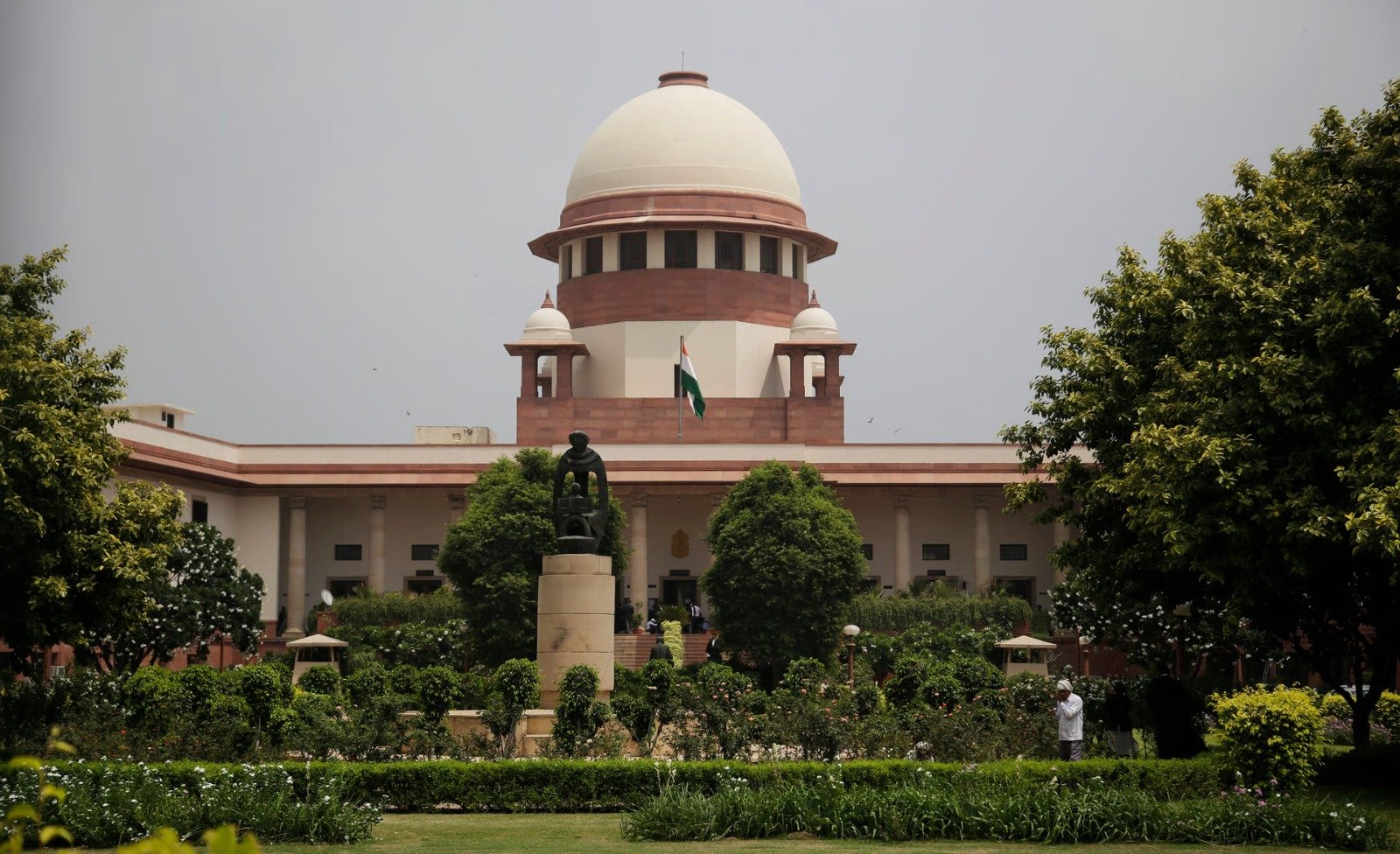
The Supreme Court has ruled that access to and use of the internet is a fundamental right under Articles 21 and 19(1)(a) of the Constitution, including for children irrespective of age. While emphasising the need to protect minors from Child Sexual Exploitation and Abuse Material (CSEAM), the court said safeguards must target harmful content and those responsible for its circulation rather than deny children internet access. It proposed child-friendly social media settings, parental oversight, age-appropriate digital safety and sex education, and better training for teachers to identify online grooming, abuse and harassment.
New Delhi,Oct 2026 : The Supreme Court on Saturday held that every individual, including children irrespective of age, has a fundamental right to access and use the internet. It emphasised that protecting children from online sexual exploitation must not mean denying them access to digital platforms, but instead requires effective action against harmful content and those responsible for creating and circulating it.
A bench comprising Justices J.B. Pardiwala and K. Vinod Chandran delivered the judgment while addressing the circulation of Child Sexual Exploitation and Abuse Material (CSEAM) on online platforms. The court observed that children's safety and freedom were not contradictory objectives and that they were entitled to both.
The ruling came on an application filed by Just Rights for Children Alliance (JRCA), seeking effective implementation of the Supreme Court's September 23, 2024, judgment in Just Rights for Children Alliance vs S. Harish. The earlier judgment dealt with the responsibilities of social media intermediaries to report suspected offences involving child sexual abuse material.
Internet Access Is a Fundamental Right Under the Constitution
In its judgment, the Supreme Court stated that the right to access and use the internet was a fundamental right under Article 21, read with Article 19(1)(a) of the Constitution. The bench made it clear that children enjoy the same rights, regardless of their age.
The court cautioned against the idea of completely denying children access to the internet as a means of protecting them from online dangers. It said such a position would be as unreasonable as suggesting that children below a certain age had no conscience worth protecting or freedom of speech worth expressing.
The bench, led by Justice Pardiwala, acknowledged that the internet was far from safe for children. However, it said protective measures must focus on harmful material and those responsible for making it available, rather than treating children themselves as the problem.
Keeping children away from the internet because of failures to control harmful content, the court observed, would amount to mistaking the victim for the problem.
Internet Plays a Critical Role in Education and Inclusion
Highlighting the importance of digital access, the Supreme Court described the internet as a marketplace of ideas, creative expression and information that benefits both adults and children.
For many children, particularly those living in remote areas, the internet is often the only accessible source of learning and information. The court also noted its importance for children with special needs, who may find opportunities for connection and companionship with others in similar circumstances through online platforms.
The observations underline the need to balance the protection of children from digital threats with their ability to learn, communicate, participate in public life and access information.
According to the bench, blanket restrictions on children's internet access are not necessarily an effective solution to online abuse. Their effectiveness remains unproven, and such restrictions could expose children to additional risks.
Blanket Restrictions Could Push Children Towards Unsafe Platforms
The Supreme Court pointed out that children do not necessarily stop using the internet simply because access is prohibited by law. Instead, they may continue using it without the knowledge of their parents or authorities, potentially turning to unregulated websites and platforms that offer even fewer safeguards.
The court also warned that strict restrictions could discourage children who experience online enticement, threats or exploitation from reporting such incidents to parents, guardians or other trusted adults.
Children may fear being reprimanded for accessing the internet in violation of restrictions. This could make them less willing to disclose abuse or seek assistance when they need it most.
The bench said such an outcome would undermine children's safety and defeat the objective of the Protection of Children from Sexual Offences (POCSO) Act. It stressed that children should be able to report inappropriate conduct without fear of punishment or blame.
However, the court clarified that its ruling did not rule out age-based safeguards. It acknowledged that measures were necessary to protect children online and regulate the content made available to them.
Supreme Court Proposes Child-Friendly Social Media Safeguards
Instead of imposing blanket restrictions, the court suggested a framework centred on parental consent, guidance and supervision, alongside dedicated child-friendly settings on social media accounts, particularly for pre-teens.
The suggested safeguards could include:
Private accounts by default: Children's accounts could be configured with stronger privacy settings from the outset.
Restrictions on unknown adults: Unsolicited contact and messages from unknown adults could be limited.
Age-appropriate content moderation: Advertisements and other content accessible to children could be screened and regulated.
Parental oversight: Parents and guardians could be encouraged to provide guidance and supervision suited to the child's age.
The court left the detailed implementation of such measures to the Union government.
It also clarified that its observations would not prevent the government from restricting children's access to particular categories of content or services that are inherently harmful to them, including adult-content websites.
Online Platforms Must Prevent Circulation of Exploitative Material
The Supreme Court emphasised the responsibility of online intermediaries to ensure that CSEAM and other material likely to harm children are not offered, hosted, uploaded, promoted or circulated through their platforms, including through paywalls or subscription-based services.
The bench called upon the Union government to formulate appropriate guidelines for scrutinising such material and adopting proportionate measures to regulate the content children can access or subscribe to.
The emphasis was on addressing the source and distribution of harmful material rather than limiting children's broader access to the internet.
The judgment thus highlighted the role of online platforms, regulators and government authorities in establishing safeguards that protect minors while preserving their fundamental rights.
Digital Safety and Sex Education to Be Integrated into School Curriculum
The Supreme Court also stressed that protecting children requires education and awareness from an early age. It called for children to be taught, from the primary school stage, about their bodies, safe and unsafe touch, consent, healthy relationships, respect for others and the safe use of the internet.
Children should also learn how to protect their personal information and privacy online and recognise warning signs associated with grooming, sexual extortion and other exploitative practices.
The bench said children must know whom to approach when confronted with inappropriate behaviour, whether it is a trusted adult at home or school, and which channels are available for reporting wrongdoing.
It particularly emphasised that children must be encouraged to speak up without fear. They should be assured that reporting abuse or inappropriate conduct would not invite reproach and that they would receive help and support with complete confidentiality.
NCERT, SCERTs and Schools Asked to Strengthen Child Protection
The judgment called for digital safety and age-appropriate sex education to become part of the core school curriculum.
The National Council of Educational Research and Training (NCERT) and the State Councils of Educational Research and Training (SCERTs) were tasked with developing the curriculum in consultation with child psychologists, educators and parenting experts.
The court also highlighted the need to train teachers and school staff to identify signs of grooming, abuse and online harassment. They should be equipped to respond appropriately when children disclose such incidents and understand their reporting obligations under the POCSO Act.
These measures are intended to ensure that schools serve not only as centres of learning but also as environments where children can recognise potential threats and seek timely help.
Balancing Children's Freedom with Protection
The Supreme Court's judgment underscores the importance of protecting children from online sexual exploitation without undermining their constitutional freedoms or access to education and information.
By calling for stronger regulation of harmful content, safer digital settings, parental guidance and comprehensive school-based awareness, the bench placed the emphasis on creating a safer online environment rather than excluding children from it.
The ruling also highlights the shared responsibility of government authorities, online intermediaries, parents and educational institutions in preventing abuse and ensuring that children can use digital platforms safely.
The central message is that children's right to access the internet and their right to protection must be upheld together. Effective safeguards, the court indicated, should empower children to navigate the digital world safely, recognise exploitation and report wrongdoing without fear.