Moscow pitches an extensive defence-industrial partnership as India balances immediate airpower requirements with its indigenous AMCA fifth-generation fighter programme.
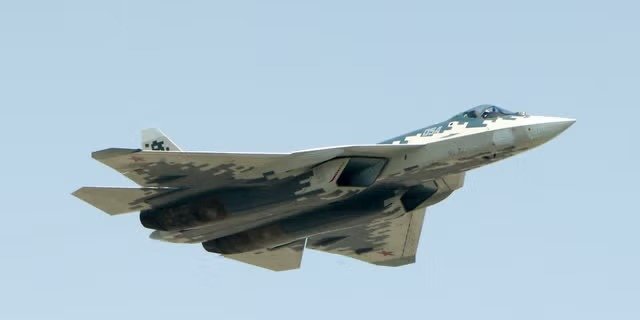
New Delhi, Oct 2026 : Russia has stepped up efforts to secure India as a partner for its export-oriented Su-57E fifth-generation stealth fighter, offering a package that goes beyond aircraft procurement to include domestic manufacturing, technology transfer and integration of Indian weapons and sensors. The proposal reportedly includes the local production of around 100 aircraft, alongside options for smaller batches of fighters manufactured in Russia.
The offer seeks to build on decades of defence cooperation between the two countries, particularly India's experience with the licensed production and maintenance of Russian-origin combat aircraft. However, New Delhi has yet to demonstrate an immediate commitment to a large-scale Su-57E acquisition, as it continues to prioritise fleet modernisation and the development of indigenous fighter technology.
Local Manufacturing at the Centre of Russian Proposal
A key component of Moscow's offer is the proposed assembly and manufacture of approximately 100 Su-57E fighters in India. Russian officials have reportedly identified Hindustan Aeronautics Limited's (HAL) Nashik facilities as a potential production location, drawing on the infrastructure and expertise developed through the licensed manufacture of the Su-30MKI fleet.
Using existing aerospace facilities, supply chains and skilled personnel could help reduce the cost and complexity of establishing a new production line. It could also create opportunities for Indian companies to participate in manufacturing, component supply and long-term aircraft support.
The proposal would potentially give India a greater role in the fighter's production and maintenance lifecycle, rather than relying exclusively on imports from Russia. The scale of localisation, however, would depend on the final agreement, production arrangements and the extent of technology sharing.
Technology Transfer and Indigenous Weapons Integration
Technology transfer is another significant feature of the reported Russian offer. Moscow has reportedly indicated a willingness to provide access to source code associated with onboard systems and mission software, an area where foreign suppliers generally impose restrictions.
If agreed upon and implemented, such access could give India greater control over software modifications, maintenance and future upgrades. It could also reduce dependence on the original manufacturer for certain changes to mission systems and operational capabilities.
The proposed package reportedly envisages integrating Indian-developed weapons, including the Astra beyond-visual-range air-to-air missile family and Rudram anti-radiation missiles, along with other indigenous precision-guided munitions.
The integration of Indian sensors and future gallium nitride-based active electronically scanned array (AESA) radars has also been discussed as part of the broader concept. These capabilities could help tailor the aircraft to the Indian Air Force's operational requirements, although the technical feasibility, certification process and precise scope of integration would need to be established.
Such arrangements could also offer Indian defence companies opportunities to contribute to the aircraft's systems and sustainment ecosystem.
Direct Deliveries Could Provide an Interim Capability
Alongside the proposed local manufacturing arrangement, Russia has reportedly discussed supplying smaller batches of fully built Su-57E fighters directly from its production lines. Options mentioned in different rounds of discussions have ranged from an initial eight aircraft to purchases of approximately 20 to 40 fighters.
These deliveries have been presented as a possible interim capability while India's indigenous fifth-generation fighter programme advances. An initial batch could allow the Indian Air Force to begin developing operational experience with stealth aircraft without waiting for a domestic platform to enter service.
The proposal comes amid growing regional interest in advanced combat aircraft. China continues to expand its fifth-generation fighter capabilities, adding to the strategic importance of stealth, advanced sensors, electronic warfare and long-range weapons in the region.
Nevertheless, acquiring a foreign fifth-generation aircraft would involve more than the purchase price. Training, maintenance, infrastructure, weapons integration, upgrades and long-term operating costs would all need to be assessed.
India's Priorities: Super Sukhoi, Rafale and AMCA
India's approach remains shaped by the need to address immediate combat-aircraft requirements while avoiding excessive pressure on its defence budget and domestic development programmes.
The ongoing Super Sukhoi initiative aims to modernise the Su-30MKI fleet through improvements to avionics, sensors, weapons and electronic warfare systems. The programme is intended to extend the operational relevance of one of the Indian Air Force's principal fighter fleets.
India is also pursuing additional Rafale acquisitions to strengthen frontline capabilities and address shortages in fighter squadron strength. These efforts form part of a broader strategy to maintain operational readiness while longer-term indigenous projects progress.
At the centre of India's future aerospace ambitions is the Advanced Medium Combat Aircraft (AMCA), its indigenous fifth-generation stealth fighter programme. The project is intended to build domestic capabilities in advanced aircraft design, stealth technology, mission systems and manufacturing.
A major commitment to the Su-57E would therefore need to be assessed against its potential impact on funding, industrial capacity and technical resources available for AMCA. Indian policymakers must also consider how a foreign platform would complement existing aircraft and future indigenous systems.
Lessons from the Earlier FGFA Project
India previously participated in discussions on the Fifth Generation Fighter Aircraft (FGFA) project based on Russia's Su-57 platform before withdrawing. Concerns over costs, the aircraft's capabilities and the terms of technology sharing contributed to the decision.
The renewed Russian offer appears designed to address some of those earlier concerns through greater localisation, broader industrial participation and potentially deeper access to technology.
However, the extent to which the new proposal resolves India's earlier reservations remains uncertain. Any agreement would require detailed technical evaluation, commercial negotiations and clarity on production responsibilities, intellectual property, upgrade rights and long-term support.
Russia's Su-57E offer presents India with a potential combination of advanced combat capability and domestic industrial participation. For New Delhi, the central question is whether the benefits would complement its existing fleet-modernisation plans and accelerate, rather than constrain, its ambition to develop an independent fifth-generation fighter capability.