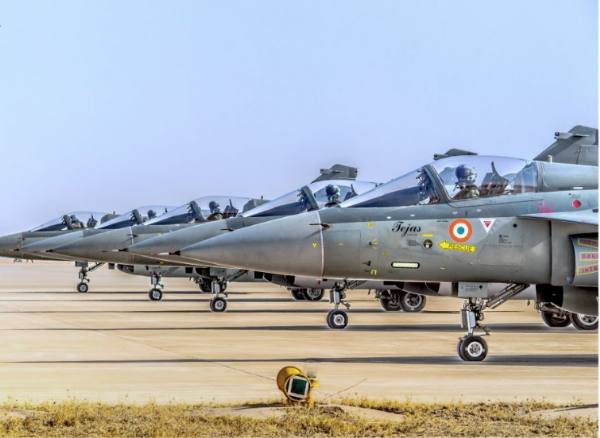
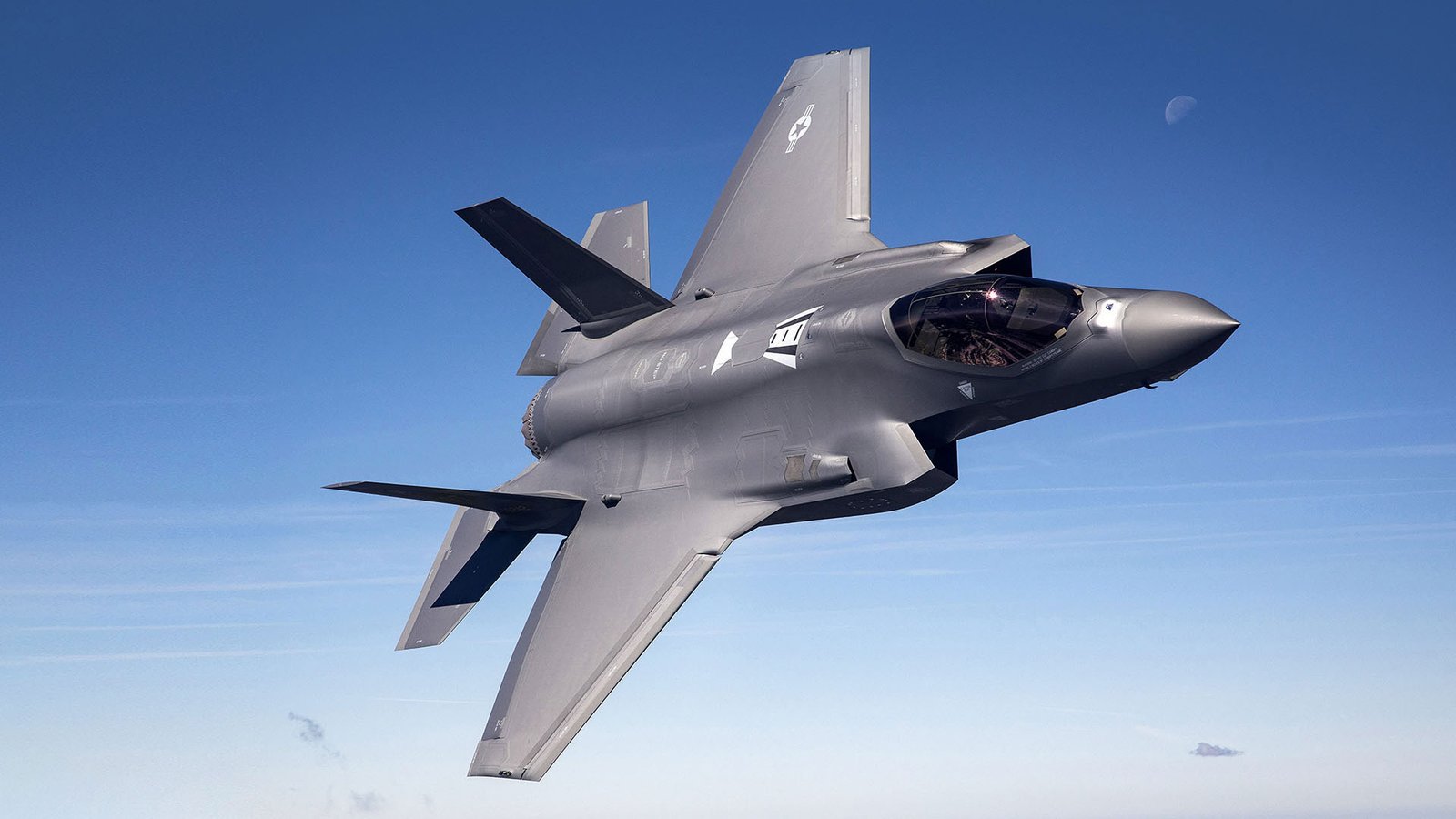
The arrival of six American F-35A Lightning II fighters at Exercise Tarang Shakti 2026 has renewed discussion about India's future fifth-generation combat aircraft requirements. However, the Indian Air Force Chief has clarified that the United States has made no formal offer to sell the F-35 to India. Any potential acquisition would involve more than evaluating the aircraft's advanced stealth and combat capabilities, requiring New Delhi to weigh technology access, dependence on American support systems, relations with Russia, concerns surrounding the S-400 air defence system and India's indigenous Advanced Medium Combat Aircraft (AMCA) programme.
New Delhi, Oct 2026 : The participation of six American F-35A Lightning II stealth fighters in Exercise Tarang Shakti 2026 has reignited debate over India's future combat aviation requirements and the possibility of acquiring a fifth-generation fighter from the United States. Speaking on DD India, retired Colonel Danvir Singh highlighted the strategic questions surrounding the aircraft and its potential implications for India's defence modernisation plans.
However, the discussion remains exploratory rather than part of an active procurement process. On October 10, 2026, the Indian Air Force Chief clarified that the United States had not made any formal offer to sell the F-35 to India.
The aircraft's appearance at the exercise has nevertheless provided an opportunity to examine its capabilities and the challenges India would face if it considered adding the platform to its fleet.
F-35 capabilities and operational advantages
The F-35 is regarded as one of the most technologically advanced combat aircraft currently in service. Its combination of stealth characteristics, sensor fusion, electronic warfare capabilities and network-centric operations is designed to provide pilots with enhanced situational awareness and the ability to operate in highly contested airspace.
Its sensors integrate information from multiple sources, helping pilots identify threats and coordinate operations with other aircraft and military assets. Its low-observable design is intended to reduce detection by enemy radar, while its electronic warfare systems support threat identification and response.
For India, these capabilities could be relevant to future operational requirements, particularly as neighbouring countries modernise their air forces and develop increasingly sophisticated air defence networks.
Yet, the question is not simply whether the F-35 is technologically advanced. Any acquisition would have to fit India's operational requirements, financial priorities, industrial ambitions and long-term strategic objectives.
Balancing defence ties with Washington and Moscow
India's expanding defence relationship with the United States is an important consideration in discussions about the F-35. Agreements such as the Logistics Exchange Memorandum of Agreement (LEMOA), the Communications Compatibility and Security Agreement (COMCASA), and the Basic Exchange and Cooperation Agreement (BECA) have strengthened logistical cooperation, secure communications and access to geospatial information.
These arrangements could provide a foundation for deeper military interoperability if India were to acquire additional American platforms. However, operating the F-35 would also connect India more closely to a US-controlled ecosystem of software, maintenance, mission systems and operational support.
This presents a strategic consideration for New Delhi, which has traditionally sought to diversify its defence suppliers and preserve freedom in its procurement and operational decisions.
Russia remains a major defence partner, and a substantial part of India's military inventory—including combat aircraft, air defence systems and armoured platforms—originates from Russian or Soviet-era designs. Integrating a sophisticated American aircraft into this existing environment could create technical, logistical and security challenges.
The Countering America's Adversaries Through Sanctions Act (CAATSA) adds another dimension to the issue. India has not faced US sanctions over its acquisition of the Russian S-400 air defence system, but future decisions involving advanced American and Russian military technologies could attract political and regulatory scrutiny.
S-400 system raises security questions
The compatibility of the F-35 with Russian-made air defence systems is among the most sensitive aspects of the debate.
US officials have previously raised concerns that advanced Russian radar systems could gather information about the electronic signatures and operating characteristics of stealth aircraft. Such information, if collected and analysed, could potentially undermine some of the advantages offered by low-observable platforms.
The issue has a precedent: Turkey was removed from the F-35 programme following its acquisition of the Russian S-400 system.
The presence of F-35 fighters at Tarang Shakti 2026 demonstrated that American stealth aircraft could participate in an exercise in India. It did not, however, establish whether the United States would approve long-term operations alongside Russian-origin systems or resolve questions relating to interoperability, data security and the protection of sensitive technology.
Reports that access to the aircraft was tightly controlled during the exercise also underscored the security restrictions surrounding the platform's advanced systems.
Technology access and long-term dependence
Technology transfer would be another critical issue in any potential acquisition. Purchasing a sophisticated fighter does not automatically grant the buyer unrestricted access to its software, mission systems, source code or other sensitive technologies.
The United States protects key F-35 technologies through stringent security arrangements. Operators generally depend on authorised upgrade pathways, approved modifications and support from the manufacturer and associated suppliers.
For India, this could affect its ability to integrate indigenous weapons, modify mission systems and adapt the aircraft to changing operational requirements without external approval.
New Delhi has consistently sought technology transfer and greater domestic industrial participation in major defence acquisitions. Any assessment of the F-35 would therefore need to establish the extent of access India could obtain and the degree of operational independence it could retain.
Lifecycle costs and sustainment would also require careful evaluation. The aircraft depends on a sophisticated international support network covering spare parts, maintenance, software updates and continuing capability improvements. While this system is intended to maintain operational effectiveness, it can create long-term dependence on the original supplier.
AMCA and India's indigenous fighter ambitions
India's own fifth-generation fighter programme is central to the debate. The Advanced Medium Combat Aircraft (AMCA) project aims to develop an indigenous stealth fighter and strengthen domestic aerospace capabilities.
The programme will require substantial investment, technological development and time before an operational aircraft can enter service. Nevertheless, it represents India's longer-term ambition to reduce dependence on foreign suppliers and exercise greater control over the design, maintenance and evolution of its combat aircraft.
A potential foreign acquisition would therefore need to be assessed alongside the resources and industrial priorities required for AMCA. Policymakers would have to consider how a purchase could complement, rather than undermine, India's indigenous development objectives.
Regional security developments add urgency to these decisions. China's expanding inventory of advanced combat aircraft and reports concerning Pakistan's potential fifth-generation fighter capabilities have intensified attention on India's future airpower requirements.
Ultimately, the F-35 debate is about more than the performance of a single aircraft. It concerns whether India can obtain advanced combat capabilities while preserving sovereign control over operations, technology, maintenance and future upgrades. With no formal US offer currently on the table, the aircraft remains a subject of strategic assessment rather than an established procurement plan.
(Disclaimer :The content of this article is sourced from a news agency and has not been edited by the Mavericknews30 team.)