Bengaluru, October 2026 : NewSpace Research & Technologies (NRT) has achieved an indigenous development milestone with the successful validation of a Rocket-Assisted Take-Off (RATO) booster for its Sheshnag-150 long-range unmanned aerial platform, potentially enabling launches from locations without conventional runway infrastructure.
The company's GryphonWorks team carried out the validation, marking a step towards improving the platform's deployment flexibility. The addition of the booster is expected to reduce dependence on vehicle-based and mobile highway launch arrangements, allowing operations from confined, unprepared and rugged forward locations.
The capability could provide greater flexibility in selecting launch sites and reduce reliance on fixed infrastructure. However, further operational testing and evaluation will be necessary before the system's readiness for frontline deployment can be established.
Indigenous long-range unmanned platform
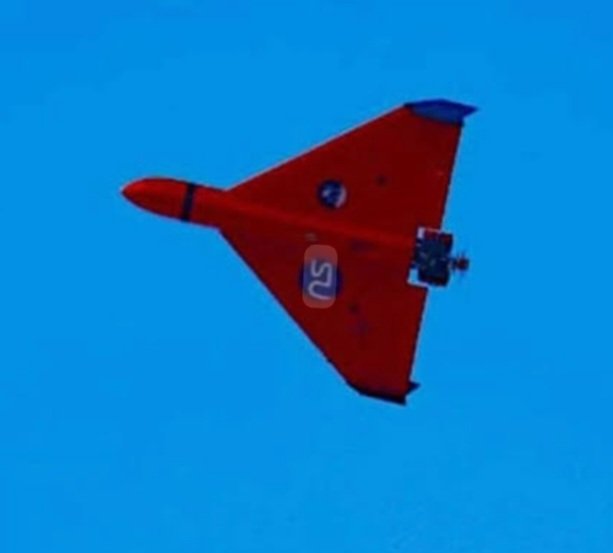
Developed by Bengaluru-based defence start-up NewSpace Research & Technologies, the Sheshnag-150 is an Indian long-range, swarming one-way attack drone designed for deep-strike missions. The platform has been developed under the Indigenously Designed, Developed and Manufactured (IDDM) category, supporting India's broader push for domestic defence technologies.
Belonging to the 150-kilogram weight class, the system is designed to combine extended endurance with precision-strike capability. According to the specifications provided, it has an operational range exceeding 1,000 kilometres and can remain airborne for more than five hours.
The platform is also reported to accommodate a high-explosive warhead weighing between 25 and 40 kilograms. Previous trials at Pokhran reportedly demonstrated a continuous flight path of approximately 720 kilometres before target engagement.
These performance figures reflect reported specifications and trial results; the latest RATO validation does not, by itself, establish that the platform has completed all operational qualification requirements.
AI-based swarm capabilities
A key feature of the Sheshnag-150 is its reported artificial intelligence-enabled swarm coordination. The technology is intended to allow multiple drones to coordinate their movements autonomously during flight.
Such systems are being explored for missions involving coordinated operations, although their performance depends on communications, navigation, software reliability and operational testing.
The platform is also reported to use AI-driven visual navigation to track targets when GPS signals are unavailable or disrupted. This capability could be relevant in electronic warfare environments where satellite navigation is subject to jamming.
Greater launch flexibility
The RATO booster validation is significant because it addresses a practical limitation associated with launching long-range unmanned aircraft from locations with limited infrastructure. Rocket-assisted take-off can provide additional initial thrust, potentially allowing an aircraft to become airborne from a shorter or otherwise unsuitable launch area.
For the Sheshnag-150, the development could broaden deployment options and improve flexibility in selecting operating locations.
The achievement also reflects the growing role of India's private defence industry in developing indigenous unmanned platforms and supporting technologies.
Further testing will be needed to establish the booster-equipped system's reliability, safety and performance across operational conditions. Its eventual integration into frontline service will depend on the outcome of these assessments and the relevant approval processes.
The milestone represents another step in NRT's development of indigenous unmanned systems, as India continues to expand domestic aerospace and defence capabilities.
(Disclaimer :The content of this article is sourced from a news agency and has not been edited by the Mavericknews30 team.)