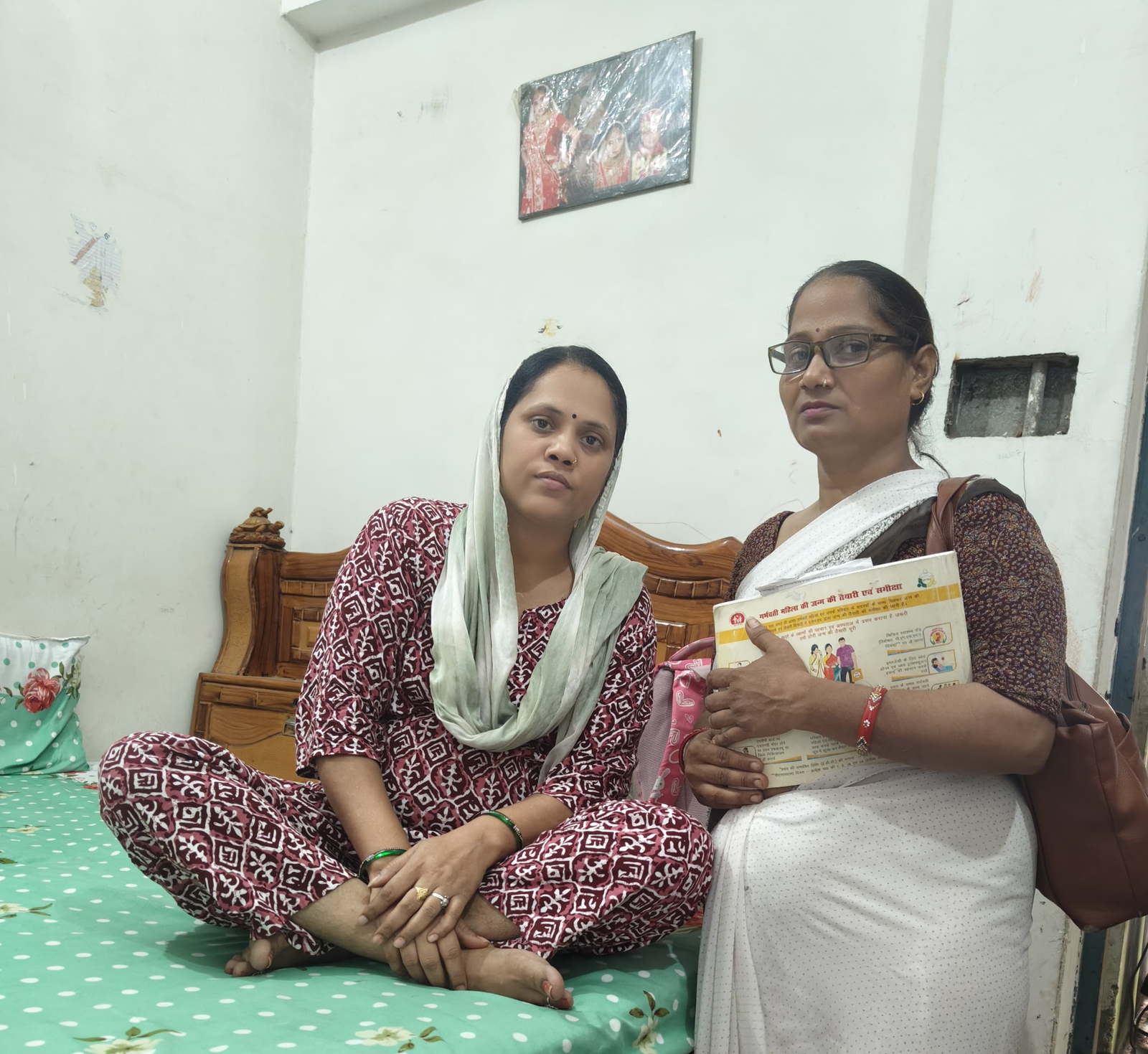
From facing taunts to earning national recognition, she has helped more than 3,000 women access healthcare schemes
Honoured nationally in New Delhi on January 26, 2025
Increased honorarium and incentives have strengthened ASHA workers financially
Aligarh, October 2026: During Navratri, when the country worships the nine forms of Goddess Durga, many women quietly serve society through their dedication and hard work. Rajbala Devi, an Accredited Social Health Activist (ASHA) worker from Aligarh, Uttar Pradesh, is one such example of strength and perseverance.
Once subjected to taunts for visiting homes to educate women about government healthcare schemes, Rajbala has emerged as an important link between thousands of women and essential health services. By overcoming difficult circumstances and criticism, she has earned the respect of people who once questioned her work.
Rajbala began working as an ASHA worker in 2006. At that time, awareness about the role of ASHA workers and government healthcare schemes was limited in rural areas. Her efforts to visit households and inform women about available services often invited criticism. Support from her family was also limited, but she remained determined.
Through consistent hard work and dedication, she gradually earned the trust of the community and established herself as a dependable healthcare worker.
Helped More Than 3,000 Women Access Government Schemes
Rajbala Devi has helped more than 3,000 women benefit from various healthcare schemes implemented by the Health Department.
To encourage institutional deliveries, she educated women in villages about the benefits of giving birth in hospitals and healthcare facilities. Her efforts have focused on ensuring that pregnant women receive timely medical care and that the health and safety of both mothers and newborns are protected.
Her commitment to maternal and child health reflects the strength and compassion associated with the feminine spirit celebrated during Navratri.
Taking Healthcare Schemes to Every Household
As an ASHA worker, Rajbala has played an important role in immunisation programmes, family welfare initiatives, Ayushman Bharat health cards and Aadhaar-related activities.
She has visited households to facilitate children's vaccination and spread awareness about family planning. She has also helped economically disadvantaged families obtain Ayushman cards, enabling eligible beneficiaries to access cashless hospital treatment of up to ₹5 lakh under the scheme, subject to its provisions.
Through these efforts, she has helped connect rural families with healthcare services and government welfare programmes.
Recognition from District to National Level
Rajbala Devi's outstanding contribution to public health has earned her recognition at the district, state and national levels.
At the district level, she received the 'Aligarh Ratna' honour. She was also recognised at the state level for helping take healthcare programmes to people across the community.
Her work received national recognition on January 26, 2025, when she was honoured in New Delhi by the Government of India's Department of Health and Family Welfare on Republic Day for her outstanding service.
The recognition was a proud achievement not only for Rajbala but also for Aligarh district.
Higher Honorarium and Incentives Provide Financial Support
According to Rajbala, ASHA workers received very low honorariums during the initial years of their service. The increase in honorariums and incentive payments under the Yogi Adityanath government has provided them with greater financial support.
The additional income has also made it easier for ASHA workers to manage household expenses, she said.
Rajbala's journey reflects the message of Navratri: respecting and empowering women is an essential part of building a stronger society. Like countless ASHA workers across the country, she continues to visit villages and households, helping protect community health through dedication and service.
Key Responsibilities of ASHA Workers
Supporting maternal and child healthcare services.
Promoting awareness about immunisation and nutrition.
Providing information on family planning.
Assisting in disease prevention and epidemic control.
Participating in campaigns to control communicable diseases.
Helping eligible beneficiaries access government healthcare schemes.