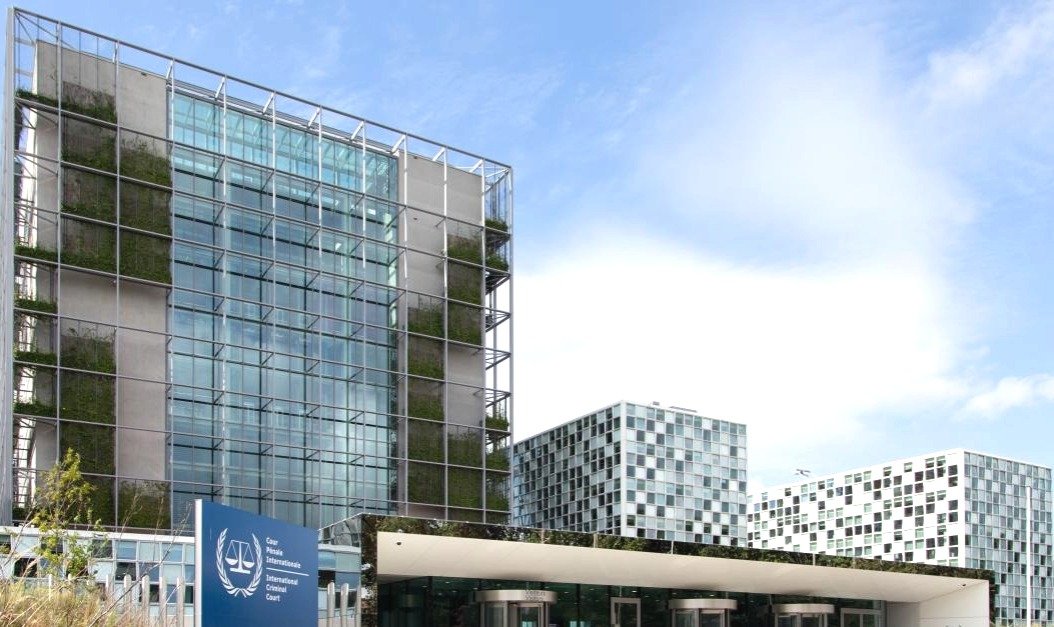
Geneva/Washington DC; October 2026: Yesterday early morning the United States Secretary Of States Marco Rubio has vowed to dismantle the International Criminal Court (ICC) ‘brick by brick’ unless it ends what the US regards as a “threat” to its citizens, and furthermore, imposing sanctions on the ICC as an institution.
The court has hit back forcefully, calling the step unprecedented, following sanction measures by the US already in place against 13 judges and prosecutors. ICC President Tomoko Akane has lambasted the United States asserting that: “Today, the United States has imposed sanctions on the International Criminal Court as an institution. This unprecedented step follows a series of designations against thirteen independent Judges and prosecutors who serve the cause of justice. This measure targets an independent judicial institution, created by treaty and entrusted by 125 States Parties with investigating and prosecuting genocide, crimes against humanity, war crimes, and the crime of aggression. It is an attempt to obstruct the course of justice and to prevent the Court from doing what it was created to do. It is an assault on the rule of law and on the very foundations of the international legal order which strikes at the simple principle that no one stands above the law”.
The designation is aimed at disrupting the Court’s operations and at intimidating those who work for or cooperate with the Court. The Court, for its part, will not be deterred. “The Court will continue to fully discharge its mandate, with independence and impartiality, acting only on the basis of the law and the evidence, for the sake of the countless victims of grave crimes”, said ICC President Tomoko Akane.
Yet the Court cannot stand alone. Its fate now rests also in the hands of the States that created it. The Rome Statute is a collective promise that the most serious crimes of concern to the international community as a whole must not go unpunished. That promise is only as strong as the resolve of those who made it.
There may be challenges. But, together with its States Parties, the Court has made considerable efforts to ensure the continuity and resilience of its activities. The Court calls upon States to continue taking concrete actions, including to ensure that the Court continues to have the necessary means to continue its work. This is not just about defending a single institution, but about safeguarding the international order grounded upon the rule of law.
No one should be punished for serving the cause of justice. History will judge this moment. Future generations, and above all the victims of mass atrocities, will ask how we responded when an institution created to protect them came under attack. They will ask whether the Court held firm and whether the international community defended the principles it proclaimed or allowed them to be abandoned under pressure.
UN Secretary-General António Guterres has strongly criticised the US decision, according to his spokesperson, Stéphane Dujarric.
“The Secretary-General condemns the announcement of the imposition by the United States of sanctions against the International Criminal Court as an institution. The Secretary-General is deeply alarmed by the expected impact of today’s sanctions on the International Criminal Court as a whole, and in particular, its continued ability to perform its important mandates, including in relation to the situations referred to it by the Security Council and States Parties to the Rome Statute.
Today’s decision marks a serious blow to our collective pursuit of international criminal justice, of which the ICC is a key pillar.Accountability for international crimes and delivery of justice to victims are central to our global commitment to peace, security, human rights and fundamental freedoms. The Secretary-General reiterates his unwavering support for the independence of the Court and its officials.
The Secretary-General calls upon all States to uphold their commitments under international law and to support efforts aimed at ensuring accountability for the most serious crimes of concern to the international community. The United Nations remains committed to cooperating with the ICC in accordance with the Relationship Agreement between the United Nations and the ICC, which was approved by the General Assembly on 13 September 2004”.
Independent UN human rights experts warned separately that the US sanctions were a “brash attempt” to dismantle a collective international legal system to hold perpetrators of the gravest crimes to account. They called on States committed to the rule of law to stand together in defence of the court and its independence.
The US Government’s imposition of sanctions on the International Criminal Court (ICC) as an institution is a brash attempt to dismantle the international legal system created by States, jurists, human rights advocates and other stakeholders to hold perpetrators of the gravest crimes to account, UN experts warned today, calling on States committed to the rule of law to stand together in defence of the Court and its independence.
“Sanctioning the institution entrusted with delivering justice for the gravest international crimes is an assault on the foundations of international accountability and rule of law,” the experts said. “No State should place itself beyond the reach of the law by intimidating the court established to enforce it and attempting to dismantle it. This attack on the ICC directly injures the victims of atrocities and their advocates, who rely on the ICC for justice, accountability and reparation”, the experts said.
The United States today imposed sanctions on the ICC as an entity. The US Government had already sanctioned more than 10 current or former ICC judges and personnel, and one UN Special Rapporteur, under US Executive Order 14203 of 2025.
“These sanctions are an egregious assault by one country against the international administration of justice and the international criminal accountability gains against impunity for the gravest crimes. The sanctions are aimed at bringing the ICC to its knees; and ensuring US allies are not held accountable for genocide, war crimes and crimes against humanity. If ever there was a moment for States committed to an international rules-based order, to accountability for atrocity crimes, to the defence of human rights, and to the principle that no one is above the law, to stand up and be counted, it is now”, they warned.
“The international criminal justice system forged in the fires of Nuremberg and Tokyo, and the International Criminal Tribunals for the former Yugoslavia and for Rwanda, stands on a razor’s edge. Sanctioning the institutions at the heart of international justice risks dismantling, piece by piece, the system States built to ensure that the gravest crimes do not go unanswered. As a global community, we cannot let one State launch unilateral attacks against the Court. The ICC was built by humanity, created through the coordinated actions of states across the world, and its essential work for victims of the most serious crimes must continue”.
The experts called on the European Union to immediately activate the EU Blocking Statute, to prevent its operators – including banks and service providers - from complying with third country sanctions that violate international law. Other States with similar statutes should activate them as well to protect the Court, its personnel, victims, and those engaging with the ICC.
The experts also reiterated calls to Member States to ratify and use the Agreement on Privileges and Immunities of the ICC to mitigate the effects of the sanctions. The experts urged Member States whose nationals work at the ICC—the court employs citizens from about 100 countries, to take concrete steps to ensure nationals do not bear the brunt of the sanctions alone. They also encouraged States to ensure protection for civil society organisations and human rights defenders who support and cooperate with the Court.
“It is time for States to stand together in defence of this Court and the international justice system it embodies. Silence and inaction will only embolden further attacks. States must act collectively now to protect this Court”.
Team Maverick.