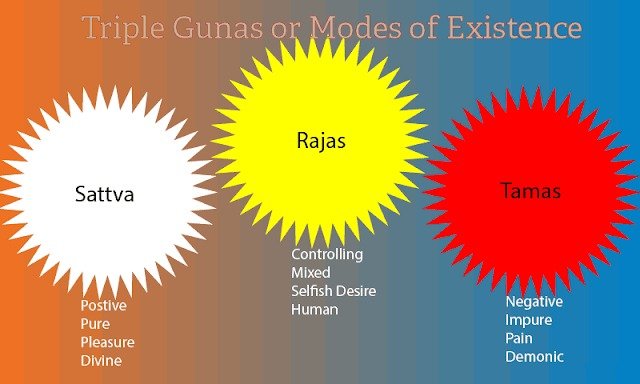
What are we choosing in life? And why have sages and spiritual seekers traditionally been drawn to forest regions for spiritual practices?
1. Tamasic Worship — Rudimentary Practices and the Shudra Varna
Tamasic spiritual practices are an important subject to understand. Are you familiar with these practices? Understanding them, according to this spiritual framework, may help you manage and channel your lower impulses.
This involves important stages of inner discipline, control at subtle levels, control at the level of information and data, and in-depth study. One could describe this as an intensive level of effort, involving foundational practices that are referred to as Kshudra.
In other words, this may also be understood as the initial stage of the Brahmacharya Ashrama, or the student stage of life. It can also be associated with Dharma Purushartha—the pursuit of duty and righteous living.
2. Rajasic Worship — Kshatriya and Vaishya Duties and Varna
Rajasic worship involves action, ambition, organisation and engagement with the world.
Certainly, you need support. You need followers and people who can help you move forward. Senior-level positions, management, directors, CEOs and various administrative processes fall within the realm of Rajasic activity. This is associated with the Artha (material prosperity) and Kama (desires and fulfilment) dimensions of life.
In other words, these activities may be associated with the Grihastha Ashrama, the householder stage, and the Vanaprastha Ashrama, the stage of gradual withdrawal from worldly responsibilities.
3. Sannyasa — The Path of Brahmanhood
The final stage is Sannyasa, associated here with Brahmanatva—the pursuit of spiritual wisdom and the realisation of Brahman.
The idea is clear: at this stage, the emphasis shifts towards inner understanding and spiritual clarity. There is no need to divide ourselves rigidly into Brahmin, Vaishya, Kshatriya and Shudra categories.
Instead, try to understand that Brahmatva—the realisation of the ultimate spiritual truth—is the essence of Sannyasa.
Everything else you see around you relates to responsibility, worldly life and the right to live. The time has come to reflect on when, how and in what manner we choose to live our lives.
This is the essence of Trishakti Upasana—the worship of the Three Divine Powers.
Vidya Bhawan Astro Research Centre
Jitendra Saxena