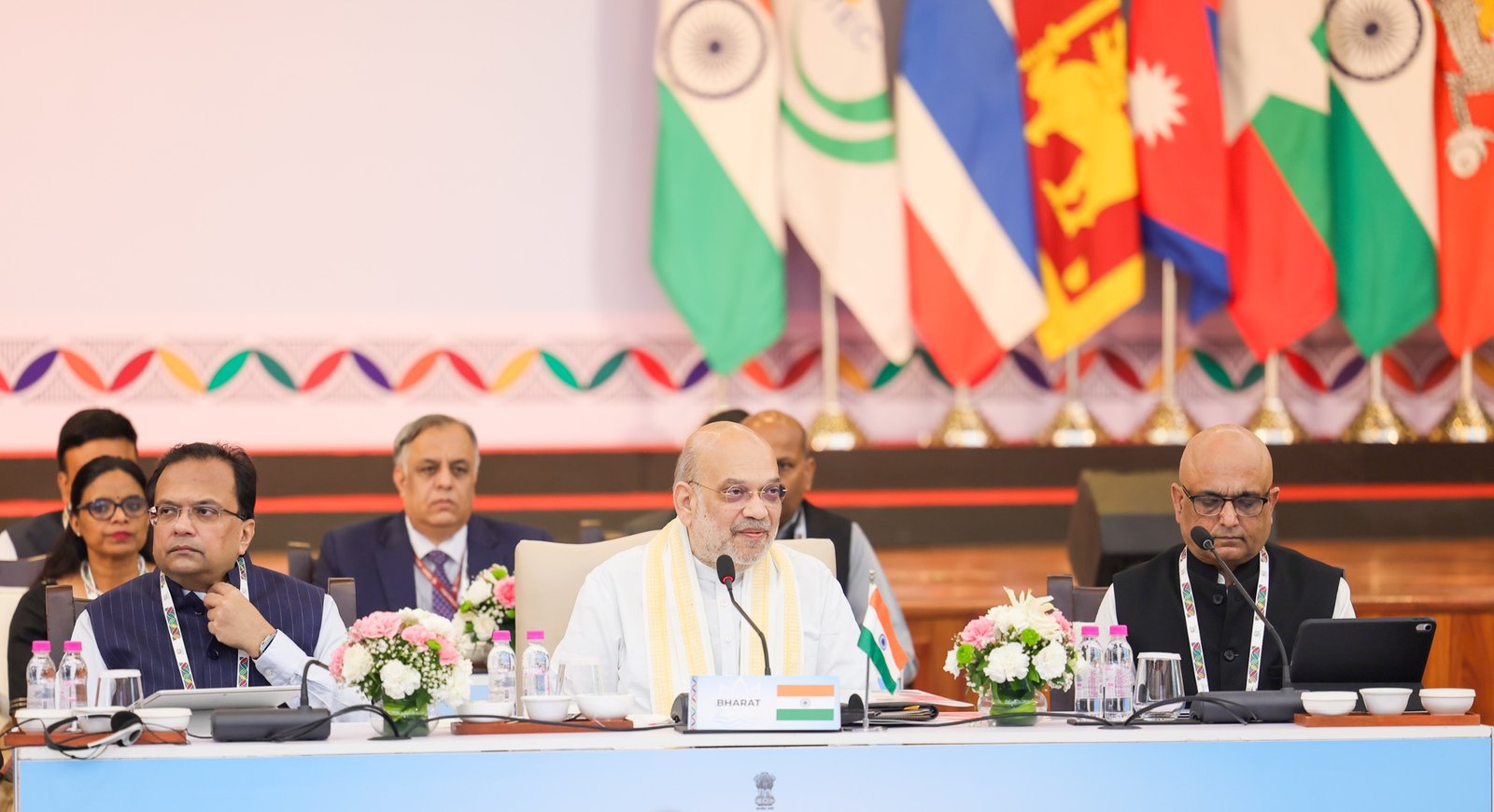

New Delhi, October 2026 : The seven member countries of BIMSTEC have agreed to strengthen regional cooperation to tackle major security challenges, including terrorism, drug trafficking, cybercrime, human trafficking and organised crime. At the first BIMSTEC Home Ministers’ Meeting, held in New Delhi on Tuesday under the chairmanship of Union Home Minister Amit Shah, the participating nations adopted a joint declaration on regional security and approved five key agreements and action plans.
According to the Union Home Ministry, the meeting reaffirmed the members’ commitment to collective efforts for peace, security and development across the Bay of Bengal region. The discussions focused on cross-border terrorism, radicalisation, illicit drug trafficking, human trafficking, cybercrime and organised criminal networks.
The outcomes are intended to strengthen coordination among law enforcement agencies, improve information-sharing and build the capacity of member countries to respond to shared threats.
Delhi Declaration Emphasises Regional Security
The BIMSTEC member countries adopted the Delhi Declaration, agreeing to enhance cooperation in preventing cross-border crimes and strengthening coordination among law enforcement agencies.
The declaration identifies intelligence-sharing, mutual legal assistance, extradition of offenders and capacity-building as key areas for cooperation. It also emphasises the effective implementation of existing agreements and action plans to ensure that regional commitments translate into coordinated action.
The member countries also highlighted the need to protect women and children who are trafficked and subsequently forced into online fraud and other criminal activities. The issue underscores the growing intersection between human trafficking, cybercrime and organised criminal networks.
The declaration seeks to encourage closer cooperation among the seven countries in investigating transnational offences and improving the effectiveness of their respective security agencies.
BIMSTEC Convention on Human Trafficking Approved
One of the major decisions at the meeting was the approval of the BIMSTEC Convention on Human Trafficking.
The proposed framework aims to strengthen cooperation among member countries in preventing trafficking, taking legal action against offenders, and ensuring the protection and rehabilitation of victims.
The agreement places particular emphasis on safeguarding women and children, who are often vulnerable to exploitation by trafficking networks. It also seeks to improve coordination between countries in handling trafficking cases and responding to crimes that cross national borders.
Through stronger cooperation, member countries aim to improve the identification and protection of victims while facilitating action against those responsible for trafficking and exploitation.
The initiative also recognises the need to address cases in which trafficking victims are exploited for online fraud and other illegal activities.
Joint Action Against Drug Trafficking and Terror Financing
The home ministers approved a BIMSTEC action plan to combat illicit drug trafficking. The plan focuses on preventing the illegal trade in narcotic drugs, psychotropic substances and chemicals used in the manufacture of prohibited drugs.
Union Home Minister Amit Shah described drug trafficking as a serious threat to young people and the future of society, calling for a coordinated regional response to the problem.
The meeting also approved a memorandum of understanding on capacity-building to combat money laundering and terrorist financing.
Under this framework, member countries will cooperate in specialist training, financial intelligence, investigations and the recovery of assets generated through criminal activities.
The initiative aims to strengthen the ability of participating nations to identify and disrupt financial networks that support terrorist organisations and organised crime. Cooperation in financial investigations is also expected to help authorities trace illicit funds and take action against those involved in laundering money or financing terrorism.
Action Plan to Curb Illegal Financial Flows
A separate action plan was approved to identify and prevent illicit financial transactions.
The initiative focuses on identifying the sources of illegal funds, assessing potential risks and examining the channels through which money is transferred across borders.
Member countries stressed the importance of sharing information on financial crimes and improving coordination among the institutions responsible for monitoring and investigating suspicious transactions.
Illegal financial flows can facilitate organised crime and terrorism by allowing criminal networks to move and conceal money. Cooperation among financial authorities and investigative agencies is therefore a key component of the broader regional security framework.
The action plan is intended to help member countries improve their ability to detect suspicious transactions and respond to financial crimes that extend beyond national jurisdictions.
Regional Strategy for Natural Disaster Preparedness
The fifth major initiative focuses on strengthening preparedness and coordination in responding to natural disasters across the Bay of Bengal region.
Under the action plan, BIMSTEC members will cooperate on joint exercises, early-warning systems, disaster-risk mapping, training facilities, research and technological innovation.
Reducing tsunami risks and ensuring the rapid exchange of information during emergencies are also important elements of the initiative.
The Bay of Bengal region faces recurring threats from cyclones, floods and other natural disasters. Better coordination and timely information-sharing can help countries prepare for emergencies and improve the effectiveness of disaster response operations.
The plan seeks to strengthen collective preparedness by encouraging members to share expertise, improve warning mechanisms and develop capabilities for responding to disasters affecting the region.
Amit Shah Reiterates India’s Zero-Tolerance Policy on Terrorism
Addressing the meeting, Amit Shah reiterated that India follows a policy of zero tolerance towards terrorism.
He urged BIMSTEC members to ensure that terrorist organisations are denied opportunities to find safe havens, recruit members, conduct training or obtain financial resources anywhere in the region.
Shah also emphasised the importance of collective action against drug trafficking, warning that the illicit trade poses a serious danger to young people and society. He called for a unified regional approach to address the challenge.
His remarks highlighted India's emphasis on cooperation among neighbouring countries to prevent terrorist networks and organised criminal groups from exploiting cross-border gaps in law enforcement.
Seven-Nation Partnership
BIMSTEC comprises India, Bangladesh, Bhutan, Nepal, Sri Lanka, Myanmar and Thailand. The regional organisation promotes economic, technological and security cooperation among countries in and around the Bay of Bengal.
The decisions taken at the first Home Ministers’ Meeting mark an effort to expand cooperation on shared security challenges. Member countries have stressed that terrorism, organised crime and cyber threats require coordinated regional strategies alongside national measures.
The Delhi Declaration and five approved initiatives provide a framework for closer collaboration in law enforcement, financial security, counter-terrorism, human trafficking prevention and disaster management.
The participating countries have reaffirmed their commitment to working together towards a safer and more secure Bay of Bengal region.