School Education and Women and Child Development departments asked to frame guidelines based on local requirements
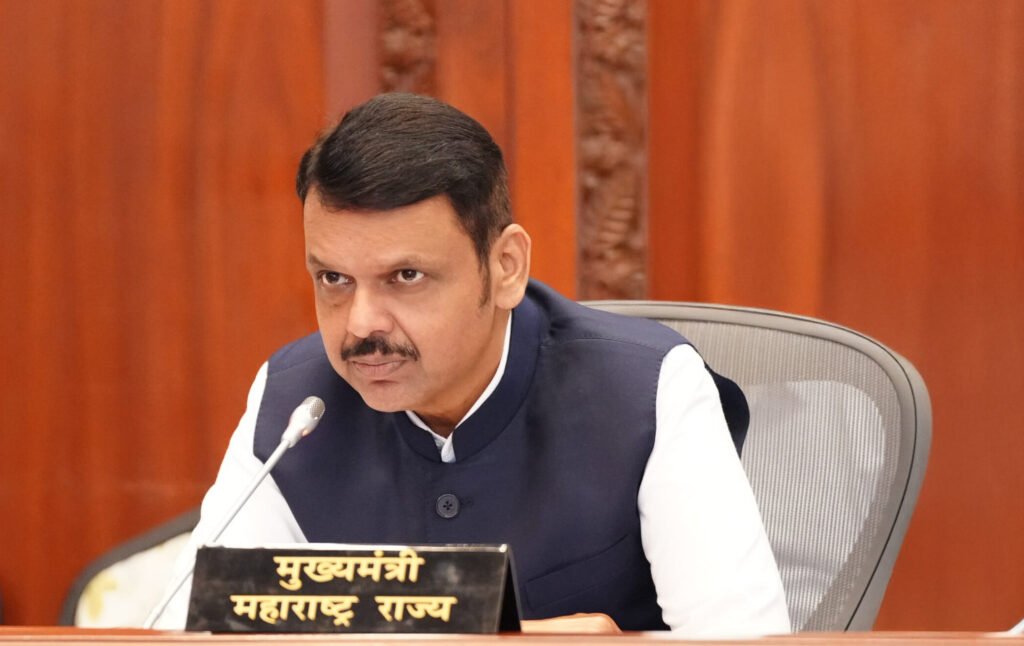
Mumbai, October 2026: Maharashtra Chief Minister Devendra Fadnavis has directed the School Education and Women and Child Development departments to formulate a joint policy to ensure that students receive fresh, nutritious and quality meals on time under the Pradhan Mantri Poshan Shakti Nirman Yojana.
He said district-level authorities should be given the flexibility to take decisions based on local conditions. The departments should jointly prepare the necessary guidelines for implementing the scheme, he added.
Fadnavis also directed officials to examine the feasibility of extending the benefits of the nutrition programme, currently available to students up to Class 8, to students up to Class 10 and submit a proposal in this regard.
A review meeting of the Pradhan Mantri Poshan Shakti Nirman Yojana was held under Fadnavis's chairmanship at Sahyadri Guest House. School Education Minister Dadaji Bhuse, Women and Child Development Minister Aditi Tatkare, Minister of State Meghana Sakore-Bordikar, Chief Secretary Rajesh Agrawal and senior officials from both departments attended the meeting. Commissioners of municipal corporations, district collectors and chief executive officers of Zilla Parishads participated online.
Local Solutions for Timely Meal Distribution
Fadnavis said centralised kitchens should be adopted in urban areas and in rural locations where the model is practical. However, in remote and tribal areas, where transporting food from centralised kitchens may cause delays, alternative arrangements should be made through gram panchayats.
Before implementing the centralised kitchen model, authorities should assess at the local level whether fresh meals can be delivered to schools on time. Wherever feasible, self-help groups should be entrusted with meal distribution, he said.
District collectors, Zilla Parishad chief executive officers and municipal commissioners should take decisions based on local requirements and feasibility. Clear standards should also be established for food quality, service delivery and payment mechanisms.
The Chief Minister directed the School Education and Women and Child Development departments to jointly assess demand at the district level and coordinate available resources so that the scheme can reach students more effectively.
Before finalising the joint policy, suggestions from district collectors and Zilla Parishad chief executive officers should be considered to identify local challenges and necessary changes. A joint proposal incorporating practical recommendations should subsequently be placed before the Cabinet, he said.
Greater Focus on Local, Protein-Rich Foods
Fadnavis directed district collectors to convene meetings of district-level nutrition committees and plan to include locally available protein-rich foods in students' meals. Zilla Parishad chief executive officers should coordinate the process.
The Chief Minister also suggested considering nutritious options, including millet-based preparations, while taking into account local food habits and students' preferences.
School Education Minister Dadaji Bhuse suggested expanding the network of centralised kitchens and providing funds to gram panchayats so that they can take responsibility for supplying nutritious meals locally.
He also urged the state to request the Centre to reduce the quantity of rice and increase the proportion of other grains in school meals. Bhuse said health cards were being prepared for school students and that health check-ups would henceforth be conducted in the presence of parents.
Anganwadi Nutrition Programme
Women and Child Development Minister Aditi Tatkare said her department was entrusting ISKCON with the supply of nutritious food to 30 Anganwadi centres in urban areas. The number of centres covered under the initiative would be increased after assessing its effectiveness, she said.
Tatkare suggested giving district-level nutrition committees, headed by district collectors, the authority to decide on meal arrangements based on local conditions and availability. She also advocated serving fresh food suited to local requirements instead of relying primarily on pre-mixed or fortified products.
Chief Secretary Rajesh Agrawal suggested that refined flour should not be used in nutritious meals.
Officials from the School Education Department, Women and Child Development Department and representatives of ISKCON's Annamrita Foundation made presentations on the centralised kitchen model.
Scheme Covers Over 85,000 Schools
The Pradhan Mantri Poshan Shakti Nirman Yojana currently benefits students from Classes 1 to 8 in 85,206 eligible schools across the state, including institutions run by the state and Central governments, local bodies, private aided and partially aided schools.
Under Central government norms, students from Classes 1 to 5 are provided meals containing 450 calories and 12 grams of protein, while students from Classes 6 to 8 receive meals containing 700 calories and 20 grams of protein.
To provide variety in the menu, 12 types of preparations have been prescribed, including different varieties of pulao, khichdi, usal and dal-rice.