Centre, States/UTs Reaffirm Commitment to Faster Telecom Infrastructure Deployment and Citizen-Centric Digital Services
State Government IT Ministers and Secretaries discussed RoW Reforms, BharatNet, 4G Connectivity and Digital Inclusion at IMC 2026 Roundtable
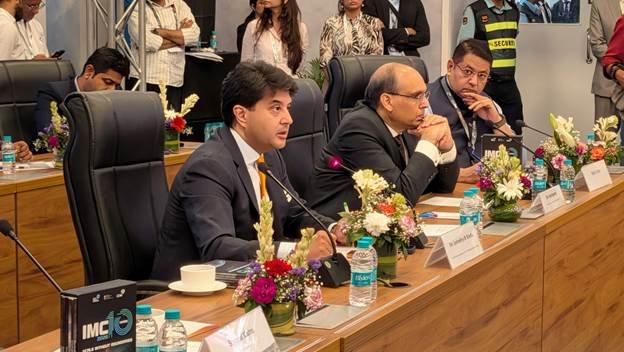
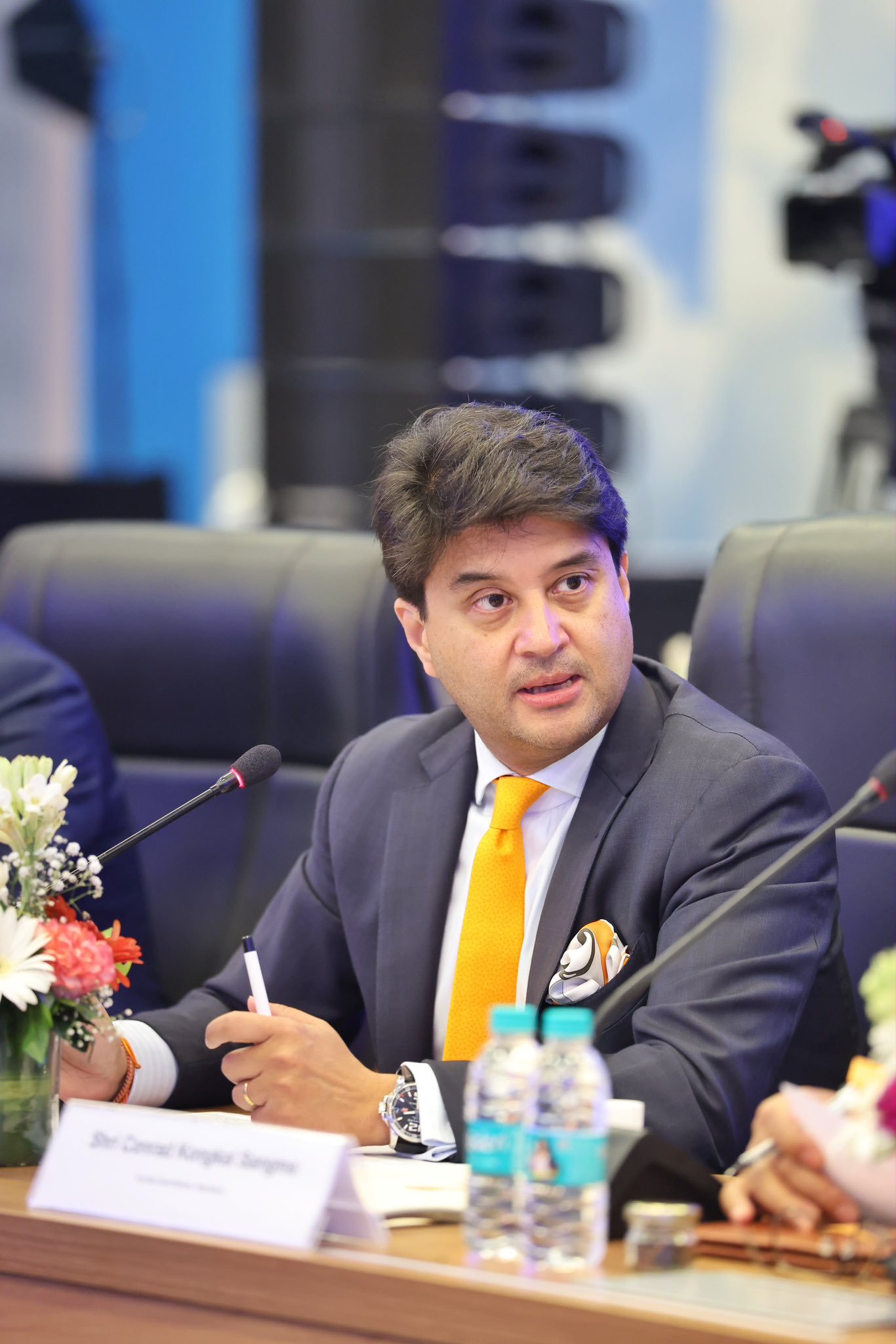
The Department of Telecommunications (DoT), Ministry of Communications, organised a high-level Roundtable Conference with State Government IT Ministers and Secretaries on the sidelines of the India Mobile Congress (IMC) 2026. The Roundtable was chaired by Shri Jyotiraditya M. Scindia, Union Minister for Communications and Development of North Eastern Region, along with Dr. Chandra Sekhar Pemmasani, Union Minister of State for Communications & Rural Development, and Shri Amit Agrawal, Secretary, Department of Telecommunications.
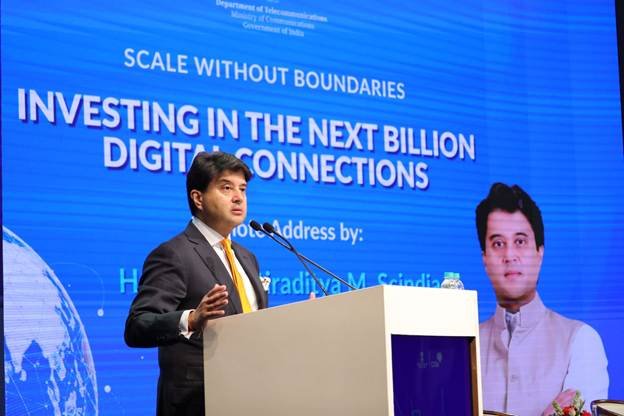
The Roundtable provided a platform for structured dialogue and coordination between the Centre, States and Union Territories (UTs) on key issues concerning telecommunications, digital infrastructure and citizen-centric digital services. In line with the theme of IMC 2026, “Scale Without Boundaries”, the discussions focused on scaling digital connectivity, accelerating infrastructure deployment and strengthening Centre–State cooperation to support India’s digital transformation and the vision of Viksit Bharat by 2047.
Addressing the meeting, Union Minister for Communications and Development of North Eastern Region Shri Jyotiraditya M. Scindia said, "Telecom may be a Union subject, but digital infrastructure is built on State soil making our States true co-owners in driving National Broadband Mission 2.0. To realize Viksit Bharat @2047, we must act as Team India by accelerating Right of Way approvals to unlock SASCI capital incentives, pushing BharatNet and 4G saturation to the last mile, securing networks through Sanchar Saathi, and scaling Samriddh Gram so that connectivity meaningfully transforms every citizen's life."
The discussions highlighted the crucial role played by States and UTs in the successful rollout of digital communication infrastructure, particularly in addressing ground-level requirements such as Right of Way (RoW), land allocation and site access.
A key focus of the Roundtable was the implementation of the Telecommunication (Right of Way) Rules, 2024, notified by DoT under the Telecommunications Act, 2023. The Rules, which came into effect from January 1, 2025, established a uniform and transparent framework for telecom infrastructure deployment, including rationalised RoW charges and time-bound processing of applications. The Rules provide timelines of 67 days for general RoW applications and 7 days for Special Projects such as BharatNet.
It was noted that 34 States/UTs had issued Government Orders or notifications directing local bodies and line departments to follow the DoT’s RoW Rules, 2024. All 36 States/UTs are live on the Central RoW Portal. The Special Assistance for Capital Investment (SASCI) Scheme 2026–27, with an earmarked allocation of ₹4,000 crore, was also highlighted as an important enabler for strengthening implementation of RoW reforms by States and their agencies, including State PSUs, corporations and Urban Local Bodies.
The Roundtable also reviewed progress under the Amended BharatNet Programme (ABP) and the 4G Saturation Project. The ABP is aimed at upgrading the existing BharatNet network, creating incremental network infrastructure for new Gram Panchayats (GPs), connecting non-GP villages on demand and providing 1.5 crore fibre internet connections. As of August 2026, 55,780 km of Optical Fibre Cable had been laid and 28,700 Gram Panchayats had been upgraded and connected under ABP.
The meeting further highlighted the Government’s efforts to extend mobile connectivity to remote and uncovered areas through projects funded by the Digital Bharat Nidhi (DBN). These initiatives were aimed at bridging the digital divide and providing 4G connectivity to villages where telecom service providers had not expanded networks due to commercial considerations. As of August 31, 2026, 25,367 mobile towers had been commissioned, covering 35,771 villages/locations across the country. The indigenous 4G stack has been used in the 4G Saturation Project implemented by BSNL.
The Roundtable also discussed the Sanchar Saathi initiative and the importance of strengthening coordination between DoT, State/UT Governments, Law Enforcement Agencies, Telecom Service Providers and other stakeholders to combat cybercrime and financial fraud. Sanchar Saathi enables citizens to report suspected fraudulent communications, check mobile connections issued in their name, report unauthorised connections, and block, report and trace lost or stolen mobile devices. The Digital Intelligence Platform (DIP) was also highlighted as an important mechanism for intelligence sharing and coordinated action against cyber fraud.
Another key initiative discussed was the Samriddh Gram Phygital Services Initiative, an integrated service delivery model aimed at translating reliable broadband connectivity into meaningful, citizen-centric services and opportunities in rural communities. Through Samriddhi Kendras, the initiative brings together services such as tele-consultations and diagnostics, digital classrooms and skilling, e-governance, banking, soil testing, drone-based agricultural services, employment opportunities and e-commerce under one roof. The model was being piloted in Umri in Madhya Pradesh, Chaurawala in Uttar Pradesh and Narakoduru in Andhra Pradesh and has been recognised globally as the winner of the WSIS Prizes 2026 under Action Line C6 – Enabling Environment.
The Roundtable concluded with a shared commitment among the Centre, States/UTs and the telecom industry to strengthen coordination, accelerate digital infrastructure deployment, facilitate adoption of emerging technologies and expand citizen-centric digital services. The discussions reaffirmed the collective resolve to build a digitally empowered and connected India and advance the vision of Viksit Bharat by 2047.