New Delhi, Oct 2026 : India’s efforts to strengthen indigenous defence manufacturing have received a boost with the Defence Research and Development Organisation (DRDO) successfully developing and testing a lightweight armour solution compliant with STANAG Level 6 protection standards and designed to withstand 30mm armour-piercing ammunition.
The armour panels have been developed by DRDO’s Research & Development Establishment (Engineers), Pune, or R&DE(E), which specialises in engineering technologies for the armed forces. Following successful development and testing, DRDO has issued an Expression of Interest (EoI) for Transfer of Technology (ToT) to Indian industry partners for manufacturing the armour solution at scale.
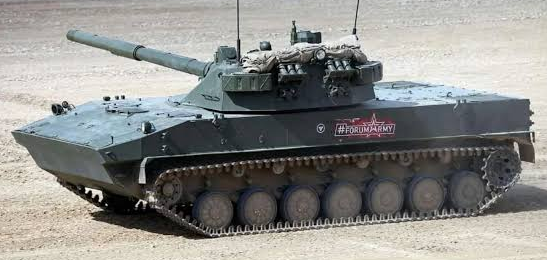
The indigenous armour has been designed for potential integration into next-generation Main Battle Tanks (MBTs), Light Tanks and Future Infantry Combat Vehicles (FICVs). These platforms are expected to form an important part of the Indian Army’s future armoured warfare capabilities, where protection, mobility and survivability must be balanced against weight and operational requirements.
A key feature of the system is its lightweight construction. Modern combat vehicles require high levels of ballistic protection while maintaining mobility across challenging terrain. Reducing armour weight can help platforms retain operational flexibility without compromising the protection required against medium-calibre threats.
STANAG 4569 is a NATO standard that defines protection levels for military vehicles against a range of ballistic and blast threats. Level 6 represents a high level of protection against specified medium-calibre kinetic-energy threats. The successful indigenous development of such armour therefore represents a significant capability in India’s military vehicle-protection technology.
The decision to offer the technology to Indian manufacturers through the ToT route is aimed at accelerating its transition from development to production. Domestic participation could help create an indigenous supply chain for advanced armour materials while reducing dependence on imported protection technologies for future armoured vehicle programmes.
The initiative also supports the broader objective of strengthening India’s domestic defence-industrial base. By involving Indian industry in the manufacturing stage, DRDO seeks to enable wider adoption of the technology across future platforms and build production capacity for specialised military protection systems.
The armour’s potential application across MBTs, Light Tanks and FICVs could also allow the technology to be adapted to different vehicle configurations and operational requirements. Such flexibility is increasingly important as the Army seeks platforms capable of operating across diverse environments.
The development comes as modern battlefields place growing emphasis on survivability against armour-piercing ammunition and other kinetic threats. Advanced armour solutions are therefore an important component of vehicle design, alongside active protection systems, electronic warfare capabilities, situational awareness and other defensive technologies.
With the successful testing phase completed, the next challenge will be industrialisation and large-scale production. The EoI issued by DRDO is expected to provide Indian companies an opportunity to acquire the technology and establish manufacturing capabilities for the armour panels.
If successfully inducted into future combat platforms, the indigenous STANAG-6 compliant armour could contribute to enhancing the protection of India’s armoured fleet while supporting domestic manufacturing of critical defence technologies. The move further expands the role of Indian industry in translating DRDO-developed technologies into production-ready systems for the armed forces.
(Disclaimer :The content of this article is sourced from a news agency and has not been edited by the Mavericknews30 team.)