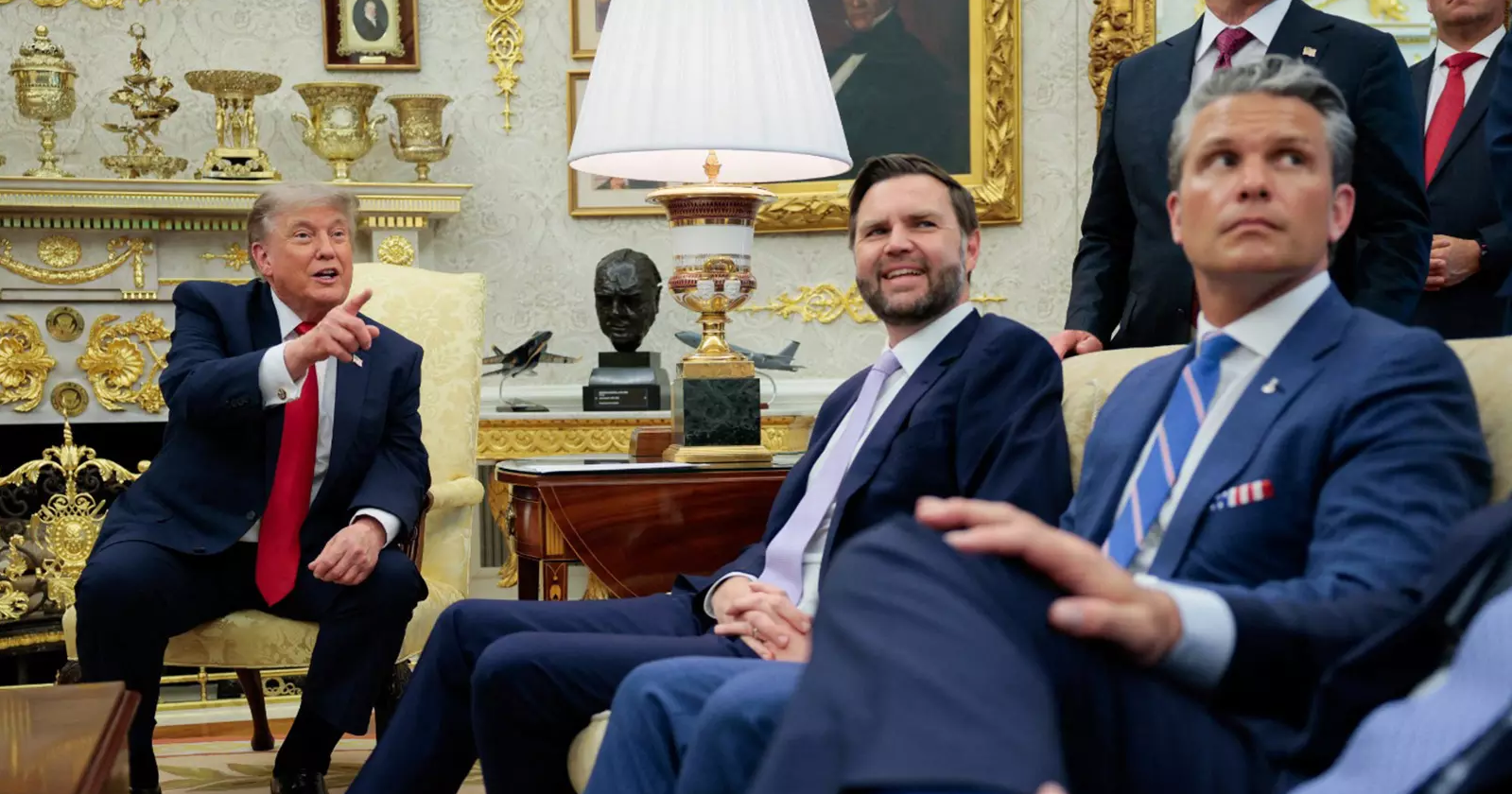
Washington, November 2026 : US Defence Secretary Pete Hegseth has defended the Trump administration's military action against Iran, saying he would support the decision again if faced with similar circumstances, even as the conflict comes under increasing scrutiny following the Republican Party's setbacks in the November 3 midterm elections.
Addressing reporters at a press conference at the Pentagon on Tuesday, Hegseth declined to endorse Vice President JD Vance's assessment that the ongoing Iran war was a major reason behind the Republicans' electoral losses. He said he had great respect for Vance but did not intend to engage in a political blame game over the election results.
Hegseth emphasised that his responsibility was to lead the US Department of Defence and ensure that American military forces remained prepared to respond to national security challenges. Assessing election outcomes and their political implications, he said, was not his primary responsibility.
Asked whether he agreed with Vance's argument that the Iran conflict had hurt the Republican Party, Hegseth avoided giving a direct yes-or-no answer. Instead, he reiterated that his focus remained on military preparedness and the country's security interests.
His comments come amid growing debate within the Republican Party over the reasons for its performance in the November 3 midterm elections. The Democratic Party made gains in several significant contests, strengthening its position in Congress and prompting Republican leaders to examine the factors behind the setbacks.
Vance Links Election Setback to Iran War
On November 5, Vice President JD Vance commented on the election results through social media, identifying the ongoing war with Iran as a major factor behind the Republican Party's losses.
Vance argued that the conflict had contributed to economic difficulties and rising inflation, increasing public dissatisfaction. He suggested that the party needed to learn from the election results and seriously reconsider its political strategy.
The Vice President's assessment indicated that public opposition to the Iran war may have influenced voter behaviour. However, the impact of any single issue on election outcomes requires a broader examination of voter data, as economic conditions, domestic policies and local political factors can also influence electoral results.
President Donald Trump has also acknowledged that the conflict with Iran may have politically hurt the Republicans. However, he has continued to defend his decision to launch military action, maintaining that preventing Iran from acquiring nuclear weapons was necessary for American national security.
Hegseth Says He Would Support Military Action Again
Hegseth firmly backed the administration's justification for the military operation, arguing that the action against Iran was undertaken for reasons related to national security.
The Defence Secretary said the central objective was to prevent Iran from developing nuclear weapons. When asked whether he would support the decision again despite its possible political consequences, he responded that he would make the same choice under similar circumstances.
He maintained that decisions involving national security should not be determined solely by their popularity among voters or their impact on a political party.
Hegseth also supported the assessment of Secretary of State Marco Rubio, who has argued that military operations may sometimes be necessary for national security even when they are unpopular with sections of the public.
The statements represent the Trump administration's position on the justification for military action. The necessity, legality and consequences of the conflict, however, remain subjects of debate in the United States and internationally.
Questions Over White House Strategy
During the Pentagon press conference, Hegseth was also asked about the reported position of newly appointed White House Chief of Staff Stephen Miller on the Iran conflict.
Some reports had suggested that Miller favoured bringing the war to an end. Hegseth declined to comment directly on those reports, saying Miller had only recently assumed his new responsibility and that he looked forward to working with him on various issues.
The Defence Secretary did not disclose whether he had held detailed discussions with Miller about ending the conflict.
The exchange comes as senior officials in the Trump administration continue to face questions about the future direction of US policy towards Iran. However, the comments alone do not establish any formal disagreement within the administration or indicate that a change in military strategy has been decided.
Republican Congressman Seeks Hegseth's Impeachment
The press conference also addressed an impeachment initiative against Hegseth launched by Republican Congressman Thomas Massie.
Massie introduced impeachment resolutions against the Defence Secretary on Monday, raising questions about the constitutional and legal basis of military operations, including the action against Iran.
The congressman has alleged that certain military operations may not have complied with constitutional provisions and requirements relating to congressional authorisation.
Hegseth rejected the allegations, describing the impeachment effort as politically motivated. He argued that policy disagreements among lawmakers should not, by themselves, constitute sufficient grounds for impeachment.
According to Hegseth, the Pentagon's legislative affairs team was in contact with House Speaker Mike Johnson and other Republican lawmakers. He said the concerned lawmakers were reviewing the allegations contained in the resolutions.
Any further action on the impeachment proposals will have to follow the established procedures of the US House of Representatives.
Trump Gives Hegseth 'A+++' Rating
President Trump publicly praised Hegseth's response to the impeachment allegations. In a post on his social media platform Truth Social, Trump gave the Defence Secretary an 'A+++' grade for his performance.
The President also criticised Congressman Thomas Massie and questioned his political position.
Trump's endorsement came as Hegseth faced mounting political scrutiny over the Iran war, the Republicans' midterm election performance and the impeachment initiative. However, the President's support does not settle the constitutional and legal questions raised in the impeachment resolutions, which remain subject to congressional procedures.
Iran War Debate Intensifies Within Republican Party
The growing debate over the Iran conflict has highlighted the political and economic pressures facing the Republican Party. Rising energy prices and economic uncertainty have emerged as concerns for American households, with Vance linking these developments to voter dissatisfaction.
While the Vice President has called attention to the possible electoral consequences of the war, Hegseth has maintained that military decisions must be judged primarily on national security considerations.
The contrasting emphasis reflects the wider challenge confronting the Trump administration as it deals with the future of the Iran conflict and its domestic political implications.
For now, Hegseth has made his position clear: he does not want to assign blame for the Republicans' election losses, but he is also unwilling to retreat from his support for military action against Iran.
His remarks underline the continuing divide within the Republican debate over the relationship between foreign policy, economic pressures, national security and electoral accountability.
(Disclaimer :The content of this article is sourced from a news agency and has not been edited by the Mavericknews30 team.)