Christchurch, October 2026 : New Zealand produced an explosive batting performance against India in the first T20 International of the five-match series at Hagley Oval in Christchurch on Thursday, posting a formidable 225 in their allotted 20 overs. India now face a challenging target of 226 runs to begin the series with a victory.
Glenn Phillips led New Zealand's aggressive batting display with a blistering half-century, while Finn Allen provided a rapid start at the top of the order. Despite India claiming wickets through Mayank Yadav, Axar Patel and Arshdeep Singh, the hosts maintained an impressive scoring rate throughout the innings.
India's bowling attack struggled to contain the New Zealand batters, particularly during the middle and death overs. Experienced pacer Bhuvneshwar Kumar, returning to the Indian T20I side after a lengthy absence, also found it difficult to make an impact as the hosts capitalised on favourable batting conditions.
New Zealand Post 225 Runs Against India
After losing the toss and being asked to bowl first, India faced an aggressive New Zealand batting lineup that attacked from the opening overs. Openers Tim Seifert and Finn Allen quickly put the visitors under pressure, taking advantage of the powerplay to score at a brisk pace.
Seifert scored 24 off 17 deliveries before Mayank Yadav dismissed him to give India their first breakthrough. However, Allen continued his attacking approach, ensuring that the early wicket did little to slow New Zealand's momentum.
Daryl Mitchell subsequently contributed 28 runs from 19 balls, helping the hosts maintain their scoring rate. New Zealand reached 122 runs before Mitchell was dismissed by Arshdeep Singh, giving India their third wicket.
Despite losing wickets at regular intervals, New Zealand refused to abandon their aggressive strategy. The hosts had already reached 158 runs after 15 overs and accelerated further during the final five overs to finish on 225.
New Zealand's innings produced a run rate of 11.25 runs per over, leaving India with a required scoring rate of 11.30 runs per over to achieve the target.
Glenn Phillips Smashes a Rapid Half-Century
Glenn Phillips was the standout performer of the New Zealand innings, producing a powerful display of attacking batting against India's pace and spin combination.
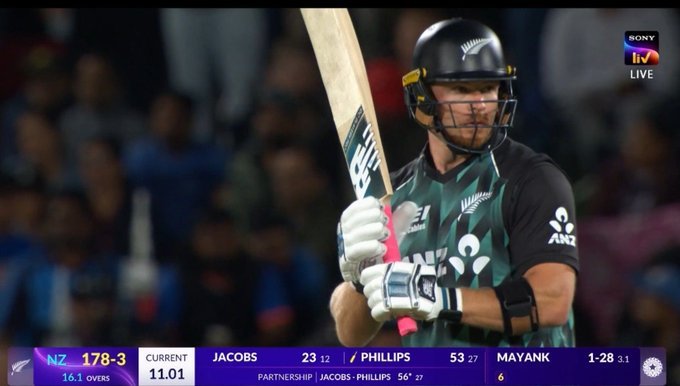
The right-handed batter reached his half-century in just 27 deliveries, putting pressure on the Indian bowlers after the hosts lost their early wickets.
According to a live score update available during the 19th over, Phillips was unbeaten on 74 from 36 balls, striking at a rate of more than 205. His aggressive strokeplay helped New Zealand maintain their momentum and move towards a total well above 200.
Phillips repeatedly found scoring opportunities against India's fast bowlers, using his power and timing to send the ball into gaps and across the boundary. His innings proved particularly important after India had removed three batters, as New Zealand needed a strong middle-order contribution to build a commanding total.
His partnership with Bevon Jacobs further strengthened the hosts' position and reduced India's chances of restricting the total to a manageable score.
Finn Allen Gives New Zealand an Explosive Start
Finn Allen played a crucial role in establishing New Zealand's early momentum. The opener smashed 45 runs from just 24 deliveries, recording a strike rate of 187.50.
Allen attacked from the beginning, putting pressure on India's pace attack and making full use of the fielding restrictions during the powerplay.
He fell five runs short of a half-century when Axar Patel dismissed him, giving India their second breakthrough. However, his aggressive innings had already laid the foundation for New Zealand's imposing total.
Tim Seifert's contribution of 24 runs from 17 balls also helped the hosts make a positive start. Together, the opening batters ensured that India were unable to establish early control over the contest.
Arshdeep Singh and Mayank Yadav Claim Wickets
India's bowlers managed three wickets during New Zealand's innings, with Mayank Yadav, Axar Patel and Arshdeep Singh each claiming one.
Mayank provided the first breakthrough by dismissing Seifert for 24. Axar subsequently removed Allen, briefly giving India an opportunity to slow the scoring rate.
Arshdeep claimed the important wicket of Daryl Mitchell, who had scored 28 from 19 deliveries. Mitchell's dismissal came at 122 runs, but the breakthrough did not produce the collapse India needed.
Phillips and Jacobs continued to attack, taking New Zealand from 122 to 195 through a partnership worth 73 runs for the fourth wicket.
Jacobs was eventually run out at 195, but the damage had largely been done as New Zealand remained on course for a substantial total.
Arshdeep conceded 45 runs in his four overs while taking one wicket, whereas Mayank Yadav gave away 40 runs in his four-over spell and also claimed one wicket. India's inability to take wickets consistently allowed New Zealand's middle order to dictate the pace of the innings.
Bhuvneshwar Kumar Struggles on T20I Return
Bhuvneshwar Kumar's return to India's T20 International setup was another major talking point. The experienced fast bowler was back in the Indian T20I side after an absence of nearly four years, raising expectations that his swing bowling and experience would help control New Zealand's top order.
However, the home batters attacked him effectively, limiting his ability to build pressure through economical spells.
At the time of a live score update during the 20th over, Bhuvneshwar had conceded 37 runs in 3.1 overs without taking a wicket. New Zealand's aggressive approach meant that India struggled to establish control even when wickets fell at the other end.
The expensive bowling spells contributed to the hosts' ability to cross the 220-run mark.
India Need 226 Runs to Win the First T20I
With New Zealand finishing on 225, India now need 226 runs in 20 overs to win the opening match of the five-game T20I series.
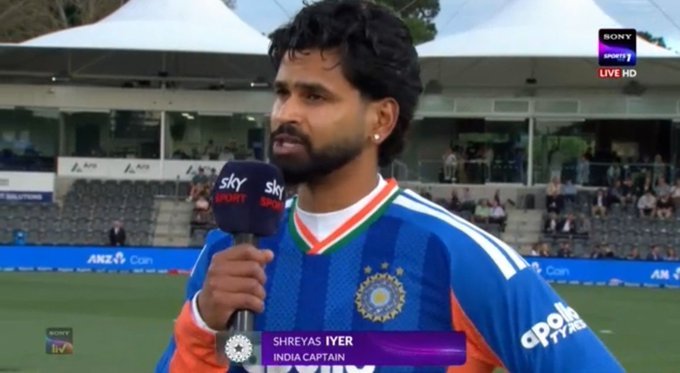
The chase will demand a strong start and sustained scoring throughout the innings. India's batting lineup includes aggressive options such as Abhishek Sharma, Sanju Samson, Ishan Kishan, Tilak Varma and captain Shreyas Iyer.
The opening partnership is expected to be particularly important. If Abhishek Sharma and Sanju Samson can capitalise on the powerplay and score quickly without losing early wickets, India could remain within reach of the required run rate.
The middle order, featuring Ishan Kishan, Shreyas Iyer and Tilak Varma, will also need to contribute substantially. With a target of 226, India cannot afford a prolonged slowdown during the middle overs.
New Zealand's bowling attack, featuring Matt Henry, Adam Milne and Lockie Ferguson, will look to exploit the pressure of the steep target and take early wickets.
India Face a Tough Challenge in Christchurch
The opening T20I has set up an intense contest, with New Zealand's powerful batting display placing India under immediate pressure in the five-match series.
Phillips' explosive innings, Allen's quickfire 45 and valuable contributions from the middle order enabled the hosts to post 225 despite losing wickets along the way.
India's response will determine whether they can begin the series with a victory or New Zealand take an early lead. A successful chase would require disciplined shot selection, effective partnerships and aggressive scoring at the right moments.
With 226 runs required, the focus now shifts to India's batting performance as they attempt to overcome New Zealand's imposing first-innings total at Hagley Oval.