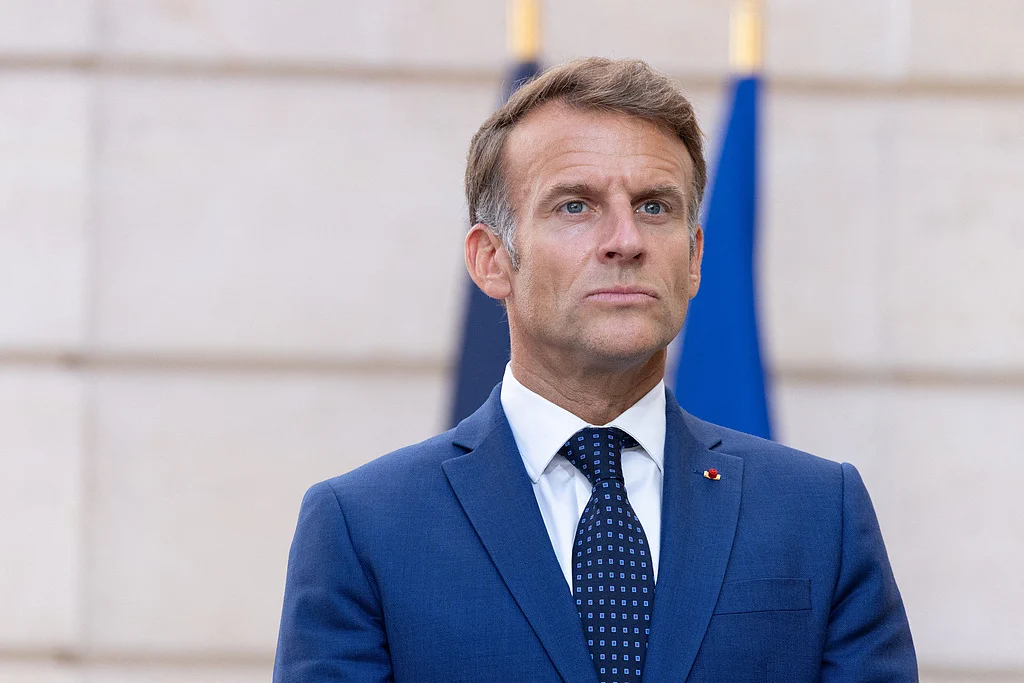
Paris, October 2026 : French President Emmanuel Macron has accused foreign leaders, including those in the United States, of exploiting France’s tense social situation for political purposes following a weekend of violence, looting and unrest in Paris and other French cities.
The remarks came amid protests linked to rising living costs and concerns over education, which have attracted international attention and triggered competing interpretations of the causes of the unrest.
US President Donald Trump has blamed immigration for instability in parts of Europe, warning that France and Italy could face further turmoil unless their governments strengthen border controls. French authorities, however, have pointed to radical groups and other factors in explaining the recent violence.
Speaking about the international reaction, Macron said foreign actors had engaged in what he described as manipulation of information following reports of looting across France. He criticised comments by several foreign leaders, calling them unacceptable and foolish.
When asked whether his remarks were directed specifically at Trump, Macron replied, “Among others,” indicating that his criticism extended beyond the American president.
Macron Rejects Trump’s Claims on Immigration
The French president strongly rejected Trump’s assertion that France was being overwhelmed by migrants and Islamists, describing the claim as “completely false”.
Macron also raised concerns about the circulation of artificial intelligence-generated images that purportedly showed incidents that had never occurred in France. He argued that such fabricated content was contributing to misleading accounts of the unrest and distorting international perceptions of the situation.
According to Macron, some individuals had circulated AI-generated visuals depicting events that did not take place, while others promoted claims that France had been invaded by large numbers of migrants and Islamists.
He warned that the spread of such material could intensify public confusion and allow inaccurate narratives to gain traction on social media.
The controversy highlights growing concerns across Europe about AI-generated misinformation, political messaging and the use of unverified digital content during periods of civil unrest.
France Offers Clarifications to Counter Misinformation
French Foreign Minister Jean-Noël Barrot said his office was prepared to provide relevant countries with the necessary clarifications to prevent inaccurate information about France from spreading further.
Barrot said the initiative would help foreign governments avoid repeating or amplifying false claims on social media platforms.
The French government’s response reflects its concern that misleading reports about the protests could influence international opinion and complicate efforts to address domestic tensions.
Authorities have attributed much of the recent violence to radical groups, while the wider protests have taken place against a backdrop of economic pressures, including rising living costs. The different explanations offered by political leaders have intensified debate over the causes of the unrest and the appropriate policy response.
Macron Criticises Foreign Political Campaigns
Macron expressed frustration with foreign politicians who, he said, were using developments in France to advance their own political agendas.
He argued that some leaders engaged in election campaigns were repeating AI-generated material or promoting narratives circulated by groups seeking to influence public perceptions of the situation.
The French president said such interventions amounted to using France as a tool in foreign political campaigns at a time when the country was dealing with domestic challenges.
He also suggested that the criticism reflected a lack of goodwill towards France, expressing irritation with those who were speaking negatively about the country during the unrest.
Although Macron did not limit his criticism to Trump, his remarks underscored tensions over immigration, European security and the political interpretation of protests across the continent.
The dispute also illustrates broader disagreements between political leaders over migration policy and the role of social media in shaping public debate.
As France continues to address the aftermath of the violence, the government faces the twin challenges of responding to domestic concerns and countering misleading information circulating internationally.
The episode has renewed attention on France’s political unrest, US-European relations, immigration debates and the growing influence of AI-generated misinformation in international politics.
(Disclaimer :The content of this article is sourced from a news agency and has not been edited by the Mavericknews30 team.)