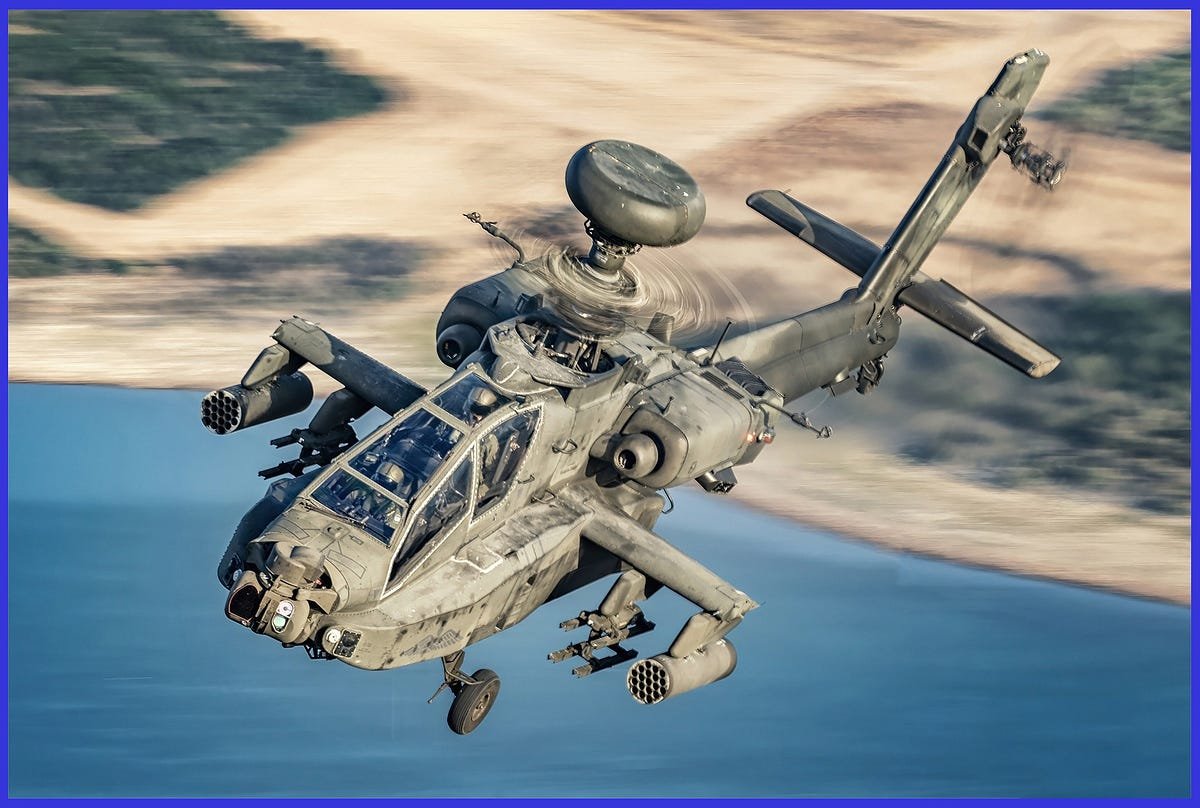
Army Aviation Corps’ Valiant Wings squadron tests Apache’s 30mm cannon against high-speed aerial targets, reinforcing preparedness against evolving unmanned threats
Oct 2026 : The Indian Army has successfully validated the air-to-air combat capabilities of its AH-64E Apache attack helicopters during exercises conducted in the harsh desert terrain along the country’s western border, with a major focus on countering emerging drone threats.
The drills, conducted by the Army Aviation Corps’ “Valiant Wings” squadron, tested the Apache’s ability to detect, track and engage fast-moving aerial targets using its standard weapon systems. The exercise was aimed at strengthening operational preparedness against increasingly sophisticated unmanned aerial threats.
During the exercise, the Apache’s 30mm M230 chain gun was used to track and destroy a Banshee Jet 40+ Uncrewed Aerial Vehicle (UAV). Powered by a 40 kg-thrust gas turbine engine, the Banshee jet is capable of replicating the speed and flight profile of modern loitering munitions, commonly described as kamikaze drones.
The successful interception of the fast-moving expendable target demonstrated the Apache’s ability to engage incoming aerial threats before they can reach their intended targets. The exercise also highlighted the Army’s efforts to adapt its attack helicopter fleet to the changing nature of modern warfare, where unmanned systems are increasingly being used for surveillance, precision strikes and battlefield attacks.
The Apache’s 30mm ammunition is designed to deliver accurate and concentrated fire against a range of targets. Its ability to engage small and agile aerial threats provides an additional counter-drone capability without requiring major modifications to the helicopter’s existing weapon configuration.
The Indian Army is increasingly focusing on integrating its attack helicopter fleet into operations against next-generation unmanned threats. The American-made Apaches are expected to operate alongside India’s indigenous Light Combat Helicopter (LCH) Prachand, creating complementary capabilities for battlefield operations and aerial threat response.
The AH-64E Apache Guardian remains a significant platform in Indian military aviation. While the Indian Air Force operates a fleet of 22 Apaches, the Army has six specialised helicopters of the type.
Designed for survivability in high-threat environments, the Apache features twin engines, redundant flight systems, crashworthy landing gear and self-sealing fuel tanks. These features allow the helicopter to continue operating and provide protection to its crew even under severe battlefield conditions.
The Apache has also demonstrated counter-drone capabilities in combat environments overseas, including operations involving Israel and the United Arab Emirates. Its ability to engage aerial targets is supported by sophisticated sensors and advanced fire-control systems.
Although the Apache’s 30mm chain gun has a lower firing rate than some dedicated ground-based air-defence systems, its advanced targeting technology enables pilots to accurately calculate the movement of fast aerial targets and engage them effectively.
The successful drills conducted by the Valiant Wings squadron underline the Indian Army’s continuing efforts to enhance the operational utility of its aviation assets and prepare them for evolving aerial threats along the nation’s borders.
(Disclaimer :The content of this article is sourced from a news agency and has not been edited by the Mavericknews30 team.)