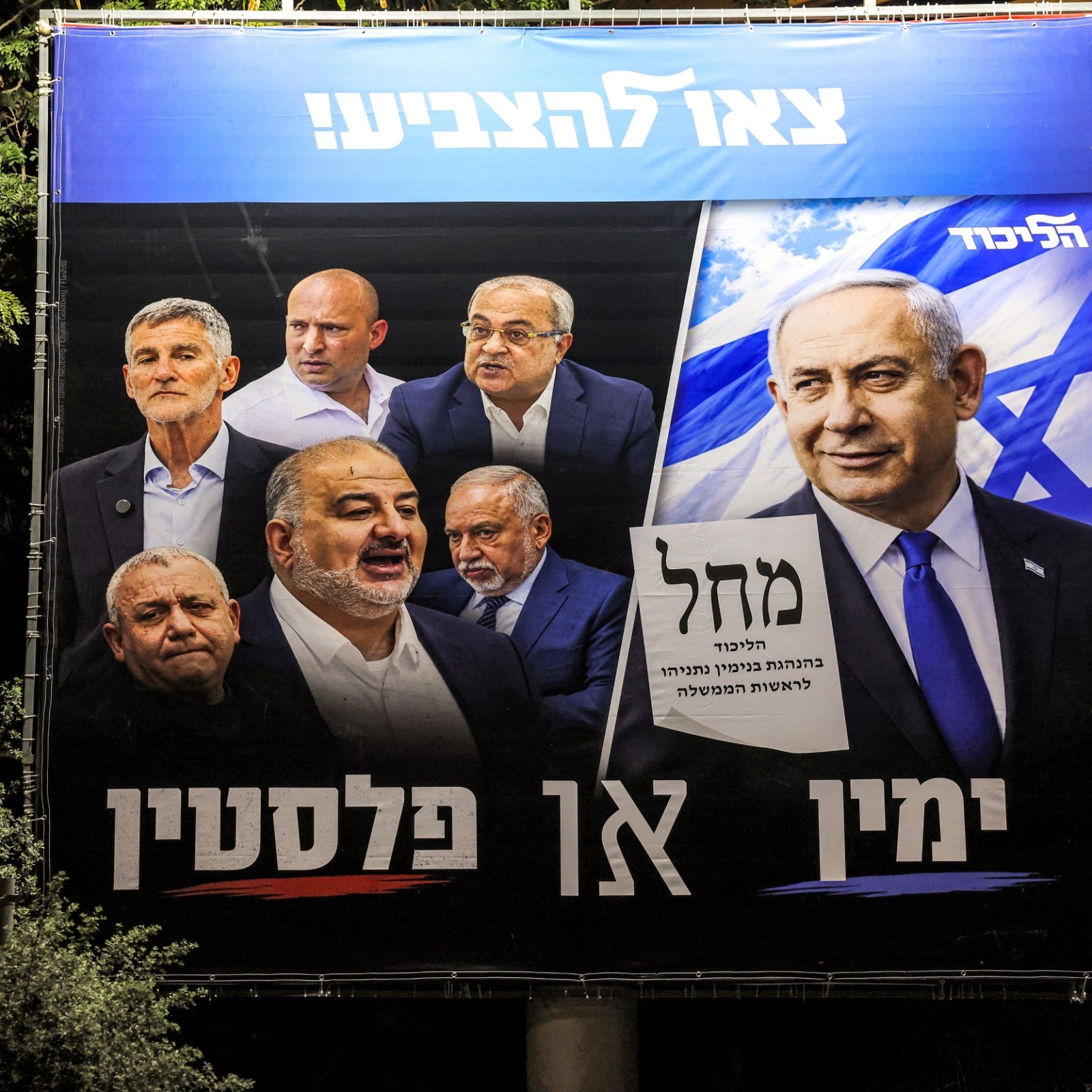
Israel heads to the polls amid security concerns following the October 7 Hamas attack, with Benjamin Netanyahu facing a challenge from centrist, right-wing, left-wing and Arab parties in a closely watched parliamentary election
Jerusalem, October 2026 : Israel is heading into a crucial parliamentary election, with Prime Minister Benjamin Netanyahu’s leadership facing renewed scrutiny following the Hamas-led attack of October 7, 2023, and the military operations that followed. The election is widely viewed as a referendum on Netanyahu’s political future, with voters set to choose representatives for the 120-member Knesset, Israel’s parliament.
Around seven million Israelis are eligible to vote. A total of 38 parties initially registered for the election, although two subsequently withdrew from the race. The contest features established political organisations, new centrist alliances, ultra-Orthodox religious parties, far-right groups and Arab political formations.
The outcome will determine the composition of the next government and could shape Israel’s approach to security, military service, relations with the Palestinians, settlement policy and domestic political divisions.
Likud: Benjamin Netanyahu’s Right-Wing Party
Leader: Benjamin Netanyahu
Current parliamentary seats: 32
Likud, whose name means “Consolidation”, is Netanyahu’s principal political vehicle and one of Israel’s leading right-wing parties.
Netanyahu, who first became prime minister in 1996, is Israel’s longest-serving prime minister, having held the position for more than 19 years across different periods. Raised partly in the United States, he is known for his political experience and ability to build governing coalitions.
However, Likud has faced strong criticism over the failure to prevent the October 7, 2023, Hamas-led attack, the deadliest attack in Israel’s history. Netanyahu’s government subsequently launched extensive military operations across the region, including operations involving the United States against Iran, according to the supplied account.
Despite his long political career, Likud has been running slightly behind some rivals in most recent opinion polls cited in the source material. The election will test whether Netanyahu can retain sufficient support to lead another coalition government.
Yashar: Gadi Eisenkot’s Centrist Challenge
Leader: Former military chief Gadi Eisenkot
Current parliamentary seats: None
Yashar, meaning “Upright”, was established in 2025 by former military chief Gadi Eisenkot. The party says its objective is to bring Israelis together after years of political division under Netanyahu.
Eisenkot served in a national unity government with Netanyahu following the October 7 attack. Recent polling cited in the source material has placed him prominently among potential challengers to the prime minister.
The party has brought together experienced political figures from the right and, to a lesser extent, the left. One of its key proposals is ending exemptions from compulsory military service for ultra-Orthodox Jewish men, an issue that has generated considerable resentment among many secular Israelis.
Yashar’s performance will indicate whether voters are prepared to support a new centrist formation offering institutional change and a different approach to national unity.
Beyahad: Naftali Bennett and Yair Lapid Join Forces
Leader: Former prime minister Naftali Bennett
Current parliamentary seats: None under the Beyahad name; the source lists 24 seats for allied party Yesh Atid
Beyahad, meaning “Together”, represents an alliance between former prime minister Naftali Bennett and former journalist Yair Lapid.
The two politicians previously joined forces to form a government in 2021 that remained in office until 2022. Their coalition was united largely by opposition to Netanyahu, despite differences in their political backgrounds.
Bennett, a businessman and the son of American immigrants, is a religious Jew who was previously associated with the West Bank settler movement. In the current campaign, he has presented himself as a more secular centrist figure.
The alliance seeks to attract voters looking for an alternative to Netanyahu while bringing together different sections of the political centre and right.
HaDemokratim: Israel’s Left-Wing Opposition
Leader: Former deputy military chief of staff Yair Golan
Current parliamentary seats: Four
HaDemokratim, or “The Democrats”, brings together remnants of Israel’s Labour movement and the left-wing Meretz party.
Labour dominated Israeli politics for decades after the country’s establishment, while Meretz has traditionally represented the secular left. Meretz failed to cross the electoral threshold for parliamentary representation in the 2022 election, according to the supplied information.
The Democrats support a two-state solution to the Israeli-Palestinian conflict, a position that distinguishes them from most of the other major parties described in the source.
Their campaign seeks to rebuild the Israeli left and offer an alternative to Netanyahu’s right-wing government.
Shas and United Torah Judaism Represent Ultra-Orthodox Voters
Shas leader: Aryeh Deri
Current parliamentary seats: 11
Founded in 1984, Shas represents Sephardic and Mizrahi Jewish communities with roots in the Middle East and North Africa. The party has been a close ally of Netanyahu and says it represents economically disadvantaged Israelis.
Shas has strongly opposed efforts to extend compulsory military service to ultra-Orthodox men, making the issue a central point of contention in coalition negotiations.
United Torah Judaism leader: Yaakov Asher
Current parliamentary seats: Seven
United Torah Judaism, also known as UTJ, represents ultra-Orthodox Ashkenazi Jews, whose ancestry is primarily European.
Like Shas, the party seeks to protect exemptions from military service for religious students. Its parliamentary strength could make it influential in determining the composition of a future coalition.
Far-Right Parties: Otzma Yehudit and Religious Zionism
Otzma Yehudit leader: National Security Minister Itamar Ben Gvir
Current parliamentary seats: Six
Otzma Yehudit, meaning “Jewish Power”, is a far-right party that Netanyahu brought into his governing coalition despite earlier resistance to its inclusion.
Ben Gvir has attracted international criticism for his hard-line rhetoric and statements concerning Palestinians. The supplied account cites his call for Israel to kill 30 to 40 Palestinians nightly in Gaza.
Religious Zionism leader: Finance Minister Bezalel Smotrich
Current parliamentary seats: Seven
Religious Zionism is another far-right party in Netanyahu’s government. It advocates annexing the entire Israeli-occupied West Bank.
Smotrich has used his position as finance minister to advance settlement policies and withhold tax revenues from the Palestinian Authority, according to the source material.
The electoral performance of both parties could influence the strength of the far-right within any future governing coalition.
Yisrael Beiteinu: Avigdor Lieberman’s Secular Right
Leader: Avigdor Lieberman
Current parliamentary seats: Six
Yisrael Beiteinu, meaning “Israel, Our Home”, combines a secular outlook with a hard-line position on the Palestinians.
Lieberman, a former defence, foreign and finance minister who previously served as Netanyahu’s chief of staff, draws considerable support from Israelis who immigrated from the former Soviet Union.
His party’s emphasis on secularism distinguishes it from the ultra-Orthodox groups, particularly on questions involving military service and religion’s role in public life.
Arab Parties Could Influence Coalition Formation
Raam leader: Mansour Abbas
Current parliamentary seats: Five
Raam, or the United Arab List, has moderate Islamist roots and advocates equal rights for Israel’s Arab minority, which accounts for around 20 per cent of the population.
The party made history by joining an Israeli governing coalition in 2021–2022, demonstrating that Arab political parties can play a role in government formation.
Its position could again become important if neither major political bloc secures a clear parliamentary majority. In an unusual move highlighted in the source material, its candidate list includes Yoav Segalovitz, a former police official who is Jewish.
Joint List leader: Yousef Jabareen
Current parliamentary seats: Five
The Joint List brings together the Arab-Jewish communist party Hadash and the Arab nationalist parties Ta’al and Balad. It supports a two-state solution to the Israeli-Palestinian conflict and represents another strand of Arab political participation in the election.
New Far-Right Party Enters the Contest
Former military commander Ofer Winter has established Amcha Israel, a new far-right party. Unlike some of its ideological counterparts, the party supports compulsory military service for all Israelis.
Its emergence adds another competitor to an already fragmented political landscape.
Netanyahu’s Future at Stake
The Israeli election will determine more than the distribution of seats in the Knesset. It will also shape the country’s leadership, security policies, military-service rules, approach to the occupied West Bank and prospects for a political settlement with the Palestinians.
With right-wing, centrist, left-wing, ultra-Orthodox and Arab parties competing for influence, coalition negotiations could prove decisive in determining who forms the next government.
For Netanyahu, the vote represents a major test of public confidence following the October 7 attack and the subsequent regional conflict. For his challengers, it offers an opportunity to reshape Israel’s political direction.
The final outcome will depend on how voters distribute their support among the competing parties and whether any political bloc can assemble a governing majority in the 120-seat Knesset.
(Disclaimer :The content of this article is sourced from a news agency and has not been edited by the Mavericknews30 team.)