US Secretary of State says Washington will not allow Venezuela’s interim leadership to indefinitely delay elections; reforms to the Supreme Court and electoral institutions remain central to the proposed transition
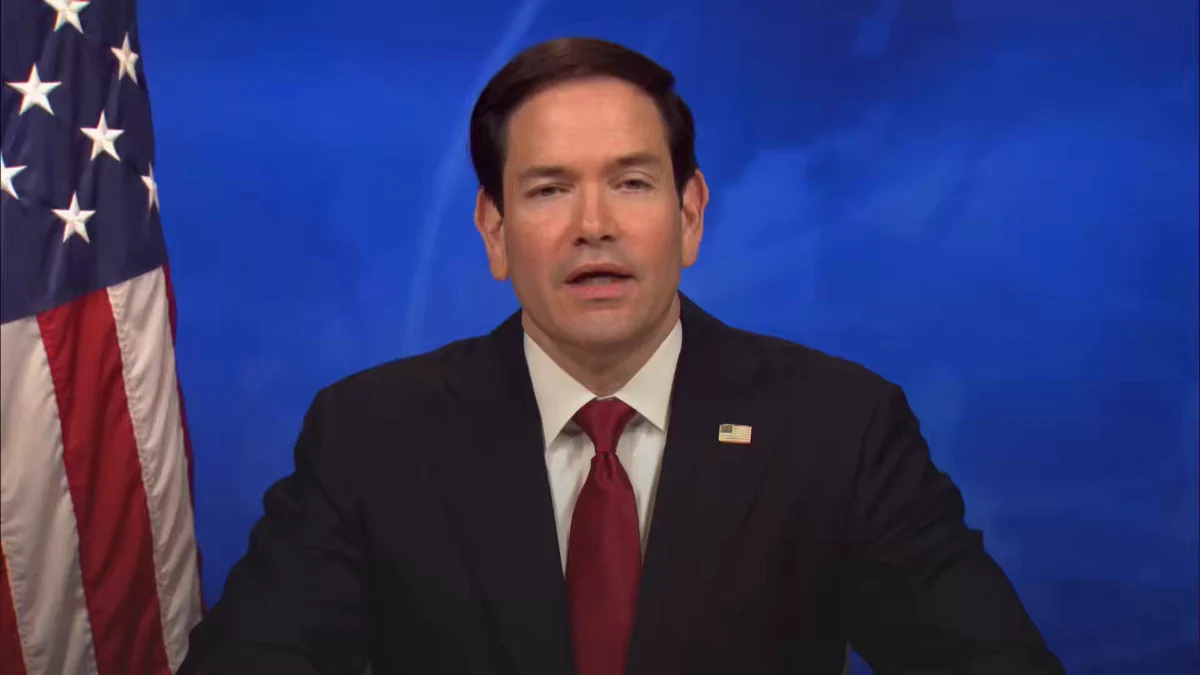
Washington, October 2026 : US Secretary of State Marco Rubio has warned that Venezuela could face civil war or return to decades of political repression if its ongoing political transition fails, stressing that Washington expects the country’s interim leadership to move towards democratic elections without indefinite delays.
In an assessment of Venezuela’s political future, Rubio said the United States had established clear timelines with the interim administration for reforming key electoral and judicial institutions. He added that Washington was using sanctions relief and economic incentives to encourage compliance with commitments aimed at establishing a functioning democratic system.
The US administration, Rubio said, wants a peaceful political transition that would allow Venezuelans who fled the country amid years of political and economic turmoil to return home.
“If this process doesn’t work, then the alternative is going to be worse,” Rubio told reporters during a teleconference on Monday.
“The alternative is going to be either violence and armed conflict within the country, or back to the way things have been for the last 20 years, which have not been good for the people of Venezuela,” he said.
Rubio’s remarks came as the Trump administration sought to advance political and economic changes following the January 3 operation that led to the arrest of Venezuelan President Nicolás Maduro, according to the account provided.
US Sets Timelines for Venezuela’s Democratic Transition
Rubio made clear that Washington’s support for Venezuela’s interim authorities is conditional on progress towards a democratic political system. He said the administration had agreed on specific timelines with the interim leadership and that commitments had so far been met despite disruptions caused by an earthquake.
“We have timelines that are agreed to, and so far, they’ve met every one of the timelines,” Rubio said.
Although he did not announce a date for fresh elections, the US Secretary of State insisted that institutional reforms could not be postponed for years.
The proposed changes include replacing Venezuela’s Supreme Court, known by its Spanish acronym TSJ, and the National Electoral Council, or CNE. Rubio argued that elections conducted under institutions inherited from the Maduro administration might not produce a legitimate democratic outcome if those bodies continued to favour particular political interests.
“How can you have a legitimate election in Venezuela when the Electoral Council is controlled by people loyal to one side, with the power to decide that certain so-and-so can’t run for election, so they can’t be on the ballot?” he asked.
He also questioned whether the judicial system could be considered credible if it continued to validate decisions that favoured the authorities in power.
According to Rubio, replacing key institutions is essential to ensuring that opposition candidates can participate in elections and that the results have public legitimacy. Washington’s stated objective, he added, is not simply to organise a single election but to establish institutions capable of supporting successive elected governments.
US Sanctions Remain Key Leverage Over Caracas
Economic pressure remains an important part of the United States’ approach to Venezuela. Rubio said Washington continued to exercise significant influence because extensive American sanctions remained in place.
Certain economic activities, including oil-related transactions, have been permitted through waivers and general licences issued by the US Treasury Department. Rubio indicated that these concessions could be reconsidered if Venezuela’s interim government failed to meet its commitments.
“The United States has significant influence over the direction that these talks go and the results that we get from them,” he said.
Rubio rejected suggestions that Venezuela’s interim authorities could delay negotiations in the hope that the Trump administration would eventually run out of time.
“No one’s going to wait us out here,” he said, expressing confidence that the transition could be completed during his remaining time in office.
The comments underline the role of sanctions relief, oil transactions and other economic measures in Washington’s efforts to influence Venezuela’s political direction. However, the final outcome will depend on whether the interim administration continues to implement the agreed measures and whether the planned institutional changes translate into a credible electoral process.
Rubio also rejected suggestions that the United States had offered members of the interim leadership immunity from prosecution in exchange for cooperation.
“No, there’s definitely no talk about prosecutions or anything of this nature,” he said.
He described the political transition as the only viable peaceful route towards a functioning democratic republic.
Washington Evaluates Delcy Rodríguez on Actions
Asked about interim leader Delcy Rodríguez’s public criticism of the US operation against Maduro, Rubio said Washington was assessing the authorities’ actions rather than relying on their public statements.
“We ultimately judge it not by rhetoric but by action,” he said.
Rubio claimed that the interim administration had complied with US requests concerning national security, criminal organisations and political reforms. He also said Iranian and Cuban influence in Venezuela had been substantially reduced.
The Secretary of State cited the extradition of Alex Saab, saying Saab had pleaded guilty and was cooperating with the American justice system. He also pointed to the interim authorities’ reported agreement to changes involving the Supreme Court and electoral institutions.
“If at the end of the day we have a new TSJ, a new CNE, a new election, and a new system of government, that’s what we want,” Rubio said.
His remarks suggest that Washington will continue to assess the transition through specific institutional and political outcomes. The replacement of the TSJ and CNE, followed by elections under a reformed system, remains central to the US administration’s stated objectives.
Rubio Addresses María Corina Machado’s Return
Rubio also discussed the return of Venezuelan opposition leader María Corina Machado, saying Washington had contacted the interim authorities several weeks earlier to ensure that she could return to the country without interference.
“Our expectation is that she’s a Venezuelan, she belongs in her country,” he said, describing the message communicated to the interim government.
According to Rubio, the authorities indicated that Machado would be permitted to fly into Venezuela, and the assurance was conveyed to her team. He said his understanding was that she had entered the country the previous day without encountering problems upon arrival.
Machado has criticised aspects of Washington’s oil arrangements with Venezuela, Rubio said, but he maintained that disagreements over commercial agreements should not derail the broader political transition.
Her return is significant in the context of Venezuela’s political future because the participation of opposition figures is closely linked to questions about political competition, electoral access and the legitimacy of any future vote.
Venezuela Crisis Has Wider Regional Implications
Venezuela has experienced years of political confrontation, economic instability and large-scale migration. The crisis has affected neighbouring South American countries and the United States, where Venezuelan migration has become an important immigration and foreign policy issue.
Rubio estimated that between six million and seven million Venezuelans had been forced to leave their country. He argued that a stable political system and economic recovery could create conditions that would encourage some of them to return.
The US Secretary of State also criticised previous negotiations conducted under the Biden administration, arguing that concessions had been made before the necessary institutional reforms were secured.
For Washington, the current process is intended to address both Venezuela’s political crisis and the economic instability that has contributed to migration. The administration has presented a peaceful transition, credible elections and the rebuilding of democratic institutions as central goals.
Elections and Institutional Reforms Remain Critical
Rubio’s warning highlights the risks the United States believes could emerge if Venezuela’s transition stalls. He said the alternatives could include renewed violence or a return to the political conditions that preceded the current process.
However, an election date has not been announced in the account of his remarks, and the transition’s outcome remains uncertain. The replacement of the Supreme Court and National Electoral Council, the treatment of opposition leaders and the implementation of agreed reforms will be important indicators of progress.
Washington’s approach combines diplomatic engagement with economic leverage, including the possibility of reconsidering sanctions waivers and licences. The interim authorities’ continued cooperation will therefore remain central to the process.
Rubio maintained that the objective is to establish a functioning democracy capable of supporting successive elected governments, rather than simply holding one vote. For Venezuela, the challenge will be to turn the commitments made during the transition into credible institutions, political participation and conditions that support economic recovery.
The coming stages of the process will determine whether Venezuela moves towards a peaceful democratic settlement or faces renewed political confrontation and instability.
(Disclaimer :The content of this article is sourced from a news agency and has not been edited by the Mavericknews30 team.)