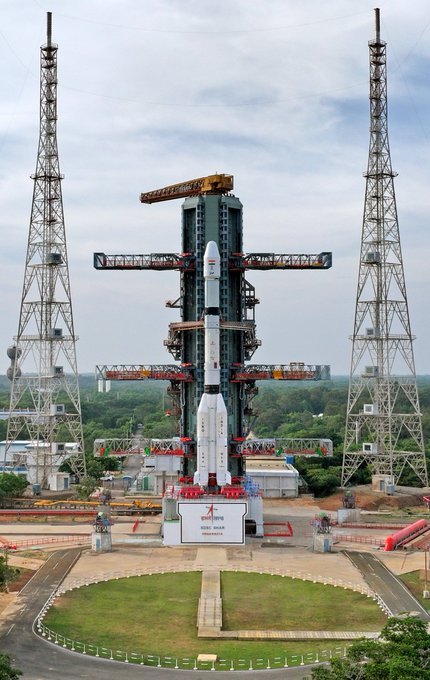
New Delhi, Oct 2026 : The Indian Space Research Organisation (ISRO) is scheduled to launch its GSLV-F18/NVS-03 mission at 11.51 pm on Friday from the Satish Dhawan Space Centre (SDSC SHAR) in Sriharikota, Andhra Pradesh.
Announcing the launch schedule on social media platform X, ISRO said the mission would lift off on October 30, 2026, at 23:51 hours IST from the space centre. The launch is planned from the Second Launch Pad (SLP).
The mission will carry NVS-03, the third satellite in India's second-generation Navigation with Indian Constellation (NavIC) series, and place it into a Geosynchronous Transfer Orbit (GTO). The flight will mark the 20th mission of India's Geosynchronous Satellite Launch Vehicle (GSLV).
NVS-03 is designed to strengthen the NavIC satellite constellation and ensure continuity of India's independent regional navigation services. The satellite incorporates an indigenous atomic clock along with procured atomic clocks, supporting the system's precise positioning and timing capabilities.
A key feature of NVS-03 is the addition of the L1 navigation signal alongside the existing L5 and S-band signals. According to ISRO, the enhanced signal capability will support coverage across the Indian landmass and a region extending approximately 1,500 km beyond the country's geopolitical boundary.
NavIC, formerly known as the Indian Regional Navigation Satellite System (IRNSS), is India's independent regional satellite navigation system. It has been developed to provide accurate Position, Velocity and Timing (PVT) services across India and the surrounding region.
The system offers two categories of services: Standard Positioning Service (SPS) and Restricted Service (RS). While SPS is designed for civilian users, RS is an encrypted service intended for authorised users.
NavIC supports a wide range of applications that require reliable positioning, navigation and timing information. These include transportation, location-based services and other activities dependent on accurate navigation data.
ISRO has planned a series of five second-generation navigation satellites to augment the existing constellation with improved capabilities and ensure uninterrupted services.
NVS-01, the first satellite in the second-generation series, was launched aboard the GSLV-F12 mission on May 29, 2023. The launch was significant as it marked the first time an indigenous atomic clock was flown on an Indian navigation satellite.
NVS-03, the third satellite in the series, is expected to further enhance the constellation through its additional L1 signal capability, complementing the existing L5 and S-band signals.
With the second-generation satellites, ISRO aims to improve the performance and reliability of NavIC while maintaining continuity of navigation services for civilian and strategic applications.
The GSLV-F18/NVS-03 mission is another step in India's efforts to strengthen its indigenous space-based navigation infrastructure and expand the capabilities of its regional positioning system.