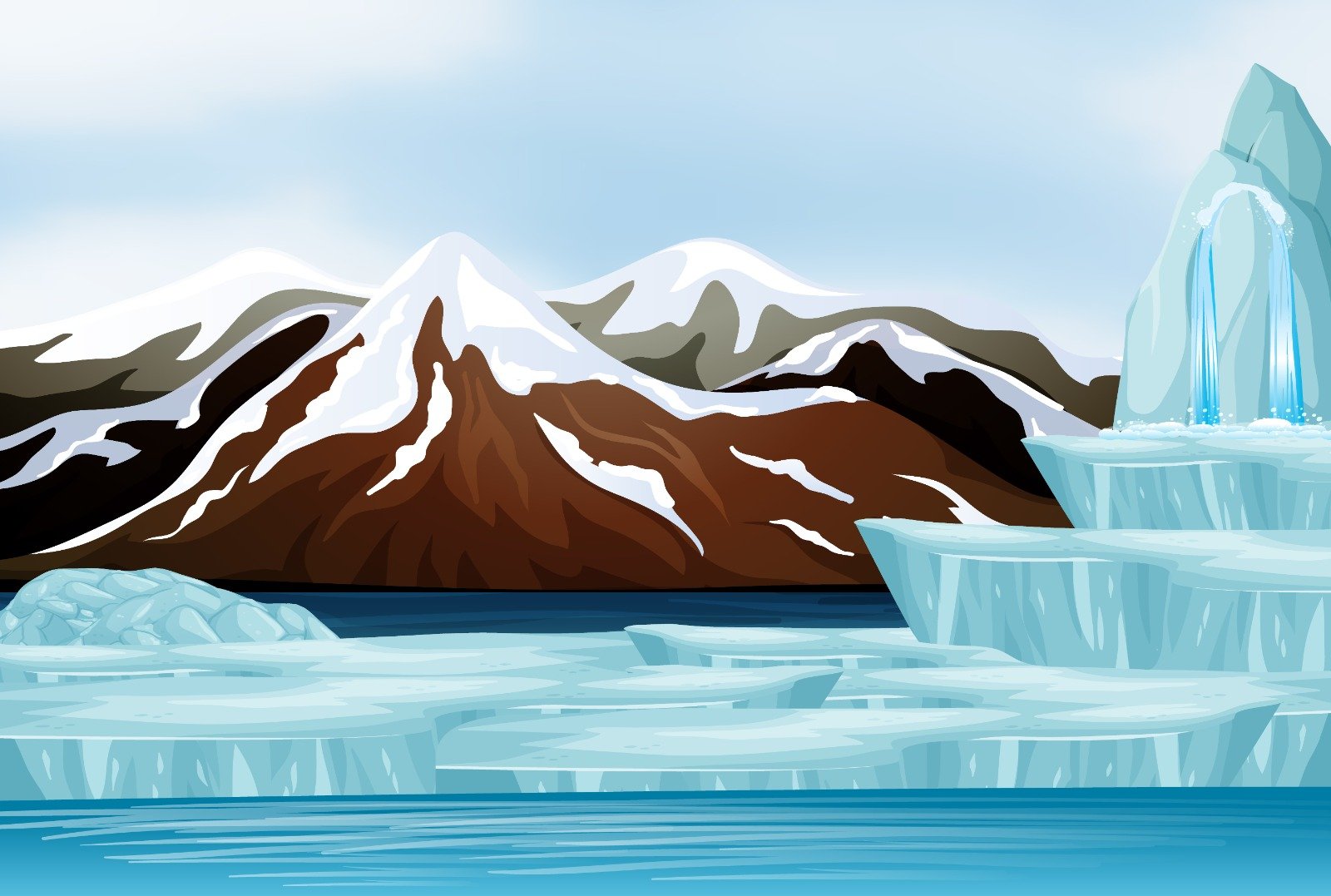
New Delhi, Oct 2026 : Glaciers that terminate in lakes, oceans or ice shelves are responsible for more than half of the world’s glacier ice loss, despite accounting for just 3.2 per cent of glaciers globally, according to a new study highlighting the accelerating impact of climate change on glaciers.
The research, led by scientists from the University of Birmingham and the University of Leeds in the United Kingdom, found that these glaciers lost an estimated 134 billion tonnes of ice annually between 2000 and 2019. The findings were published in the journal Nature Communications.
The study highlights how the environment in which a glacier ends can influence its movement and rate of ice loss, with important implications for climate change projections, sea-level rise, freshwater resources and natural hazards.
Researchers found that glaciers terminating in lakes are generally much larger than those ending on land. Together, lake-ending glaciers cover more than half of the world’s total glacier area, making their contribution to global ice loss particularly significant.
The findings also revealed differences in glacier movement. On average, glaciers ending in lakes flow around 10 per cent faster than land-ending glaciers, while those terminating in oceans move approximately 44 per cent faster. Lake-ending glaciers also lose around 57 per cent more ice than land-ending glaciers relative to their size.
Why Lake-Ending Glaciers Lose Ice Faster
Scientists said several factors may explain the rapid ice loss from glaciers that terminate in lakes. One key process is calving, in which large chunks of ice break away from the glacier’s front and fall into the water, forming icebergs.
Lake water can also melt the submerged portion of a glacier, weakening the ice front and potentially accelerating ice loss.
However, researchers said the precise reasons behind the particularly high rate of ice loss from lake-ending glaciers remain unclear.
“Glaciers ending in lakes really stand out — they’re losing ice particularly quickly. We don’t yet know exactly why,” said study author Joseph Mallalieu.
He noted that the lakes themselves, the size and shape of the glaciers, or a combination of these factors could influence the process. Understanding these mechanisms will become increasingly important as warming temperatures contribute to the formation and expansion of glacier lakes.
The researchers found that lake-ending glaciers are present in every major glacier region worldwide. In most regions, they lost ice faster than glaciers ending on land or in oceans.
Climate Change Complicates Glacier Predictions
The study also identified changes in glacier types as the climate warms. In parts of the Arctic, some ocean-ending glaciers are retreating onto land. Meanwhile, the growth of glacier lakes worldwide is turning some land-ending glaciers into lake-ending glaciers.
These transitions could have contrasting consequences. Glaciers retreating from oceans onto land may lose ice more slowly, while glaciers newly terminating in lakes could experience faster ice loss.
The researchers warned that existing models used to predict glacier evolution do not fully account for the differences between glaciers ending on land, in lakes, in oceans or at ice shelves.
Their new glacier classification could help scientists improve climate models and projections of glacier mass loss, sea-level rise, freshwater availability and glacier-related hazards.
The authors stressed that better representation of different glacier environments is essential for understanding future glacier behaviour. They added that identifying how environmental conditions and glacier geometry influence ice movement remains a major challenge for future research.
The findings underline the importance of monitoring glacier lakes and incorporating changing glacier conditions into climate projections as global temperatures continue to rise.
(Disclaimer :The content of this article is sourced from a news agency and has not been edited by the Mavericknews30 team.)