Riyadh; October 2026: Since the escalation of the Houthi attacks on the Middle East, Saudi Arabia has claimed that its oil system remains to be absolutely unshattered, enjoying the status quo as earlier, and Saudi Arabia could restore its full 12 million bpd capacity within days. It is a comforting message, and the United States, and other European nations, and oil traders have every reason to believe it.
Karl Miller, an experienced global energy executive and analyst who frequently publishes comprehensive assessments on critical global energy logistics and infrastructure vulnerabilities, has published a 37-slide operating assessment of Saudi Arabia's energy system, emphasising the fragile state of global energy distribution. It focuses heavily on the structural and physical risks threatening the Kingdom's production, refining, and export capabilities. Rather than viewing minor dips in usage as an economic recovery, Miller famously warns that recent reductions in consumption represent demand destruction, where extreme prices or structural supply failures physically ration energy by crushing industrial output and idling key infrastructure.
In February this year (2026), just before the Israel-US attacks on Iran, Saudi Arabia produced about 10.88 million barrels of crude a day.In August this year - the shortfall was 4.64 million barrels a day, when output sank to about 6.24 million. In September 2026, it was still producing 2.51 million barrels a day less, a drop of 23%. From March through September, the Kingdom produced more than 800 million fewer barrels than it would have at its February rate. That is roughly eight days of total world oil consumption that never came out of the ground.
Even, Aramco’s own records depicts the same figure. In the company’s reported figures, its liquids production fell from 10.56 million barrels a day in the first quarter to 7.57 million in the second, a 28% collapse in a single quarter. Natural gas and ethane fell nearly 06%.
Exports followed production down. In one consistent tracking series, Saudi crude exports fell from 7.27 million barrels a day in February to 3.70 million in August, which is a sharp 49% decline. The figures catapulted to 5.62 million in September, but that is still 23% below the pre-war level. The reason the recovery keeps stalling is that the damage is not in one place. It runs from the wellhead to the gas station.
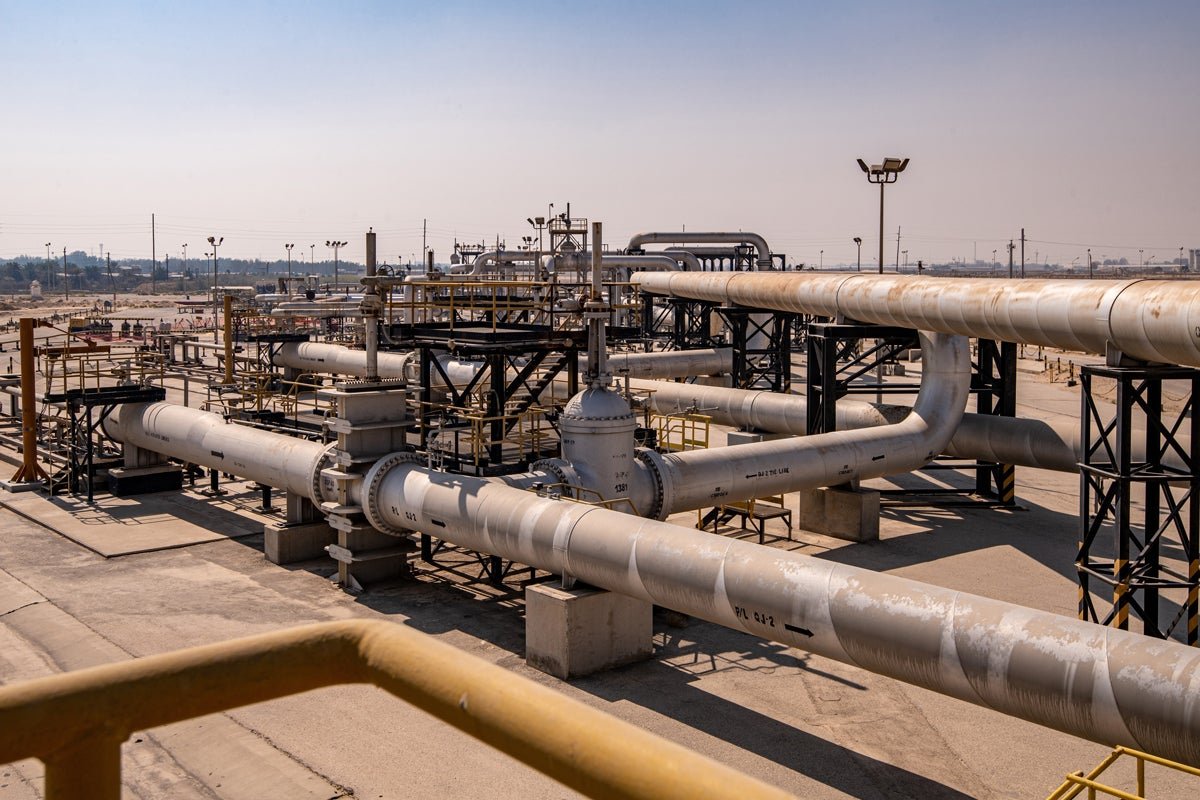
At the front: the Abqaiq complex, the plant that conditions most of Saudi Arabia’s light crude before it can be shipped or refined, sustained physical damage in July. In March, some 2 to 2.5 million barrels a day were curtailed across the offshore Safaniya, Marjan, Zuluf and Abu Safa fields. In April, Khurais and Manifa each lost 300,000 barrels a day.
In the middle: 05 of the Kingdom’s major refineries have been damaged or shut down.
·Ras Tanura, at 550,000 barrels a day the largest domestic refinery, burned and was shut in March 2026.
·SATORP in Jubail lost three units in April, restarted at half capacity and was still running at only about 70% in May 2026.
·SAMREF in Yanbu was hit in March 2026.
·The Riyadh refinery caught fire on October 03, 2026.
·Jazan, a 400,000-barrel-a-day plant designed to turn out 250,000 barrels a day of ultra-low-sulfur diesel, shut down on July 27 this year after its power plant and tank farm were hit, and
·Ansar Allah attacks in August and September disrupted every attempt to restart it.
·Petro Rabigh exhibited tank damage vide satellite imagery.
·The Juaymah gas-liquids plant, which feeds Saudi Arabia’s LPG exports, has suffered fires.
At the back end: the system for storing and moving fuel is being picked apart. Imagery of the Abha bulk plant from September 13 shows 06 tanks apparently destroyed and 08 more damaged. A depot near Riyadh’s airport burned on September 19. Jazan’s tank clusters have been hit repeatedly.
At the East-West Pipeline: which is Saudi Arabia’s only way to move crude to the Red Sea and around a closed Strait of Hormuz, has been hit again and again.
·In April, 700,000 barrels a day of pumping capacity was knocked out.
·In September, repeated attacks took out three pumping stations and halted the line until a low-rate restart on September 22.
·On October 4 and 5, another pumping station near Khurais was reported badly damaged. The energy minister now says the line is running at 5.8 million barrels a day, against a rated 7 million.
Miller’s most important insight is that this is a system, and systems fail at their weakest link. Jazan is the clearest example. Fixing the crude units does no good if the gasification and power plant that run the refinery is still damaged, and fixing the power plant does no good if there are no tanks to put the diesel in. A refinery can be “restarted” on paper and still produce nothing useful. The same logic runs upstream. An oil field with every well intact still has to shut in if the processing plant or pumping station downstream of it is broken. Every time Aramco gets one link repaired, another one gets hit. That is why restart announcements keep failing to show up in the production numbers.
·Saudi refinery output was down 534,000 barrels a day from February, nearly 18%.
·Diesel output fell 21%.
·Diesel exports fell 47%, from 848,000 barrels a day to 446,000.
·Gasoline exports fell 40%.
·Diesel stocks fell from 25.6 million barrels in February to 16.6 million in July, down 35%.
·Gasoline stocks fell by the same proportion.
The world’s largest oil exporter more than doubled its imports of fuel oil, and it is burning more than twice as much crude directly in its power plants as it did in February. Some of that is the summer air-conditioning load, but it is not the behavior of a country with fuel to spare. Lower stocks signify less cushion for future apprehensions.
If Saudi Arabia’s export outlets close, its oil has nowhere to go but its own refineries, its own power plants and its storage tanks. In July, domestic refineries and direct burning absorbed about 3.04 million barrels a day. Once the storage is full, that is roughly the ceiling on what Saudi Arabia could keep producing. Close Ras Tanura and Yanbu at the same time, and the Kingdom would have to shut in most of its oil fields. That is exactly the scenario Ansar Allah’s campaign against the pipeline, the Red Sea and the Gulf terminals is built to produce.
Team Maverick.