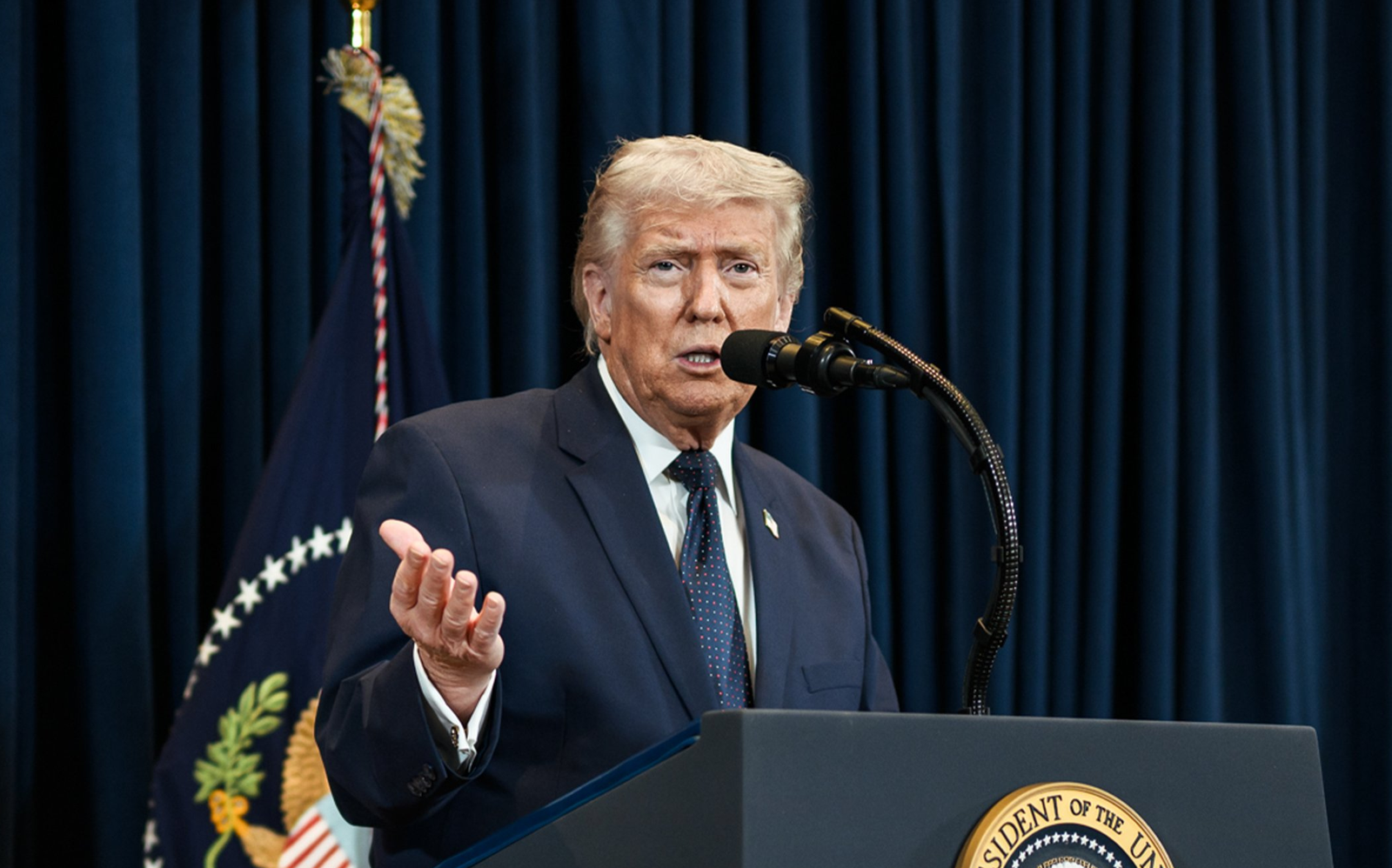
Washington, Oct 2026 : US President Donald Trump has backed the idea of local communities having a greater say in data centre projects, saying residents in areas hosting these facilities should receive substantial economic benefits. At the same time, he stressed that the United States needs to continue building data centres to compete with China in artificial intelligence and other advanced technologies.
In an interview with Atlanta News First, operated by WANF-TV, ahead of a rally in Perry, Georgia, on Saturday, Trump rejected suggestions that his position differed from that of Rick Jackson, the Republican candidate for governor who has advocated giving local residents a say in approving data centre projects.
Speaking to interviewer Abby Kousouris, Trump said he agreed that communities should receive significant financial benefits from data centres. However, he did not outline a specific approval mechanism, announce a new federal policy or explain how payments to local communities would be calculated and distributed.
Trump Advocates Financial Benefits for Local Communities
The issue arose when Kousouris referred to Jackson's position that local communities should have the authority to approve data centre developments.
Trump responded by arguing that financial incentives could change public attitudes towards such projects. He said communities often oppose data centres initially but may become supportive when operators decide to contribute financially through taxes or other forms of payments.
According to Trump, data centre companies have the financial resources to provide substantial benefits to the areas where they operate.
He suggested that these benefits could take the form of tax contributions or dividend-like payments. However, he did not specify whether the money should go directly to residents, local governments or both.
The US President also did not identify any proposed legislation or regulatory framework that would establish such a payment system. No timeline was announced for introducing a formal mechanism to ensure communities receive a share of the economic gains.
His remarks nevertheless indicated support for the principle that local residents should benefit from the development of large-scale computing infrastructure in their neighbourhoods.
US-China Competition Drives Data Centre Expansion
While backing greater local benefits, Trump emphasised that data centre construction must continue as the United States competes with China.
He said China was building data centres rapidly and asserted that the United States remained ahead, although he did not provide figures to support the comparison.
Trump argued that data centres were strategically important to America's technological and economic future, particularly as demand for computing power continues to grow.
Data centres provide the infrastructure needed to operate cloud computing platforms, artificial intelligence applications and other digital services. These facilities house servers and networking equipment that require reliable electricity supplies and extensive cooling systems to operate continuously.
As AI adoption accelerates, demand for computing capacity has increased, making data centre development an important issue for technology companies, policymakers and local communities.
However, the expansion of these facilities has also raised concerns about electricity consumption, pressure on power grids, infrastructure costs and the potential impact on household utility bills.
Trump's comments reflected an effort to reconcile the need for rapid technological development with demands from communities seeking a greater share of the economic benefits.
Power Generation and Electricity Costs
Trump also said data centres would generate their own electricity and supply power to the grid. During the interview, however, he did not identify any specific project or provide details about generation capacity, implementation plans or how much electricity could be supplied to other consumers.
The issue of electricity costs has become an important part of the debate surrounding large data centre projects. Their substantial power requirements can necessitate new generation capacity, transmission lines and other infrastructure, raising questions about who should bear the associated expenses.
On March 4, the White House announced a Ratepayer Protection Pledge involving participating technology companies. Under the pledge, companies committed to covering the additional electricity supply and infrastructure costs required for their data centres.
The commitments also included local hiring, workforce training and coordination with grid operators.
These pledges concern the companies' intended practices, but they do not by themselves establish that household electricity bills have declined or that all potential cost increases have been eliminated.
Ensuring that data centre operators pay for the additional infrastructure needed to serve their facilities remains central to efforts to protect consumers from higher electricity costs.
Balancing Community Concerns With Technology Growth
Trump's remarks come amid growing debate over how the United States should regulate data centre expansion while maintaining its competitive position in artificial intelligence and digital infrastructure.
Local authorities and residents are increasingly concerned about the effects of large facilities on electricity demand, land use and community resources. At the same time, technology companies view data centres as essential to supporting future growth in cloud computing and AI.
Trump's support for local benefits suggests that financial contributions could help address some of the opposition to these projects. However, important questions remain about how such benefits would be structured, who would receive them and whether local communities would have a formal role in approving developments.
For now, Trump has endorsed the principle of community benefits without presenting a specific policy framework. His comments underline the challenge facing US policymakers: encouraging data centre investment to compete with China while ensuring that the communities hosting these facilities are not left to bear the costs without receiving a fair share of the gains.
(Disclaimer :The content of this article is sourced from a news agency and has not been edited by the Mavericknews30 team.)