New Delhi, Oct 2026 : Polling began on Friday for 28 Legislative Council seats across Uttar Pradesh, Bihar, Karnataka and Maharashtra, with the elections drawing political attention ahead of key electoral contests and as parties seek to strengthen their representation in the respective state legislatures.
The elections cover graduate and teacher constituencies, whose electorates consist of eligible registered voters from these specific categories. While the results could offer insights into political trends in the states, they should not be viewed as a direct reflection of public opinion across the entire electorate.
Uttar Pradesh MLC Elections: Voting Across 72 Districts
In Uttar Pradesh, polling is underway for 11 Legislative Council seats, comprising five graduate constituencies and six teacher constituencies. Voting began at 8 am and is scheduled to conclude at 4 pm across 72 districts, excluding Kanpur Nagar, Kanpur Dehat and Unnao.
The five graduate constituencies are Agra, Meerut, Allahabad-Jhansi, Lucknow and Varanasi. The six teacher constituencies are Agra, Meerut, Bareilly-Moradabad, Lucknow, Kashi and Gorakhpur-Faizabad.
Of the 11 seats, five are located in western Uttar Pradesh, two in the Lucknow region, one in Bundelkhand and three in the Purvanchal region.
The elections are being closely monitored as Uttar Pradesh prepares for its 2027 Assembly elections. However, graduate and teacher constituencies have a distinct electorate, making their results different from those of general elections.
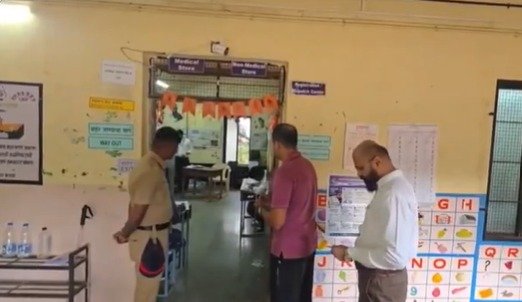
Voters expressed satisfaction with the polling arrangements in some areas. A voter in Hardoi praised the administration, saying that arrangements had been made very well.
Samajwadi Party MP Ram Gopal Yadav expressed confidence in his party's prospects, particularly in Aligarh. He said he expected both party candidates to win in the teacher and graduate constituencies, identifying Akash Agarwal as the party's candidate for the teacher constituency.
Bihar MLC Polls: 150 Candidates in the Fray
In Bihar, elections are being held for eight Legislative Council seats, including four graduate and four teacher constituencies. Approximately 5.32 lakh voters are eligible to participate, with 150 candidates contesting the seats.
The Bihar MLC elections have attracted attention because of contests involving parties that are otherwise part of the state's opposition alliance. The Congress and the Rashtriya Janata Dal (RJD) are contesting against each other in several constituencies.
The Patna Graduates' constituency is among the closely watched seats. Senior Janata Dal (United) leader Neeraj Kumar is contesting against a field that includes candidates backed by different political groups. Anant Singh, the Mokama MLA, has extended support to Jan Suraaj candidate Anuj Singh.
Neeraj Kumar was hospitalised following a cardiac attack a few days before polling. After being discharged, he was scheduled to travel to Mokama to cast his vote on Friday. He was seen leaving his residence while displaying a victory sign.
The contests are being viewed as an important electoral exercise for the parties involved, although the limited and specialised voter base means the outcome cannot be treated as representative of the preferences of Bihar's entire population.
Maharashtra Legislative Council Elections
In Maharashtra, polling is underway for five Legislative Council seats, comprising three graduate constituencies and two teacher constituencies. A total of 182 candidates are contesting the five seats.
The graduate constituencies are Pune, Chhatrapati Sambhajinagar and Nagpur, while Pune and Amravati are voting in the teacher constituencies.
The elections provide political parties an opportunity to consolidate their position in the state Legislative Council, the upper house of the state legislature.
Karnataka Also Part of the Electoral Exercise
Karnataka is among the four states included in the 28-seat Legislative Council election exercise. The polls across the states cover graduate and teacher constituencies, which have separate voter eligibility requirements and constituency-specific contests.
For Uttar Pradesh and Bihar, polling began at 8 am and was scheduled to end at 4 pm. Voting is being conducted through ballot papers, with counting scheduled for October 27.
The elections across Uttar Pradesh, Bihar, Karnataka and Maharashtra are being watched by political parties as they seek representation in the Legislative Councils. The results will determine the outcome of the respective constituency contests, while offering a limited indication of political preferences among registered graduate and teacher voters.