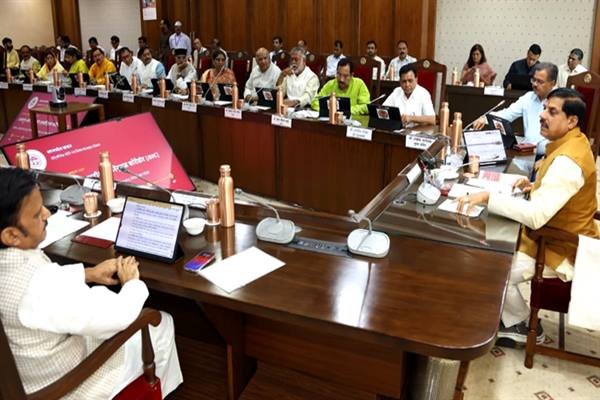
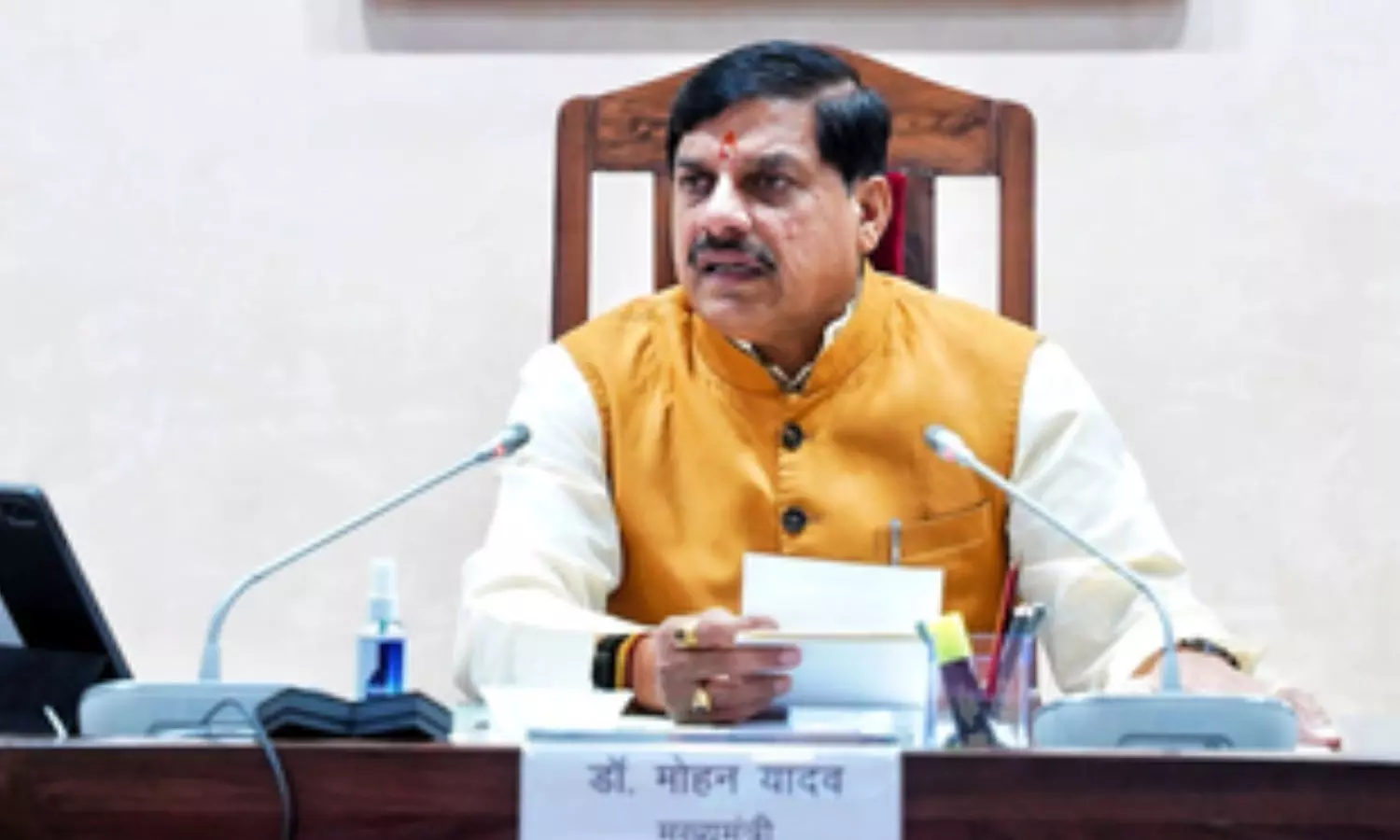
Chief Minister Dr. Mohan Yadav chaired the Cabinet to take a historic, transformative decision to accelerate the state's comprehensive, inclusive and balanced regional development, fulfilling the vision of “Investment in Every Region, Employment in Every District.”
The Cabinet has approved the integrated and planned development of an industrial corridor linking Madhya Pradesh’s three major economic, commercial and knowledge centres—Jabalpur, Bhopal and Indore. The project envisages the development of world-class economic and industrial hubs across seven districts: Indore, Bhopal, Jabalpur, Narsinghpur, Raisen, Sehore and Dewas.
The initiative will pave the way for widespread economic prosperity in the Mahakoshal, central Madhya Pradesh and Malwa regions. It marks a significant step towards extending industrial development beyond major urban centres to the state's urban and rural areas.
Local Youth to Gain Employment Opportunities, Improving Quality of Life
The initiative aims to improve the quality of life of local residents, particularly the youth, by creating employment opportunities closer to home. The planned industrial hubs along the Jabalpur-Indore corridor will enable skilled youth to find suitable livelihoods within their hometowns and the state, reducing the need to migrate in search of work. The corridor will generate high-quality, modern employment opportunities locally, enabling young people to secure dignified livelihoods in line with their qualifications and skills. The initiative will also attract major domestic and international investors to Madhya Pradesh.
Agro-Processing Clusters in Narsinghpur and Raisen to Boost Farmers' Prosperity
The industrial corridor project has accorded central importance to farmer welfare. Modern food parks, advanced agro-processing units, warehousing facilities and cold-chain networks will be established in Narsinghpur and Raisen districts, which are part of the fertile agricultural belt of the Narmada Valley.
The initiative will facilitate the local processing and value addition of crops, pulses, oilseeds, fruits and vegetables produced by farmers in these districts. Farmers will benefit from reduced dependence on intermediaries and gain better prices for their produce. At the same time, rural youth will find employment in agro-based industries located close to their villages and tehsils.
Jabalpur to Emerge as a Hub for Defence and Engineering Manufacturing
A comprehensive action plan has been prepared to establish Jabalpur and its surrounding areas in the Mahakoshal region as an advanced manufacturing centre. The region will see the development of heavy engineering and modern manufacturing facilities, ancillary units in the defence and aerospace sectors, and logistics hubs. These industrial clusters will create significant business opportunities for local micro, small and medium enterprises (MSMEs) while generating thousands of new employment opportunities for technical and non-technical youth in the Mahakoshal region.
Bhopal to Be Developed as a Global Hub for Knowledge and Advanced Technology
The state capital, Bhopal, and its adjoining areas will be developed as a global centre for knowledge and advanced technology. Modern clusters focusing on information technology, IT-enabled services, knowledge services, electronic system design and manufacturing (ESDM), and research and development will be established in the region. This will provide highly educated young people graduating from universities, engineering colleges and management institutes in the capital with opportunities for advanced, high-paying employment within their own city. The region will also see an expansion of high-quality civic and social infrastructure, contributing to an improved quality of life across the area.
Industrial Ecosystem in Malwa-Nimar Region to Be Strengthened
Large-scale food processing units, manufacturing industries, warehousing facilities and strategic logistics hubs will be established in the Sehore and Dewas regions, connecting the economic centres of central and western Madhya Pradesh. Indore, the country's commercial capital, will be further developed as a hub for advanced manufacturing, modern IT services and the global services industry. The new corridor will be directly integrated with the well-established industrial ecosystems of Dewas and Pithampur. This will drive unprecedented economic growth across the Malwa-Nimar region in transportation, hospitality, retail trade and ancillary services.
Industrial Townships to Be Developed with a Focus on Workers' Welfare
The state government has prepared a framework for developing well-planned industrial townships along the corridor. These hubs will comprise not only factories but also fully equipped residential complexes for workers, technical experts and employees. State-of-the-art hospitals, high-quality schools, daycare centres, modern skill development institutes, sports complexes and extensive green spaces will be integral components of these townships to ensure the welfare of employees and their families. The initiative will provide workers with a safe, healthy and high-quality living environment close to their workplaces.
Plug-and-Play Infrastructure to Enable Industries to Begin Production Immediately
To attract investors and entrepreneurs, state-of-the-art plug-and-play infrastructure will be provided along the corridor. Industrial units will have access to developed and levelled land, wide internal roads, uninterrupted 24-hour quality power supply, adequate industrial water, common effluent treatment plants, solid waste management facilities, scientific sewerage systems and high-speed digital connectivity. With these essential facilities already in place, investors will be able to install their machinery and commence production immediately. This will substantially reduce project establishment timelines and lower production costs.
Over 6 Lakh Employment Opportunities to Be Created Locally
In the first phase, three to five priority industrial hubs will be developed at strategic locations across the seven districts, covering approximately 10,000 acres. Preliminary assessments and studies indicate that the corridor is likely to attract private and institutional investments exceeding ₹1 lakh crore by March 2028. This initial investment is expected to generate one lakh direct and over two lakh indirect employment opportunities in the state. With the corridor's full development over the next three years, total investments are projected to exceed ₹3 lakh crore, creating more than six lakh direct and indirect employment opportunities.
Approval Granted for Formation of a Special Purpose Vehicle
To implement this ambitious project with professional efficiency, adherence to timelines and financial transparency, the Cabinet has approved the formation of a dedicated Special Purpose Vehicle (SPV). The Jabalpur-Bhopal-Indore Economic Corridor Development Company Limited will be a wholly state-owned and state-controlled public sector company. The state government will provide an initial paid-up equity capital of ₹100 crore to establish a strong financial foundation for the company. An additional interest-free loan of ₹20 crore will be provided as initial working capital.
Company to Focus on Industrial Development, Investment and Employment Generation
The Jabalpur-Bhopal-Indore Economic Corridor Development Company Limited will not function as a conventional road construction agency. The construction of national and state highways and the main road network associated with the corridor will be undertaken by the Public Works Department and other established road construction agencies. The company's mandate will focus exclusively on strategic planning of industrial clusters, development of internal infrastructure and plug-and-play facilities, investment promotion and employment generation. Long-term project financing will be mobilised through Public-Private Partnerships (PPPs), institutional financial agencies such as NaBFID, NIIF, the World Bank and the Asian Development Bank (ADB), as well as land monetisation and lease premiums.
Strong Legal Framework to Ensure Swift and Transparent Services for Industries and Investors
A robust legal framework has been established to enable the company to provide efficient and transparent services to industrialists and investors. The company has been granted statutory status as an authorised agency under the Madhya Pradesh Investment Area Development Act, 2013, and as the state's nodal agency under the Ease of Doing Business Act, 2026. These powers will enable the company to undertake land acquisition in industrial areas, scientific land-use planning, zoning, transparent plot allotment and the grant of long-term leases.
The state government will make government land available for the project at concessional rates. All matters concerning forest land will be dealt with in strict compliance with applicable statutory provisions and environmental requirements.
Implementation of a Nationally Tested and Successful Model
The model adopted by the Madhya Pradesh government has proven successful at the national level through projects under the Delhi-Mumbai Industrial Corridor and the National Industrial Corridor Development Corporation. Dholera in Gujarat and Vikram Udyogpuri in Ujjain, Madhya Pradesh, are prominent examples of this approach. By integrating land management, statutory approvals and infrastructure development through a single empowered institution, the state government aims to eliminate unnecessary interdepartmental delays.
Three-Tier Administrative and Management Structure Under the Chief Minister's Leadership
Under the chairmanship of Chief Minister Dr. Yadav, a robust three-tier administrative framework has been established to accord the project the highest priority and ensure effective implementation.
Governing Council: The Chief Minister will chair the apex body, comprising ministers and senior officials from the departments of Industrial Policy and Investment Promotion, Finance, Revenue, Urban Development, Energy, Public Works, Forests, and Town and Country Planning. The council will facilitate swift interdepartmental policy decisions.
Executive Body: A distinguished and experienced expert nominated by the Chief Minister will serve as Vice-Chairperson, with full executive powers for day-to-day implementation.
Board of Directors and Professional Team: A Board of Directors constituted under the Companies Act, 2013, will oversee the company. Multidisciplinary expert teams specialising in master planning, land management, engineering, finance, legal affairs, PPPs and investment promotion will function under the leadership of the Chief Executive Officer.
Scientific and Transparent Land Selection Through the PM Gati Shakti Portal
Sites for industrial parks and hubs will be selected on the basis of scientific assessments and technical studies. The Central Government's PM Gati Shakti National Master Plan Portal will be used to analyse land suitability, water availability, access to the power grid, environmental impact, road and rail connectivity, market demand and the actual preferences of investors. Only after this comprehensive assessment will the most suitable and undisputed sites be notified for industrial development.
Phased and Time-Bound Implementation Roadmap from 30 Days to 12 Months
The Cabinet has approved a clearly defined roadmap to ensure timely implementation of the project.
First 30 days: Formal incorporation of the company, execution of the Memorandum and Articles of Association (MoA/AoA), equity allocation and constitution of the Board of Directors.
0–3 months: Appointment of the Chief Executive Officer and professional technical teams, pre-feasibility studies, scientific assessment of demand, and environmental and social screening.
0–6 months: Precise GIS mapping of the entire corridor and creation of a transparent land bank.
3–9 months: Preparation of detailed master plans and financial models for the priority industrial hubs.
6–12 months: Preparation of Detailed Project Reports (DPRs), securing statutory approvals, commencement of internal trunk infrastructure development, and execution of agreements with major anchor investors.
After 12 months: Execution of projects under the PPP model, development of internal facilities and formal allotment of plots to investors will commence
Continuous Monitoring and Accountability Through a Digital Dashboard
A monitoring mechanism has been established to ensure construction quality, financial transparency and adherence to timelines.
The Executive Body will conduct detailed monthly reviews of project activities, while the apex Governing Council will hold quarterly review meetings.
An advanced Key Performance Indicator (KPI) digital dashboard is also being developed to monitor the progress of each industrial hub in real time. It will continuously track land acquisition, investment inflows, arrival of anchor investors, employment generation and revenue receipts.
The Corridor to Become the Foundation of MP's Economic Revival and Industrial Self-Reliance
The Cabinet has authorised the Department of Industrial Policy and Investment Promotion to issue all necessary notifications, government rules and orders for implementing the project. In the coming years, the Jabalpur-Bhopal-Indore Industrial Corridor will become a key foundation for Madhya Pradesh's economic revival and industrial self-reliance. This historic initiative will open new avenues of prosperity, dignity and development for the people of the state while firmly positioning Madhya Pradesh among India's leading and self-reliant industrial states.