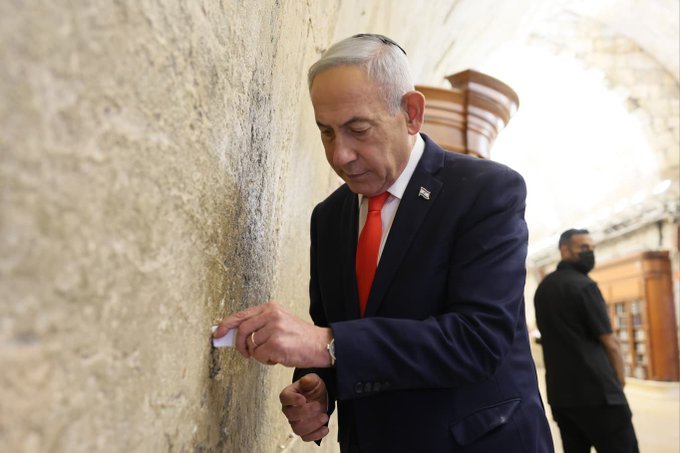
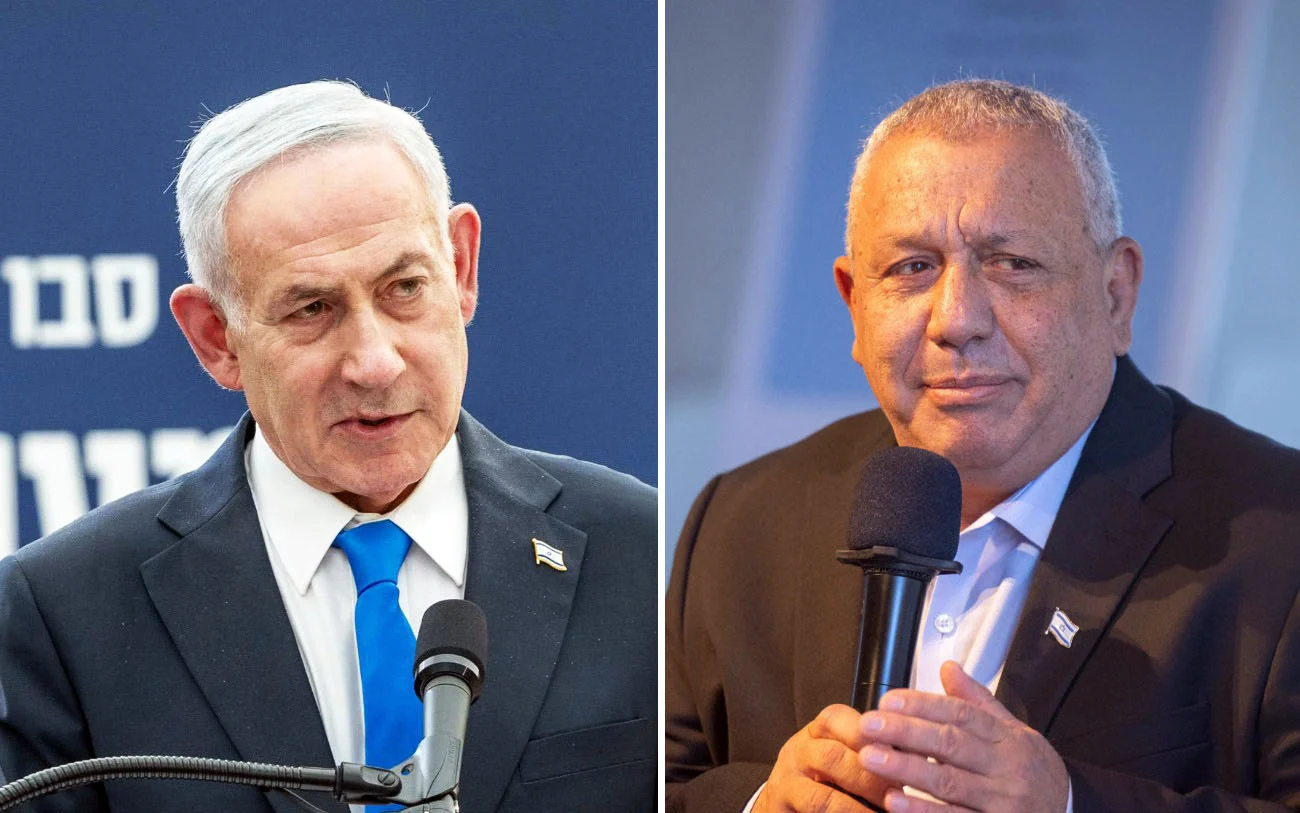
JERUSALEM, Oct 2026 : Israeli Prime Minister Benjamin Netanyahu moved ahead of his political rivals as votes were counted in the country’s parliamentary election on Wednesday, but his failure to secure a clear majority has left his path to another term dependent on coalition negotiations. Although Netanyahu’s right-wing alliance emerged as the frontrunner in the initial count, neither major political bloc appeared to have enough seats to form a government independently.
With voter turnout reaching a record high in Tuesday’s election and nearly 86 per cent of ballots counted, Israel’s three main broadcasters projected that Netanyahu’s coalition of right-wing, far-right and ultra-Orthodox parties would win 53 seats in the 120-member Knesset. The opposition bloc led by former military chief Gadi Eisenkot was projected to secure 48 seats, while parties representing Arab Israelis were expected to win a combined 19 seats.
A majority of 61 seats is required to form a government in the Israeli parliament. The preliminary figures therefore leave both major camps short of the numbers needed to govern, placing smaller parties and potential coalition partners at the centre of the post-election negotiations.
“Maybe it’s hard to say it or to see it, but he’s the winner,” former Netanyahu adviser Aviv Bushinsky said, describing the prime minister’s political comeback as a “resurrection”.
Bushinsky said the election had produced a political paradox: although Netanyahu failed to secure a parliamentary majority, the outcome may have restored his position as Israel’s dominant political figure.
Netanyahu Leads but Coalition Formation Remains Uncertain
The early election results put Netanyahu’s Likud-led alliance ahead of the opposition, but the projected 53 seats leave it eight short of a majority. The opposition bloc, meanwhile, faces the challenge of bringing together enough political support to establish an alternative government.
Likud’s emergence as the largest party does not automatically guarantee Netanyahu another term as prime minister. He will need to negotiate with other political parties and secure their support to cross the 61-seat threshold.
The final outcome will depend on the completion of the vote count, the distribution of seats and the willingness of parties to cooperate. With neither bloc in a position to govern independently, coalition-building could involve difficult negotiations over political priorities and the terms of participation in a future government.
The strong performance of Arab-majority parties has added another layer of complexity to the Israeli election results. Their projected 19 seats could influence the balance of power, although the political differences among the parties and their potential partners may limit the options available.
Likud Alleges Electoral Fraud, Seeks Investigation
Amid the uncertainty surrounding government formation, Netanyahu’s Likud Party has accused Arab parties of electoral irregularities and called for an investigation.
In a statement issued on Wednesday, Likud alleged bribery, intimidation, violence, fraud and the use of prohibited software to mobilise voters. The party requested that the police, Israel’s internal security agency Shin Bet and the Central Elections Committee examine the complaints.
Likud claimed that it had submitted substantial supporting material, including witness testimony, to the relevant authorities.
However, the filing of complaints does not establish that electoral fraud occurred. The Central Elections Committee said it was reviewing Likud’s complaint under its regular procedures for safeguarding electoral integrity. The committee also considers complaints from other political parties and applications concerning possible errors in the results.
The allegations remain unverified, and the final findings of the relevant authorities will be important in determining whether any violations took place.
Reports Find No Evidence of Systematic Vote Tampering
Citing the Israeli newspaper Israel Hayom, Anadolu Agency reported that police had not found evidence supporting Likud’s allegations. The report, citing unnamed sources, also indicated that the Central Elections Committee had no grounds at that stage to question the overall credibility of the voting process.
There were also reports that the committee had found no indications of systematic tampering with ballot papers. Individual complaints, however, are being examined separately.
The distinction between allegations and established findings remains important as the election process continues. Until investigations produce substantiated conclusions, the claims made by Likud should not be treated as proven electoral malpractice.
Arab Parties Could Influence Israel’s Government Formation
The projected 19 seats held by Arab-majority parties could become significant in determining the next government. However, parliamentary arithmetic alone may not be enough to produce a workable political agreement.
Eisenkot and several of his associates had opposed a partnership with Arab parties during the election campaign, potentially complicating efforts by the opposition to assemble a majority.
Joint List leader Yousef Jabarin has expressed willingness to cooperate with the opposition to remove Netanyahu from power. However, he has distanced himself from the prospect of directly joining a governing coalition under the current circumstances.
On the other hand, left-wing opposition leader Yair Golan has supported cooperation with Arab parties. These differing positions suggest that negotiations within the opposition camp could be as challenging as discussions between the major political blocs.
The role of Arab parties may therefore prove crucial, but their ability to influence the formation of a government will depend on the terms of cooperation and the positions adopted by other political leaders.
President Isaac Herzog Calls for Efforts to Avoid Another Election
Israeli President Isaac Herzog has urged political parties to approach government formation negotiations with an open mind and make every possible effort to prevent another election.
After the official results are announced, Herzog is expected to consult parliamentary parties before the process of assigning the task of forming a government moves forward.
The counting of ballots from special categories, including votes cast by soldiers and diplomats, could still affect the final seat projections. The current figures should therefore be treated as preliminary rather than a definitive indication of which bloc will form the next government.
If the parties fail to secure the necessary parliamentary support, Israel could face a prolonged political deadlock. Another election remains a possibility if negotiations fail to produce a viable governing coalition.
For now, Netanyahu’s lead has strengthened his position in the political contest, but the absence of a clear majority means that the next phase of Israeli politics will be shaped by coalition talks, negotiations with smaller parties and the final election results.
(Disclaimer :The content of this article is sourced from a news agency and has not been edited by the Mavericknews30 team.)