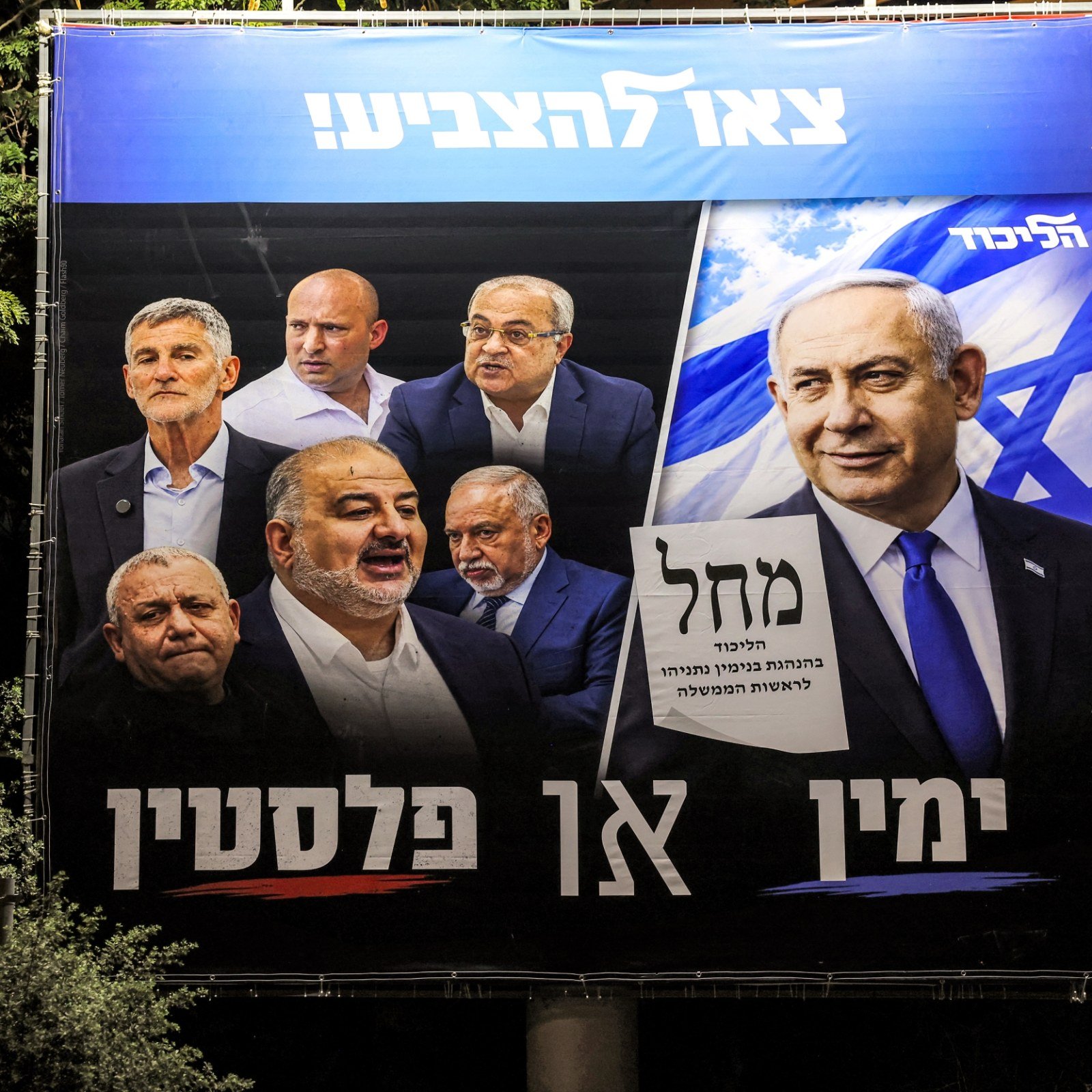
JERUSALEM, October 2026 : Israelis are set to vote on Tuesday in the country's first national elections since Hamas' October 7, 2023, attack, with Prime Minister Benjamin Netanyahu's leadership, security record and political future dominating the campaign.
The election is widely viewed as a referendum on Netanyahu, Israel's longest-serving prime minister, whose handling of the security failures surrounding the attack and the wars that followed has become a central political issue. However, the campaign has featured limited debate over Israel's military conduct in Gaza, its operations in Lebanon and Syria, and its wars against Iran, despite the international criticism surrounding these conflicts.
Instead, the main political blocs have focused on Netanyahu's leadership and character, exemptions from military service for ultra-Orthodox Jewish men, the government's controversial judicial overhaul and the rising cost of living.
The major electoral blocs broadly support Jewish settlements in the occupied West Bank and oppose the establishment of a Palestinian state. No leading candidate has made reviving the long-stalled Israeli-Palestinian peace process a central campaign promise.
Netanyahu's Record on October 7 Attack
The October 7 attack remains a defining issue for many Israeli voters. Images of soldiers killed in combat and yellow ribbons associated with the hostages have remained visible in public spaces. The last hostages were returned under a ceasefire agreement reached the previous year, according to the supplied report.
A survey by the Israel Democracy Institute, a Jerusalem-based think tank, found that around 68 per cent of Jewish Israelis considered their attitudes towards October 7 a central factor in deciding which party to support. Among Arab citizens of Israel, the figure was 32 per cent, with many identifying crime as their principal concern.
Netanyahu has emphasised Israel's military achievements against Hamas in Gaza, Hezbollah in Lebanon and Iran, which Israel regards as a major regional adversary. He has also sought to place responsibility for aspects of the October 7 security failure on officials within the country's security establishment.
His critics accuse him of avoiding political accountability by resisting calls for an official inquiry into the attack. They also argue that his government failed to secure the release of hostages sooner and did not achieve a decisive outcome against Israel's adversaries.
The election is therefore expected to test how voters assess the government's security record and its response to the attack.
Military Service Exemptions Become a Major Issue
The exemption of ultra-Orthodox Jewish men from compulsory military service has emerged as another significant campaign issue.
Netanyahu's governing coalitions have traditionally depended on ultra-Orthodox parties that support exemptions for men engaged in full-time religious studies. The arrangement has generated growing resentment among secular Israelis, particularly as reservists have repeatedly been called up during the country's military operations.
Military service is compulsory for most Jewish men and women in Israel. According to the figures cited in the report, approximately 13,000 ultra-Orthodox men reach the age of 18 annually, but fewer than 10 per cent enlist.
Tamar Hermann, an expert on Israeli public opinion at the Israel Democracy Institute, said military service had become closely associated with social belonging and citizenship.
Gadi Eisenkot, Netanyahu's principal rival in the election, has pledged to end the existing exemptions. The centrist politician and former military chief has also suffered personal losses, with his son and two nephews killed in combat in Gaza.
Yohanan Plesner, president of the Israel Democracy Institute, described military service exemptions as a leading issue for the anti-Netanyahu bloc.
Judicial Overhaul Continues to Divide Israel
Netanyahu's proposed judicial overhaul triggered mass protests in 2023 and deepened political divisions before the Hamas attack.
The government argued that the reforms were intended to curb the power of unelected judges. Opponents viewed them as an attempt to weaken judicial independence and concentrate power in the executive, particularly as Netanyahu faced corruption charges.
Public attention shifted towards the war and the hostages after October 7, reducing the prominence of the judicial dispute. The Israel Democracy Institute found that only 18 per cent of Jewish Israelis considered the judicial overhaul a major factor in their voting decision.
Last year, parliament passed legislation expanding the government's role in judicial appointments. The measure is due to take effect after the next legislature is sworn in, while the anti-Netanyahu bloc has pledged to repeal it.
Leadership and Coalition Arithmetic
Israel's parliamentary system requires parties to secure a coalition majority in the 120-member Knesset. No single party is expected to win the 61 seats needed for an outright majority, making post-election negotiations crucial.
If no bloc can assemble a governing majority, Netanyahu's administration could continue as a caretaker government until another election is held.
Netanyahu's supporters portray him as an experienced statesman who has resisted international pressure on security matters. His opponents question his integrity and blame his leadership for the country's political divisions and security failures.
Eisenkot's supporters highlight his military experience and personal sacrifices during the conflict. His background as the son of Moroccan Jewish immigrants has also drawn attention, although it has not been a central theme of his campaign.
Economy and Cost of Living Remain Concerns
Despite the focus on security and leadership, economic pressures remain important to voters. The cost of living in Israel has risen sharply and is higher than in several wealthy European countries, according to research cited from Sarit Menahem-Carmi of Reichman University's Aaron Institute for Economic Policy.
Netanyahu argues that his economic policies have encouraged growth and helped develop Israel's technology sector. Critics contend that the benefits have not reached all households, while military expenditure has added pressure to public finances.
The Israel Democracy Institute found that 38 per cent of Jewish Israelis ranked the economy and cost of living among their top two election issues. Among Arab citizens, the figure was 46 per cent.
Yet economic policy has received comparatively limited attention during the campaign. Hebrew University economics professor Joseph Zeira has warned that the financial consequences of prolonged conflict cannot be overlooked.
"The cost of the conflict is tremendous," Zeira said.
As Israelis prepare to vote, the outcome will reflect competing assessments of Netanyahu's security record, military policy, judicial reforms and economic management. The result will also determine whether the prime minister can assemble another coalition or whether Israel enters a new phase of political negotiations and uncertainty.
(Disclaimer :The content of this article is sourced from a news agency and has not been edited by the Mavericknews30 team.)