BRASILIA, Oct 2026 : Brazil’s leftist President Luiz Inacio Lula da Silva has secured a dramatic re-election victory, winning an unprecedented fourth presidential term after defeating conservative rival Flavio Bolsonaro. However, Bolsonaro has refused to accept the result and vowed to seek annulment of the election, highlighting deep political divisions in Latin America’s largest country.
According to official results, Lula secured 51.8 per cent of the vote against 48.2 per cent for Bolsonaro, giving the incumbent a lead of approximately 4.4 million votes. The victory marks a significant comeback for the 80-year-old leader, who turns 81 on Tuesday, amid a broader conservative shift in several Latin American countries.
Lula’s win comes as countries including Argentina, Chile, Colombia and Peru have experienced shifts towards the political right, with US President Donald Trump’s administration supporting conservative allies in the region.
Flavio Bolsonaro, a senator and son of former far-right president Jair Bolsonaro, rejected the outcome and announced plans to challenge the results.
“It is impossible to recognize the results. I am going to request the annulment of these elections,” he said during a brief address in Brasilia, describing the voting extension as an “unacceptable” move and a “dirty trick.”
His father, Jair Bolsonaro, is serving a 27-year prison sentence following his conviction over an attempted coup after losing the 2022 presidential election to Lula.
Voting Extension Sparks Controversy
Sunday’s presidential runoff was marked by controversy after Brazil’s Supreme Court extended voting by two hours, even as some polling stations had already closed.
The extension followed a request from Lula, who alleged that buses had been withdrawn from circulation in several cities, preventing some voters from reaching polling stations. Flavio Bolsonaro also sought extensions in certain regions because of heavy rainfall but subsequently criticised the decision.
The dispute added to tensions surrounding an intensely contested election. Since Brazil returned to direct presidential elections in 1989, no candidate who lost the first round had gone on to win the runoff, making Lula’s comeback particularly notable.
In his first remarks following the victory, Lula said voter mobilisation had been crucial to protecting democracy.
“People went to vote because we managed to convince them that voting was very important for ensuring democracy in the country,” he said.
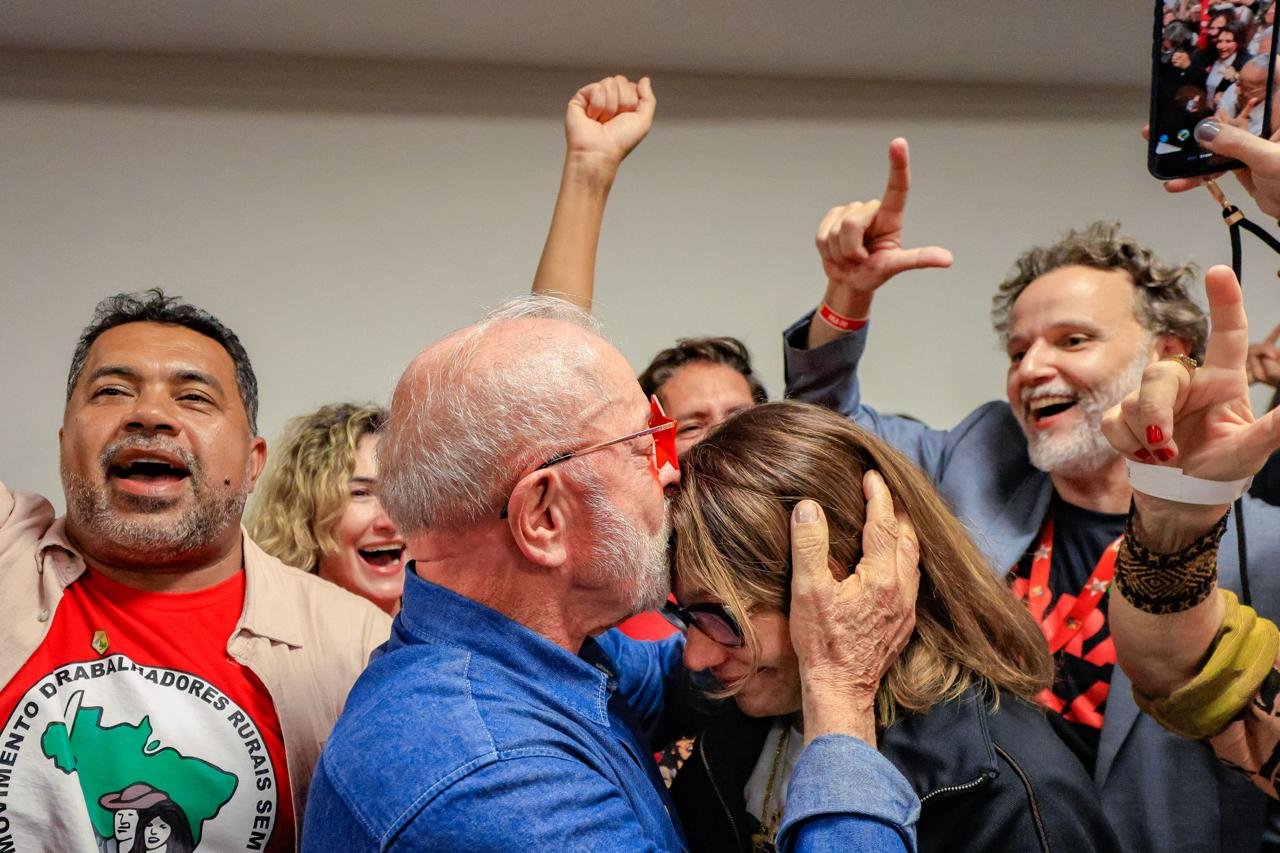
Celebrations erupted across Brazil after the results were announced. Fireworks and vuvuzelas echoed through Rio de Janeiro, while thousands of supporters dressed in red, the colour of Lula’s Workers’ Party, gathered on the streets of Sao Paulo.
Lula’s Campaign Regains Momentum
Lula’s victory followed an intensive campaign after his performance in the first round fell short of expectations. Left-wing supporters organised large rallies under the slogan “Never Again Bolsonaro” and strengthened their digital campaigning to mobilise voters.
The abstention rate declined from 21 per cent in the first round to 19 per cent in the runoff, indicating increased participation.
Julio Canelo, a 42-year-old lawyer celebrating in Rio de Janeiro, described the result as a victory for the broader democratic movement.
“It was the result of the people mobilizing, in the streets and online,” he told AFP.
Social media also became a major battleground during the campaign. Lula’s team accused Meta, the parent company of WhatsApp, Facebook and Instagram, of favouring Bolsonaro through alleged “algorithmic manipulation.” Meta denied the accusation but acknowledged that some advertisements from Lula’s campaign had been mistakenly deactivated because of technical errors.
After his victory, Lula renewed calls for regulation of social media companies.
“We are going to have to regulate them,” he said, adding another policy challenge to his incoming administration.
Brazil Remains Deeply Divided
Despite Lula’s victory, the narrow margin shows that nearly half of Brazilian voters preferred Bolsonaro, reflecting persistent divisions over the economy, crime and the country’s political direction.
Lula first rose to the presidency in 2003 after growing up in poverty and won re-election in 2006. He returned to office in 2023 after defeating Jair Bolsonaro in 2022, following a corruption scandal that had resulted in his imprisonment for more than 18 months. The convictions were subsequently annulled on procedural grounds.
During his third term, Lula’s government oversaw declines in inflation and unemployment and expanded efforts to reduce hunger. However, concerns about the cost of living and crime continued to weigh on public sentiment.
Flavio Bolsonaro, 45, sought to distinguish himself from his father by presenting a more moderate and approachable image, attracting conservative voters as well as those seeking political change.
“We’re in a deep hole, things are dire. People can barely afford to eat — buying meat is out of the question,” said Tereza Cristina Ramos, a 68-year-old retiree who voted in Rio de Janeiro.
Challenges Await Lula’s Fourth Term
Lula’s next term will bring significant challenges. He will govern a country where the electorate remains divided and face a Congress dominated by right-wing lawmakers, potentially complicating efforts to advance his legislative agenda.
His campaign also emphasised Brazilian sovereignty amid commercial and diplomatic pressure from the United States under Trump.
“This country will not accept being anyone’s backyard,” Lula said on Sunday.
International reactions reflected a mix of political perspectives. Chilean President Jose Antonio Kast and Ecuadorian President Daniel Noboa, both conservative leaders aligned with Trump, congratulated Lula on his victory. Mexico’s left-wing President Claudia Sheinbaum also welcomed the result, writing on X: “Long live democracy, the people of Brazil won.”
As Lula prepares for his fourth term, the election outcome gives Brazil’s left another mandate while underscoring the difficulties of governing a nation sharply divided over its economic priorities, political leadership and international relationships.
(Disclaimer :The content of this article is sourced from a news agency and has not been edited by the Mavericknews30 team.)