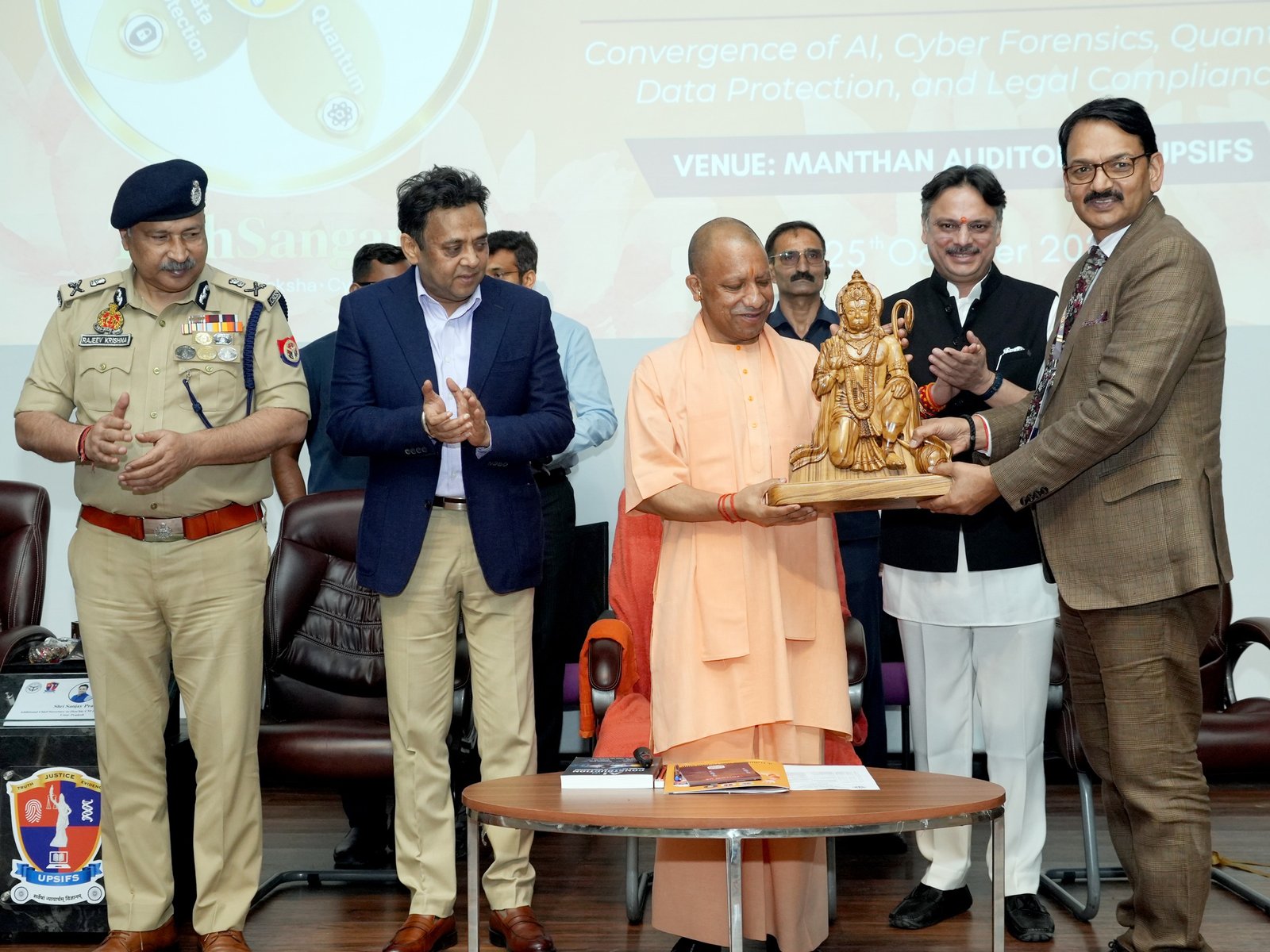
At International Tech Sangam 2026, Uttar Pradesh Chief Minister says the ‘reel life’ of CID has become ‘real life’ in the state
AI should assist, not make decisions; technology must be guided by human judgment: CM
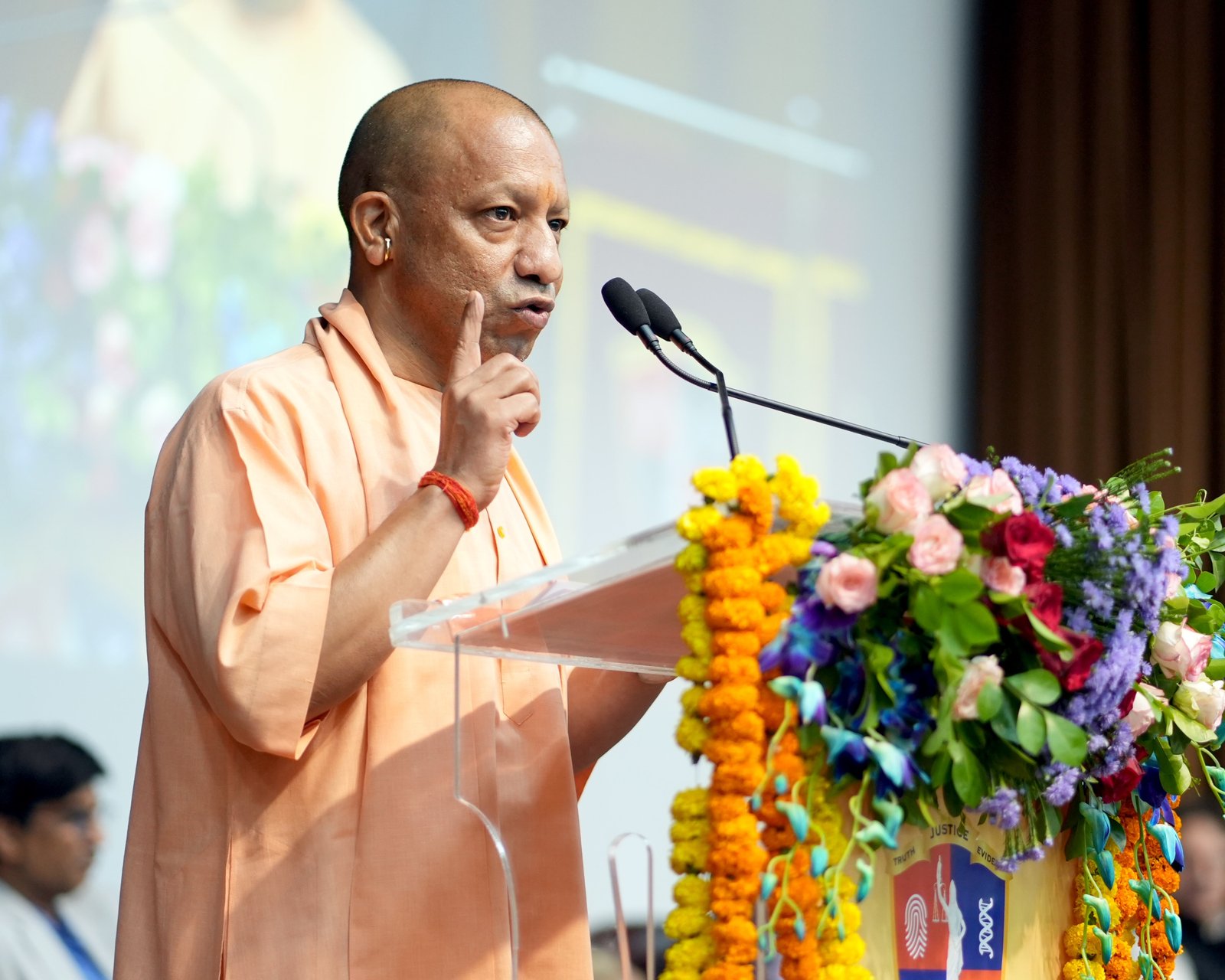
Lucknow, October 2026 : Uttar Pradesh Chief Minister Yogi Adityanath said that in an era of artificial intelligence (AI) and deepfake technology, no matter how effectively criminals attempt to conceal their identities behind technology, the scientific and legal capabilities of Uttar Pradesh will track them down.
“AI can be a helpful tool for us, but it should not become the final decision-maker. Technology must be guided by human judgment, rather than human beings becoming dependent on the judgment of technology,” the Chief Minister said. He warned that complete dependence on AI could create challenges in the future.
He added that combining scientific evidence, forensic investigations and modern technology could make criminal investigations more effective and reduce delays in delivering justice.
The Chief Minister was addressing the three-day international conference Tech Sangam 2026 at the Uttar Pradesh State Institute of Forensic Science (UPSIFS) in Lucknow on Saturday.
On the occasion, he inaugurated the LEXQ Centre of Excellence, dedicated to quantum forensics and legal compliance. He also launched a consent management portal, laid the foundation stone for the ‘Abhedya’ project and released a book titled AI in Construction.
The conference brought together experts to discuss cybersecurity, digital evidence, quantum technology, forensic science and the judicial and administrative applications of artificial intelligence.
World-class forensic institute built on land reclaimed from land mafia
Highlighting the transformation in Uttar Pradesh’s law-and-order situation, Adityanath said the approximately 100-acre site on which the world-class forensic institute now stands had once been occupied by a prominent land mafia figure in Lucknow.
He said the police had been unable to take effective action at the time. After receiving information from police officials in 2017, the matter was investigated and an FIR was registered against the land mafia figure. Following the registration of a second FIR, the individual surrendered and vacated the land.
The Chief Minister observed that a decade ago, discussing cyber forensics and quantum technology in Lucknow would have seemed like a distant dream. Today, the institute established on the same land is advancing scientific investigations, modern crime detection and technical education in the state.
‘The reel life of CID has become real life in UP’
Explaining the importance of forensic science, the Chief Minister referred to the popular television crime series CID. He said people earlier watched on television how investigators identified criminals using evidence such as a single hair or fingerprint. With advances in forensic science and modern technology, such investigations are now possible in real life.
He cited a criminal case in which the first offence was committed in 1980, but the accused was convicted only in 2022—42 years later—because of a lack of evidence and the destruction of DNA samples. The case, he said, demonstrated the importance of scientific evidence and the timely collection and preservation of forensic material.
Adityanath said the new criminal laws placed particular emphasis on collecting forensic evidence in offences punishable with imprisonment of more than seven years.
To strengthen forensic investigations, laboratories are being developed across all 18 police ranges in Uttar Pradesh. Twelve laboratories have been completed, while six others are in the final stages of development. More than 150 forensic vans have also been deployed to help investigators reach crime scenes, collect evidence and speed up investigations.
The objective is to strengthen criminal cases through scientific evidence and reduce unnecessary delays in court proceedings.
LEXQ Centre to promote ‘Law with Labs’
Emphasising the concept of ‘Law with Labs’, the Chief Minister said science and law must complement each other. Reliable scientific investigations and the legally appropriate use of evidence can make the justice system more effective.
The LEXQ Centre of Excellence will connect quantum technology with law, security and forensic science. While ‘LEX’ refers to law, ‘Q’ represents quantum technology. The centre will promote quantum forensics, legal compliance, research and technical education, opening new avenues for collaboration between modern science and the legal system.
UP targets five gigawatts of data centre capacity by 2030
Describing data as the “new oil”, Adityanath said data and technology had become key drivers of economic growth in the 21st century.
Uttar Pradesh aims to develop five gigawatts of data centre capacity by 2030 and is working towards establishing five major data centre clusters. He also referred to the proposed semiconductor fabrication unit in Noida, described as the first of its kind in North India.
Investments in data centres, semiconductors, cybersecurity and AI would strengthen the state’s technological capabilities and create new opportunities, he said.
35,000 industries established in UP since 2017
Speaking about industrial development, Adityanath said approximately 14,000 industries had been established in Uttar Pradesh between 1947 and 2017, while 35,000 new industries had come up since 2017.
He attributed the change to improvements in law and order and a more investment-friendly environment. The state has a land bank of approximately 75,000 acres and has received investment proposals worth Rs 50 lakh crore, he said.
Citing HCL’s Lucknow centre, the Chief Minister said its workforce had grown from around 100 employees in 2017 to 12,600. Women are also working night shifts, which he presented as an example of improved security and increasing female workforce participation.
Ayodhya’s transformation and infrastructure expansion
The Chief Minister referred to the launch of Deepotsav in Ayodhya and the city’s transformation. He said electricity availability had been limited in 2017, whereas Ayodhya was now being developed as a solar city and had an international airport.
Uttar Pradesh accounts for approximately 60 per cent of the country’s expressway network and has five international and 17 domestic airports, he said. Infrastructure expansion and a favourable investment climate have strengthened the state’s economy and helped it emerge among India’s leading economies.
Institute has trained over 5,000 officials
UPSIFS founding director Dr G.K. Goswami outlined the institute’s establishment and achievements. He said Union Home Minister Amit Shah laid its foundation stone on August 1, 2021.
The institute has developed advanced laboratories for DNA, cyber and digital forensics and is working to strengthen criminal investigations through AI, robotics and other emerging technologies. It has trained more than 5,000 officials from the police, defence forces and administration.
Director General of Police Rajiv Krishna highlighted discussions on cyberbullying and digital evidence, as well as the institute’s role in training crime-scene management specialists and developing modern forensic capabilities.
Professor Tanuja Singh, president of the University of Indianapolis in the United States, praised Uttar Pradesh’s work in AI and cyber technology. She said the state was developing the potential to provide leadership in these fields both nationally and globally, adding that its students would play an important role in shaping India’s future.
MoUs signed with national and international institutions
During Tech Sangam 2026, memorandums of understanding were signed with national and international organisations in education, technology, forensic science and skill development.
The institutions included the University of Indianapolis, Jiwaji University in Gwalior, SANS Institute, Uttar Pradesh Skill Development Mission, National Institute of Electronics and Information Technology, Directorate of Forensic Science Services, Digital India Corporation, Software Technology Parks of India and the Centre for Development of Advanced Computing (C-DAC).
Among those present were NITI Aayog member Professor Abhay Karandikar, Rear Admiral Sanjay Sachdeva, Director General of the Defence Cyber Agency, Uttar Pradesh Additional Chief Secretary (Home) Sanjay Prasad, DGP Rajiv Krishna, Sarojini Nagar MLA Dr Rajeshwar Singh and UPSIFS founding director Dr G.K. Goswami, along with cybersecurity and forensic experts, academics and students from India and abroad.