Mumbai, October 2026: Maharashtra Chief Minister Devendra Fadnavis on Tuesday said the newly launched ‘Participate Mumbai’ initiative would provide an institutional platform for citizens, corporates, social organisations and experts to work together for the city’s development.
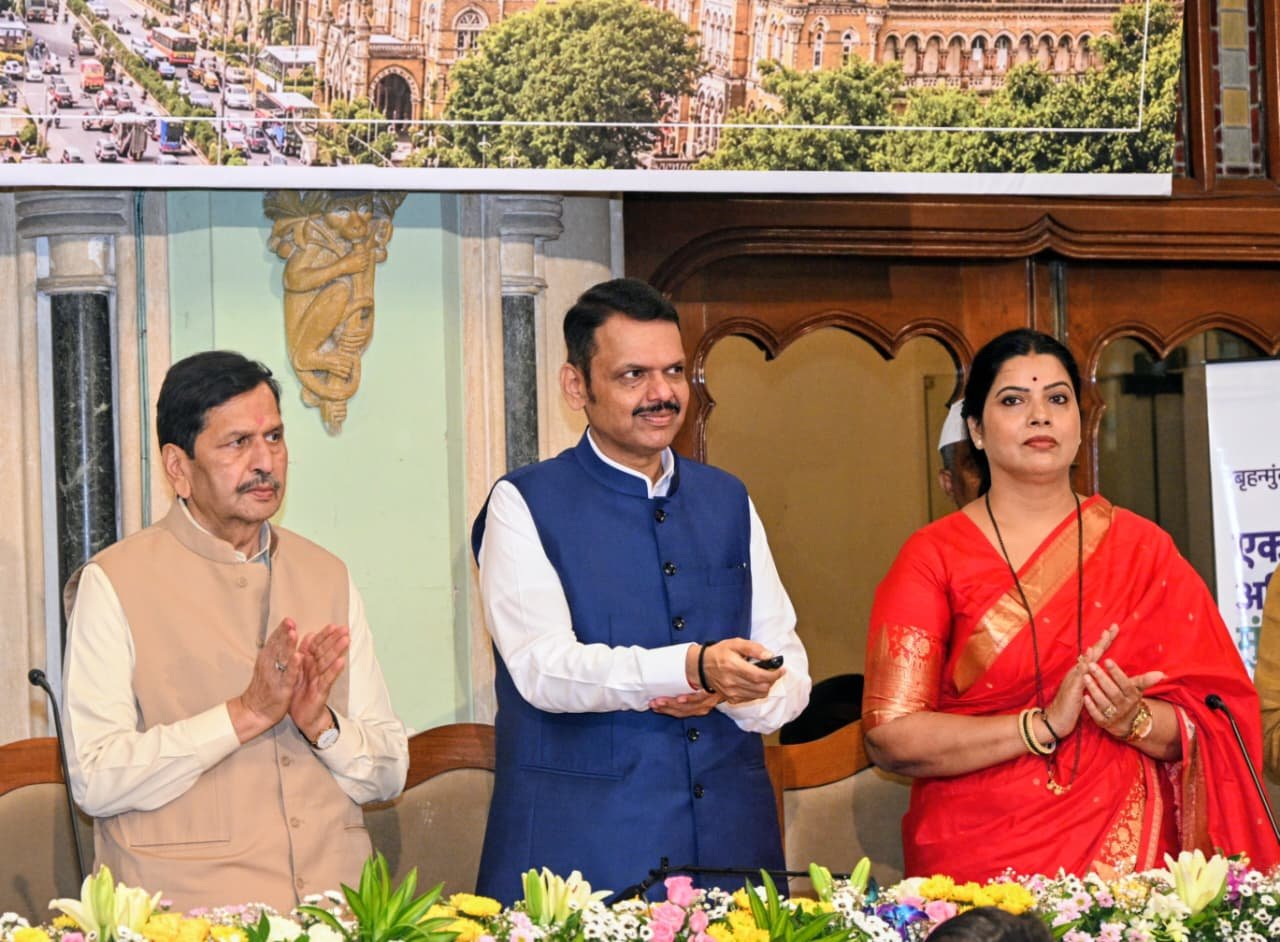
Fadnavis launched the initiative and witnessed the exchange of a Memorandum of Understanding between the Brihanmumbai Municipal Corporation (BMC) and Samagra, aimed at improving service delivery, simplifying administrative processes and enhancing efficiency.
Speaking at the BMC headquarters, Fadnavis said ‘Participate Mumbai’ was not merely a platform for mobilising Corporate Social Responsibility (CSR) funds, but an avenue through which the government, civic administration, corporate sector and social organisations could collaborate on development projects.
He said details of projects requiring partnerships with the municipal corporation would be made available on the digital platform. Companies, NGOs and citizens interested in areas such as education, healthcare, water management, employment, environment, parks, beautification and poverty alleviation would be able to select projects according to their interests.
Organisations wishing to undertake projects in specific areas would also be able to submit their own proposals through the platform. This, he said, would help bridge the gap between the civic administration and the social and corporate sectors and accelerate development initiatives.
‘Impact, Not Spending, Matters in CSR’
Fadnavis said the success of CSR should not be measured merely by the amount of money spent, but by the number of people benefiting from it and the impact created on the ground.
He said CSR partnerships could bring new technologies, modern management practices, effective monitoring systems and flexible working methods to government programmes. Combining the strengths of government machinery with CSR partners could therefore lead to more effective outcomes.
The Chief Minister also stressed the need to focus on malnutrition in Mumbai. While the BMC had undertaken substantial work in infrastructure, greater intervention was required in education, healthcare and nutrition.
He pointed out that problems such as malnutrition, stunted growth and wasting continued to affect children in some parts of the city, particularly in slums and economically weaker settlements. CSR partnerships, he said, could be used effectively to improve nutrition among children, which has a direct bearing on brain development, educational performance and immunity.
Administrative Processes to be Re-engineered
Fadnavis described the MoU with Samagra as an important step towards making the BMC administration more efficient, transparent and citizen-centric.
He said administrative processes must evolve with changing times, noting that several government procedures continued to follow methods designed many years ago. Citizens today expect faster services and quicker resolution of their problems.
He stressed the need for business process re-engineering by eliminating unnecessary stages in administrative procedures.
The state government had attempted to bring around 1,100 citizen services online. However, an analysis showed that nearly 200 of these services were not being used by citizens. The government subsequently identified around 45 to 47 services and schemes that were widely used.
Fadnavis said improving the delivery mechanisms of these key services could enable nearly 90 per cent of citizens to receive faster and better services. The restructuring process is in its final stage and will be implemented shortly, he said.
AI to Transform Building Permission Process
The Chief Minister said the BMC’s building department had introduced an artificial intelligence-based system for scrutinising building plans.
He said the objective should be to progressively reduce human intervention, eventually moving towards a system with minimal or zero human intervention wherever feasible. Such reforms, he said, would improve the ease of doing business in Mumbai.
Fadnavis also stressed that the administration must be willing to change with the times and move away from a mindset that resists new methods simply because existing procedures have been followed for years.
Citizen Participation to Get Institutional Framework
Mumbai Mayor Ritu Tawde described the launch of ‘Participate Mumbai’ and the MoU with Samagra as an important development in the city’s administrative journey.
She said the initiative would give institutional form to public participation in Mumbai’s development. Instead of viewing administration and citizens as two separate entities, the collective strength of Mumbaikars should become a defining feature of the city’s development.
Tawde said CSR should not be limited to writing cheques but should become a means of creating measurable change. ‘Participate Mumbai’ would connect the willingness and capabilities of industries, organisations, NGOs and citizens with the civic body’s development requirements.
She added that the municipal administration must be sensitive and responsive so that ordinary citizens do not have to make repeated visits to civic offices, complaints are resolved within time and services remain transparent and secure.
BMC Capacity and Service Delivery to be Strengthened
BMC Commissioner Ashwini Bhide said continuous improvements in the administrative system were necessary to provide citizen-centric, transparent and speedy services to a city with a population of more than two crore.
Through ‘Participate Mumbai’, industries, corporate organisations, NGOs, experts and citizens would be able to contribute to various civic projects through funding, material support, specialised knowledge or voluntary services.
The civic body also plans to develop systems to assess and comparatively review the performance of different departments and wards.
Bhide said ‘Participate Mumbai’ would connect external expertise and resources with Mumbai’s needs, while the partnership with Samagra would strengthen the BMC’s internal administrative capacity and service delivery systems.
Skills, Employment, Entrepreneurship and Innovation Minister and Mumbai Suburban District Guardian Minister Mangal Prabhat Lodha, Deputy Mayor Sanjay Ghadi and other civic officials, corporators, employees, industry representatives and NGO members were present.
During the event, information booklets on ‘Participate Mumbai’ and the Samagra initiative were unveiled. Hindustan Unilever also handed over Rs 25 crore in CSR funding to the BMC for setting up 10 new civic facility centres in Mumbai.