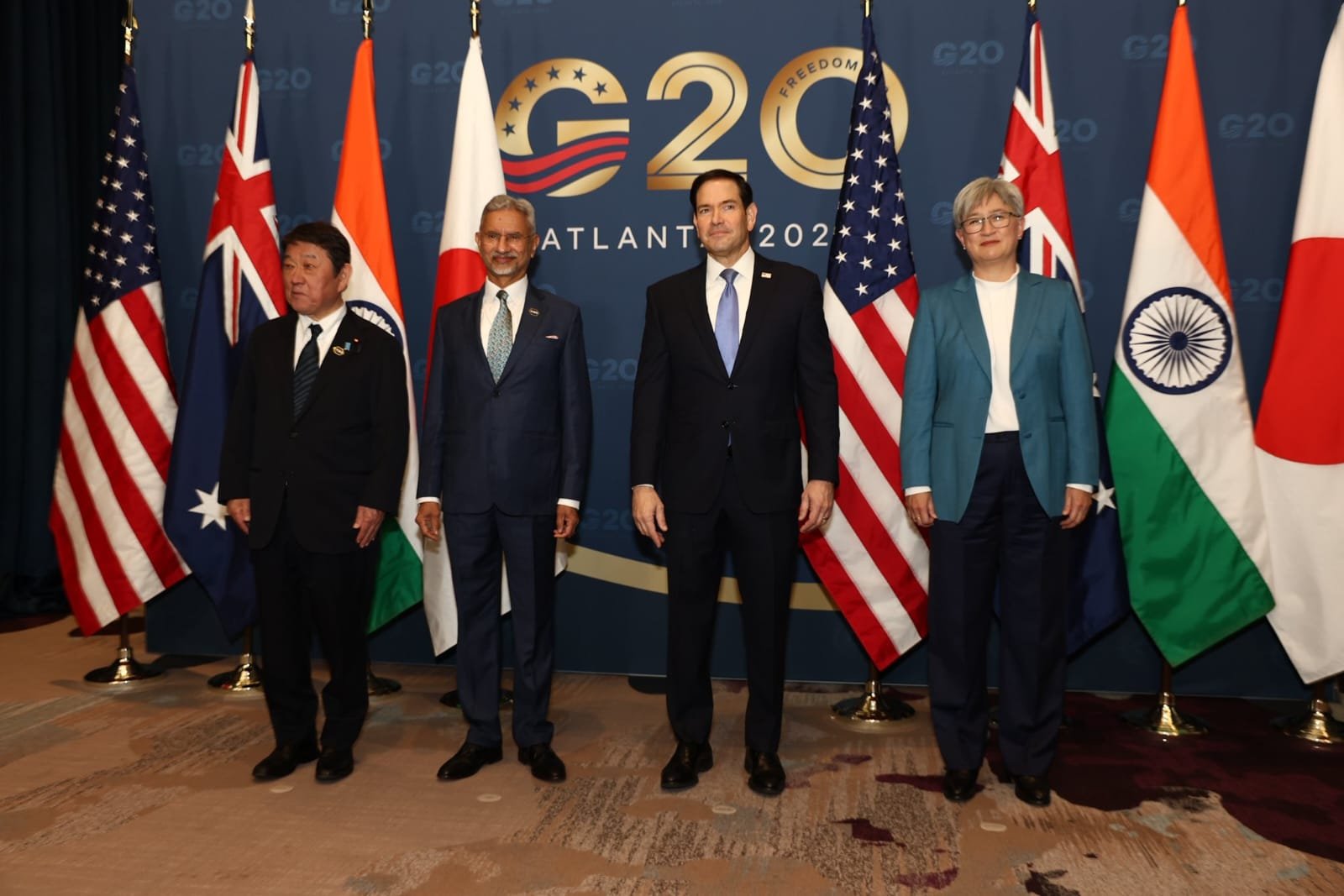
Atlanta, October 2026: Foreign ministers of the Quad countries met in Atlanta, the United States, on Saturday to strengthen strategic cooperation and advance shared priorities across the Indo-Pacific region, with a focus on maritime security, economic prosperity, supply-chain resilience and emerging technologies.
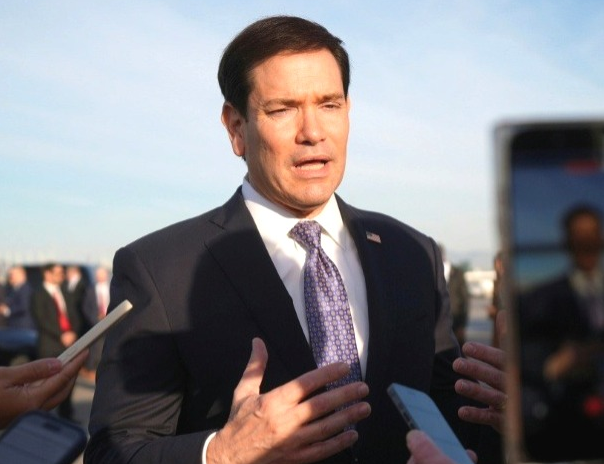
The meeting was attended by India’s External Affairs Minister Dr. S. Jaishankar, US Secretary of State Marco Rubio, Japan’s Foreign Minister Toshimitsu Motegi and Australia’s Foreign Minister Penny Wong.
The discussions centred on translating the four countries’ common priorities into practical initiatives that deliver tangible benefits to the Indo-Pacific and its people. Rubio underscored the need for the Quad to move beyond dialogue and focus on outcomes that strengthen regional security, stability and prosperity.
The meeting came amid growing challenges across the Indo-Pacific, including maritime security concerns, the protection of vital trade routes, disruptions to global supply chains and rapid advances in critical technologies. The four countries agreed to continue working through the Quad to address these challenges and promote a free, open, inclusive and stable regional order.
According to information released by Japan’s Ministry of Foreign Affairs, the ministers agreed to sustain cooperation across four key areas: maritime and international security; economic prosperity and security; critical and emerging technologies; and humanitarian assistance and disaster relief.
The ministers also highlighted the importance of economic security in supporting regional stability and global prosperity.
Maritime Security a Key Priority
Maritime security featured prominently in the discussions, given the Indo-Pacific’s importance to international trade and transportation. The region’s sea lanes carry substantial volumes of energy resources, food and other essential commodities, making their security and the freedom of navigation shared priorities for all four countries.
The Quad ministers stressed the need to enhance cooperation in maritime monitoring and information-sharing, including the exchange of maritime domain awareness information. They also discussed strengthening logistics networks, protecting undersea communication cables, expanding training and improving capacity-building initiatives.
These efforts are intended to improve the collective ability of Indo-Pacific countries to respond to emerging maritime challenges and safeguard critical infrastructure. The ministers reiterated that secure sea lanes and resilient maritime systems are essential to regional economic activity and international commerce.
Supply Chains and Economic Security
Economic security and supply-chain resilience were also central to the meeting. Geopolitical tensions, trade disruptions and conflicts in different parts of the world have placed pressure on international markets, underscoring the need for reliable and diversified supply networks.
The four countries reaffirmed their commitment to strengthening open and dependable global supply chains, particularly for critical minerals, energy resources, fertilisers and food supplies. They also emphasised the importance of building resilient infrastructure capable of withstanding disruptions.
The discussions reflected the Quad’s growing focus on economic security as a strategic priority, alongside traditional security cooperation. The ministers agreed that stronger economic links and reliable supply networks would help protect regional prosperity and reduce vulnerabilities.
Cooperation on Critical and Emerging Technologies
The meeting also focused on critical and emerging technologies, particularly artificial intelligence and the development and deployment of trustworthy AI systems.
The ministers agreed on the importance of promoting reliable technological innovation across the Indo-Pacific and expanding cooperation in areas that can support economic growth and regional development.
They also welcomed progress in economic cooperation, including the launch of the Quad Business Leaders Forum. The initiative is expected to support greater engagement among businesses and strengthen commercial partnerships across the four countries.
India’s Role in the Quad
India’s participation was viewed as significant, given its position as a major maritime power in the Indian Ocean and its longstanding support for a free, open and inclusive Indo-Pacific.
Through the Quad, India works with the United States, Japan and Australia on maritime security, technology cooperation, disaster management and economic development. The grouping provides a platform for the four countries to coordinate on shared regional challenges while pursuing practical initiatives.
During his visit to Atlanta, Jaishankar also held discussions with Rubio on bilateral India-US relations. The two ministers reviewed cooperation between the countries. Following the meeting, Jaishankar expressed appreciation for Rubio’s hospitality in a social media post and said they had taken stock of bilateral cooperation.
Third Quad Foreign Ministers’ Meeting of 2026
The Quad comprises India, the United States, Japan and Australia. Its objective is to promote cooperation across the Indo-Pacific and develop joint responses to shared challenges.
The Atlanta meeting was the third Quad foreign ministers’ meeting held in 2026. The ministers had previously met in May and July this year.
During Saturday’s discussions, the four countries also exchanged views on the forthcoming Quad Leaders’ Summit and the next foreign ministers’ meeting. They agreed to maintain coordination and continue working together on issues affecting regional interests.
Media reports indicate that preparations are underway for the next Quad Leaders’ Summit to be held in Manila, the capital of the Philippines, in November.
The Atlanta meeting is being viewed as an important step in advancing the strategic partnership among the four countries. By focusing on maritime security, economic resilience, supply-chain reliability and emerging technologies, the Quad has signalled its intention to pursue concrete initiatives rather than limit its engagement to discussions.
The ministers reiterated that sustained cooperation among the four countries could contribute to a more secure, resilient and prosperous Indo-Pacific, with practical benefits for countries and communities across the region.
(Disclaimer :The content of this article is sourced from a news agency and has not been edited by the Mavericknews30 team.)