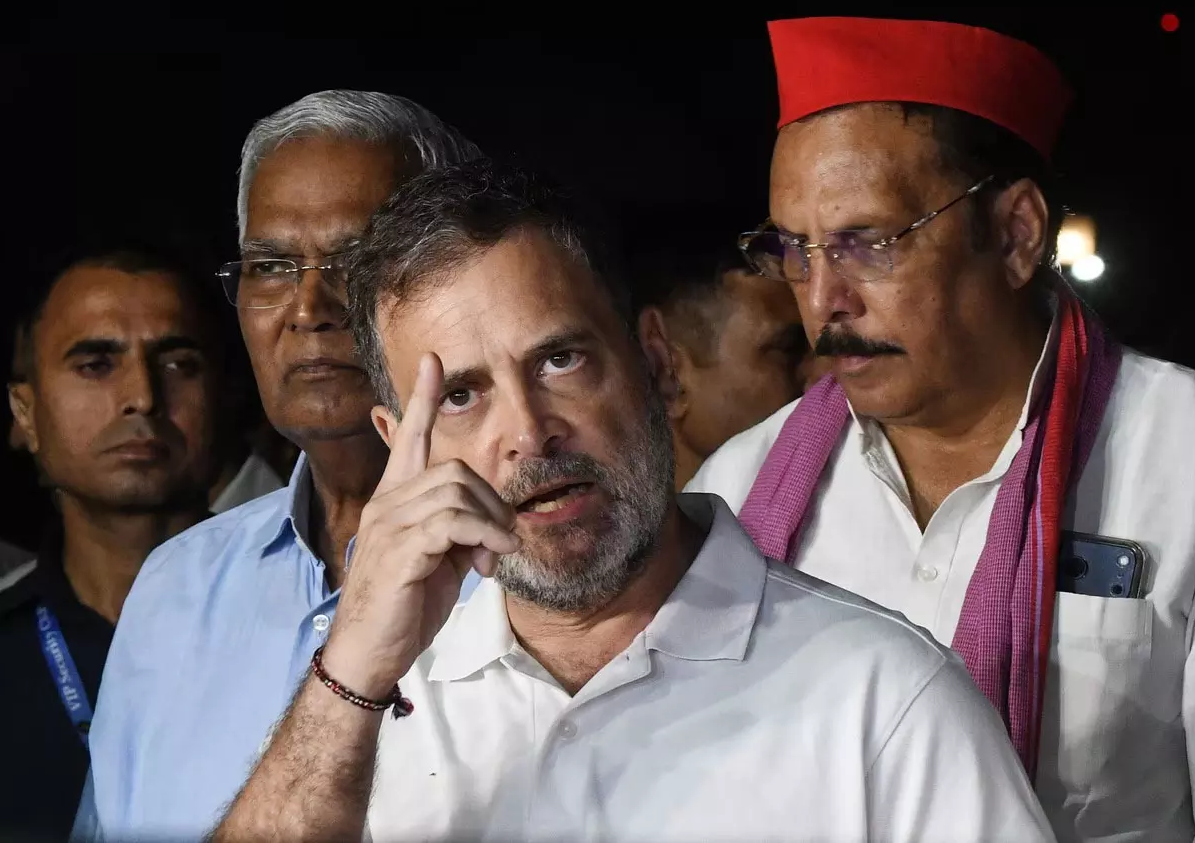
New Delhi, October 2026 : Congress leader and Leader of the Opposition in the Lok Sabha Rahul Gandhi has intensified the political debate over the functioning of the Election Commission of India (ECI), saying that the departure of Chief Election Commissioner Gyanesh Kumar and the present government would mark the beginning of the “repair of democracy”.
Gandhi’s remarks came amid a proposed protest by the Cockroach Janata Party (CJP) at Jantar Mantar in Delhi, demanding Kumar’s resignation and raising questions about the functioning of the poll panel. Although the Congress has maintained its distance from direct participation in the CJP demonstration, Gandhi’s statement reflects the party’s continuing criticism of the Election Commission and its handling of electoral processes.
In a post on social media platform X, Gandhi wrote, “Gyanesh Kumar will go. This government will go. Then the repair of democracy will begin.”
The statement, posted on Saturday, October 10, was interpreted as a political attack on the BJP-led Union government and the Chief Election Commissioner. However, the Congress has not formally announced its participation in the CJP protest, and Gandhi’s remarks do not establish any formal alliance or joint campaign between the two organisations.
Rahul Gandhi renews questions over Election Commission
Gandhi has repeatedly questioned the functioning of the Election Commission, particularly over the Special Intensive Revision (SIR) of electoral rolls. The Congress has argued that electoral procedures must be transparent, impartial and accountable to ensure that voters’ rights are protected.
The Election Commission, however, has contested several allegations made by the Congress. In a recent exchange, the poll panel described Gandhi’s remarks concerning Form 6, used in the process of registering new voters, as misleading and defended the procedures followed by the commission.
The disagreement has kept electoral transparency and the management of voter lists at the centre of the political debate. While opposition parties have sought explanations regarding aspects of the revision process, the Election Commission has maintained that its procedures are conducted under the applicable rules.
The latest exchange has also brought renewed attention to the broader question of the accountability of constitutional institutions and the relationship between the poll panel and political parties.
Congress keeps its distance from CJP protest
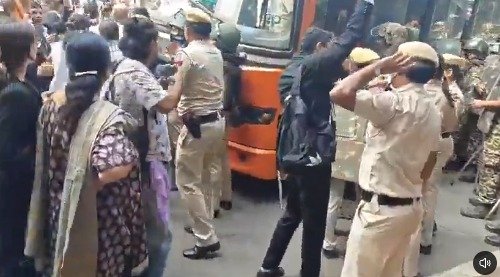
The CJP called for a demonstration at Jantar Mantar against Chief Election Commissioner Gyanesh Kumar, questioning the commission’s functioning and demanding his resignation.
The proposed protest drew responses from several opposition parties. According to reports, the Aam Aadmi Party (AAP), the Trinamool Congress and Left parties expressed support for the demonstration. The Congress, however, stayed away from direct organisational participation in the event.
Despite this distance, Gandhi’s public statement has highlighted areas of overlap between the Congress’s criticism of the Election Commission and the issues being raised by the CJP. Both have questioned the role of the Chief Election Commissioner, although their organisational activities and programmes remain separate.
The distinction is significant because Gandhi’s remarks cannot, by themselves, be taken as confirmation of a coordinated protest or formal political understanding between the Congress and the CJP.
Special Intensive Revision remains at the centre of dispute
The controversy surrounding the Special Intensive Revision of electoral rolls has become a major point of disagreement between opposition parties and the Election Commission.
Several opposition leaders have raised concerns about the process and sought clarification from the poll panel. Gandhi has also questioned aspects of voter-list management and the conduct of electoral procedures, arguing that accountability is essential to the functioning of a democracy.
The Election Commission has defended its decisions and procedures, maintaining that electoral-roll revision is carried out in accordance with established rules. The opposing positions have kept questions of transparency, fairness and voter participation prominent in the political discourse.
For the Congress, the issue forms part of its broader criticism of the government and institutions involved in conducting elections. The poll panel, meanwhile, has challenged specific allegations and defended its actions.
BJP hits back at opposition
The BJP has criticised Gandhi’s remarks and the proposed CJP demonstration, accusing opposition parties of targeting constitutional institutions.
BJP National President Nitin Nabin earlier criticised the CJP protest and the opposition’s position. He alleged that attempts were being made to create instability in the country and accused Rahul Gandhi and the CJP of seeking to undermine the nation’s stability. Nabin also claimed that foreign forces were behind the alleged attempts, a charge directed at the opposition that has not been established in the material provided.
Union Parliamentary Affairs Minister Kiren Rijiju had also criticised the Congress, saying political parties should focus on public service to earn the trust of citizens.
The BJP’s response has widened the dispute beyond the Election Commission’s functioning, turning it into another point of confrontation between the ruling party and opposition leaders.
Congress reportedly plans separate demonstration
Amid the controversy surrounding the CJP event, reports have also indicated that the Congress is preparing a separate programme against Chief Election Commissioner Gyanesh Kumar in Delhi on October 12.
Party leaders and supporters from neighbouring states are reportedly expected to participate. The proposed programme suggests that the Congress intends to continue raising its objections to the Election Commission even as it maintains organisational distance from the CJP’s Jantar Mantar demonstration.
However, the actual scale and nature of the proposed event will depend on official announcements and arrangements made by the party.
The reported plan also underlines the distinction between the Congress’s own political programme and the CJP’s protest. While the two organisations have raised concerns about the Chief Election Commissioner, there has been no formal confirmation of a joint campaign.
‘Repair of democracy’ remark draws attention
The most prominent element of Gandhi’s post was his assertion that the departure of the Chief Election Commissioner and the present government would be followed by the “repair of democracy”.
The remark represents Gandhi’s political assessment and the Congress’s position on the state of democratic institutions. It should not be interpreted as a confirmed prediction about the tenure of either the government or the Chief Election Commissioner.
Changes in the Union government take place through India’s constitutional and parliamentary processes, while the appointment and tenure of the Chief Election Commissioner are governed by the applicable constitutional and legal framework. A political statement or demand does not, by itself, bring an officeholder’s tenure to an end.
Political confrontation over poll panel continues
Gandhi’s comments have once again brought the Election Commission’s role, the revision of voter lists and the accountability of electoral institutions into the political spotlight.
The Congress has not announced direct participation in the CJP protest, but its criticism of the poll panel continues. The BJP has accused the opposition of targeting constitutional institutions, while the Election Commission has defended its procedures against specific allegations.
With a separate Congress programme reportedly planned for October 12, the coming days could see further exchanges between the ruling party and opposition over electoral transparency and the functioning of the poll panel. The immediate focus remains on the CJP demonstration, the Congress’s next steps and the responses of the Election Commission and the government.