The Trump administration has suspended eight major technology and IT services companies, including Infosys, Tata Consultancy Services, Wipro, HCL, Cognizant, Capgemini, Microsoft and Adobe, from the US Permanent Labour Certification (PERM) programme. Vice President JD Vance accused outsourcing companies of exploiting the H-1B visa system by hiring foreign workers at lower wages and displacing American employees. The Labour Department said the action followed ongoing federal investigations and would block both new and pending PERM applications involving the companies. The move could affect the pathway to permanent residency for thousands of foreign technology professionals, including Indian workers.
Washington, Oct 2026 : The Trump administration on Thursday escalated its crackdown on alleged abuse of the US foreign-worker visa system, suspending eight major technology and IT services companies from the Permanent Labour Certification Programme, commonly known as PERM.
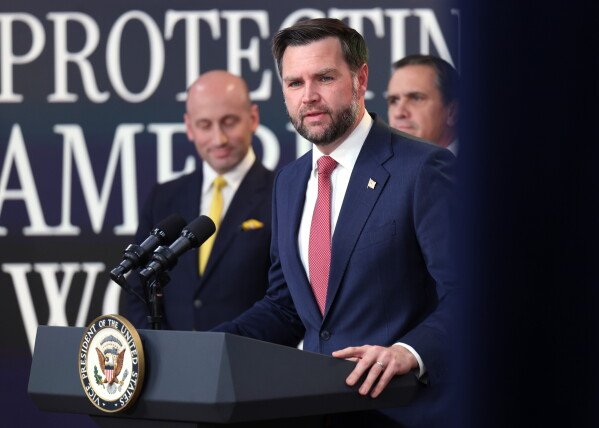
The companies affected are Cognizant, Infosys, Tata Consultancy Services, Wipro, HCL Technologies, Capgemini, Microsoft and Adobe. US Labour Secretary Keith Sonderling announced the action alongside Vice President JD Vance, saying the Labour Department would stop accepting new PERM applications from the companies and would also halt the processing of pending applications.
The PERM programme is an important step for employers seeking to sponsor foreign workers for employment-based permanent residency, commonly leading to a green card. The latest suspension therefore has implications beyond temporary H-1B employment, potentially affecting the longer-term immigration plans of foreign technology professionals working in the United States.
Vance accused major outsourcing firms of contributing to what the administration describes as abuse of the H-1B system. He alleged that foreign workers recruited through outsourcing companies were paid substantially less than Americans employed in comparable positions.
According to Vance, H-1B employees earned about $20,000 less annually than American workers in similar jobs. He claimed the wage gap was even wider for workers brought into the US through foreign outsourcing companies, alleging that such employees could earn about $48,000 less than comparable American workers.
The Vice President argued that companies were able to exploit the dependence of foreign workers on their sponsoring employers because losing a job can put an employee's immigration status at risk. He said this dependence could allow employers to reduce labour costs.
Vance said the H-1B programme was intended to help American companies recruit highly specialised talent for positions that could not be readily filled by US workers. He argued that the administration wanted companies to alter their hiring practices rather than withdraw from the American market.
The administration has also singled out Microsoft. Vance alleged that the technology giant had laid off about 6,000 American workers while benefiting from approximately 6,300 H-1B visas and nearly 3,000 green cards. He used the figures to argue that the company should increase its hiring of American workers. The allegations were made by the administration and did not establish that the layoffs or visa approvals themselves constituted violations.
Sonderling said the action against Cognizant, Infosys, Tata, Wipro, HCL and Capgemini followed ongoing criminal investigations being led by the Department of Labour's Inspector General. Microsoft and Adobe were separately suspended because of multiple active federal investigations, according to the Labour Department.
The administration has not publicly released company-specific findings detailing the alleged violations behind the suspensions. Sonderling said that, collectively, the companies covered by the action had requested nearly three million foreign workers since 2009. He said they had received more than 230,000 H-1B visa approvals and over 100,000 permanent labour certifications during that period.
The scale of those figures was cited by the administration as evidence of the companies' extensive use of foreign-worker programmes. However, the government did not provide a company-wise breakdown of the figures at the announcement.
The Justice Department is also examining alleged cases in which companies may have favoured foreign workers over Americans. Attorney General Todd Blanche said criminal prosecutions and civil lawsuits could be among the enforcement measures available to the government.
Vance has called for congressional action to reform the H-1B programme, arguing that existing regulatory and enforcement powers are not sufficient to address all alleged abuses. He said the administration would continue using investigations and regulatory measures while seeking legislative changes.
The administration has also defended higher costs for H-1B applications, arguing that companies seeking to recruit highly specialised foreign talent should be prepared to pay more.
The move is particularly significant for India's technology services industry. Indian IT companies have long relied on the H-1B system to deploy skilled professionals to US clients, while employment-based immigration programmes have provided a pathway for some workers to seek permanent residency.
However, the latest action specifically concerns the PERM programme. It does not, by itself, cancel existing H-1B visas or green cards. Instead, it prevents the affected companies from filing new PERM applications and stops the processing of pending applications under the programme.
For Indian technology professionals already working in the US, the immediate impact is therefore likely to be concentrated on employment-based green-card processing rather than the automatic termination of their existing H-1B status.
The suspension comes amid a broader tightening of US immigration enforcement under the Trump administration, with federal authorities increasing scrutiny of programmes involving foreign workers and international students. The administration's latest action places some of the world's largest technology and outsourcing companies under increased regulatory and investigative pressure.
(Disclaimer :The content of this article is sourced from a news agency and has not been edited by the Mavericknews30 team.)