As 2026 is being celebrated as the International Year of the Woman Farmer, the Maharashtra government has recently passed the Maharashtra Women Farmers Empowerment Act, 2026. Accordingly, the actual implementation of a special initiative to issue Women Farmer Certificates has begun to provide women farmers with legal recognition as independent farmers, equal rights and access to government agricultural schemes. This is information about the initiative.
Maharashtra is the third-largest state in India and the country's economic and financial centre. The state accounts for 15 per cent of India's Gross Domestic Product. With an average landholding of 1.14 hectares, the state has one of the largest landholding areas, and the agriculture sector makes a significant contribution of 11.9 per cent to its economy.
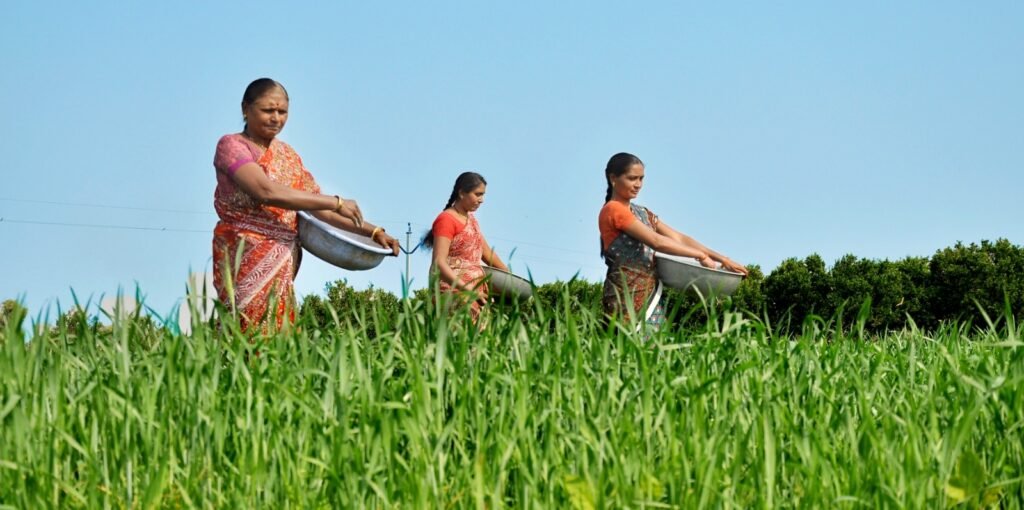
Women farmers make a significant contribution to the agricultural sectors of India and Maharashtra. Women account for 65 per cent of the total female workforce in Indian agriculture. According to the report Gender Perspective in Agriculture, 2021–22, published by the Directorate of Agricultural Extension under the Department of Agriculture and Farmers Welfare, 33 per cent of women working in agriculture are agricultural labourers, while 48 per cent are self-employed.
Particularly in Maharashtra, according to the 2015–16 Agricultural Census, women owned 14 per cent of the total operational landholdings in the state. Considering the present situation, more than 81 per cent of women participate in the state's agricultural sector.
Most agricultural policies and government schemes are male-centric. Since land ownership is a condition for women to receive the benefits of agricultural schemes, a large number of women farmers remain deprived of these schemes. Women cultivating family-owned or community land, as well as those engaged in allied occupations such as fisheries, animal husbandry, poultry farming and forest produce collection, are also not recognised as farmers.
According to the United Nations Food and Agriculture Organization, if rural women are provided access to land, technology and financial services, global agricultural production and food security could increase by an estimated 20 to 30 per cent.
Increasing Women Farmers' Access to Emerging Agricultural Technologies
The Maharashtra government recognises the important role played by women farmers in shaping the state's agricultural sector and economy. As part of its vision of building a one-trillion-dollar economy, the state government aims to enhance the capabilities of women farmers and provide them with access to emerging agricultural and digital technologies so that they are not left behind in the digital wave and can benefit from it while contributing to the state's development.
Empowering Women Farmers
Women have worked alongside men for years at almost every stage of agriculture, including sowing, weeding, harvesting, animal husbandry, dairy farming, seed conservation, vegetable production and agricultural processing. Nevertheless, the identity of a “farmer” has largely remained restricted to the person whose name appears on the land ownership record, known as the 7/12 extract.
As a result, despite recognition of the contribution of millions of women who actually cultivate land, they were not receiving legal status, financial rights or equal access to government schemes. Consequently, they remained excluded from crop loans, crop insurance, agricultural subsidies and several other government schemes.
Against this background, the state government decided to introduce the Maharashtra Women Farmers Empowerment Bill, 2026. As 2026 is being celebrated as the International Year of the Woman Farmer, the Bill is considered an important step towards protecting the rights of women farmers in the state and promoting their economic and social empowerment.
Through the Women Farmers Empowerment Bill, the state government has given recognition to women who work tirelessly in agriculture. Their participation in the agricultural sector is expected to increase in the coming years as a result.
The Maharashtra Women Farmers Empowerment Bill, 2026, passed by the Maharashtra Legislative Council and Legislative Assembly, is not merely a new legislative initiative. The concept of granting women legal recognition as independent farmers is expected to prove significant in promoting gender equality in agriculture.
Through this Bill, Maharashtra has shown an important direction. Once effectively implemented, it is expected to bring tangible changes to the lives of millions of women farmers. The Bill has the potential to ensure respect for their labour, legal protection for their rights and equal participation in the development process.
The Maharashtra Women Farmers Empowerment Bill, 2026, which provides women farmers with legal recognition as independent farmers, equal rights and access to all government agricultural schemes, has been passed by both the Legislative Council and the Legislative Assembly. The Bill is expected to become a historic step for women in the state.
Through this legislation, Maharashtra is set to become the first state in the country to grant women legal recognition as farmers. The Agriculture Department prepared the Bill under the guidance of Chief Minister Devendra Fadnavis and the leadership of Deputy Chief Minister Eknath Shinde and Deputy Chief Minister Sunetra Ajit Pawar.
The Maharashtra Women Farmers Empowerment Act, 2026, was unanimously passed during the monsoon session of the state legislature on July 7, 2026, and was officially published in the Gazette on July 22, 2026, following the Governor's approval.
Recognition for Women Farmers
The most important feature of this Bill is the expansion of the concept of a “farmer”. The legislation recognises that agriculture is not limited to crop production but also includes animal husbandry, fisheries, poultry farming, beekeeping, sericulture, agroforestry, organic farming, mushroom cultivation, forest produce collection and other allied occupations.
As a result, landless women, women cultivating land on lease and women working as agricultural labourers are also assured the opportunity to receive recognition as independent farmers for the first time.
Another important provision of the Bill is the creation of a separate digital database of women farmers. Today, many schemes fail to achieve their expected results because accurate information about beneficiaries is not available.
Digital registration can help make the planning and implementation of schemes, as well as the distribution of benefits, more transparent and effective. At the same time, measures such as a dedicated fund for women farmers, skill development, entrepreneurship, financial assistance and access to markets will promote women's economic empowerment on a broader scale.
How Women Can Apply
An important initiative has been undertaken under the Maharashtra Women Farmers Empowerment Act, 2026, to ensure that women farmers in Maharashtra can access government schemes, agricultural loans, insurance, agricultural inputs, extension services and various welfare schemes more easily.
Under this initiative, a “Women Farmer Portal” has been developed to recognise women farmers, issue Women Farmer Certificates and create an official database.
The portal was inaugurated online by Agriculture Minister Dattatray Bharane from Bharanewadi in Pune district.
The main objective of the initiative is to make it easier for women farmers across the state to access various government schemes. An online facility for obtaining certificates has been made available on the official website of the Agriculture Department.
Women can apply online for a Women Farmer Certificate through the website: https://krishi.maharashtra.gov.in
Actual participation in farming, not land ownership, is the key criterion
Under this Act, land ownership alone will not be considered the criterion for recognising a woman as a farmer. Her actual participation in agriculture and agriculture-related activities will be considered important.
The Act provides a broad definition of agriculture and allied occupations, including farming, horticulture, vegetable cultivation, animal husbandry, poultry farming, dairy farming, beekeeping, fisheries, sericulture, fruit orchards, castor cultivation, mesta cultivation, agroforestry and compost production, along with various other agricultural and allied activities.
In addition, women cultivating land on lease or under sharecropping arrangements, landless farmers, landless livestock keepers, agricultural labourers, nursery workers and livestock owners have also been included in the category of women farmers.
Women aged 18 years or above, residing within the jurisdiction of a Gram Panchayat or Nagar Panchayat in the state and engaged in agricultural activities, are eligible to apply for a Women Farmer Certificate.
After an online application for a Women Farmer Certificate is received, it is placed before the Gram Sabha or a special meeting of the Nagar Panchayat, as prescribed under the rules. The meeting examines whether the applicant participates in agricultural or agriculture-related activities specified in the Act.
The reasons for approving or rejecting an application must be recorded in writing. Once the Gram Sabha recognises a woman as a farmer, the designated officer is required to issue the Women Farmer Certificate within 15 days.
In Nagar Panchayat areas, the application is placed before the relevant general body for a decision. Following approval, the designated officer issues the certificate within 15 days.
Awareness Campaign Under the Seva Sankalp Initiative
Under the Agriculture Department's Seva Sankalp campaign, special emphasis is being placed on implementing the Maharashtra Women Farmers Empowerment Act, identifying eligible women farmers, encouraging them to apply for certificates, providing training and conducting awareness activities between September 17, 2026, and October 17, 2026.
The Agriculture Department has appealed to eligible women farmers across the state to visit its official website, apply online for a Women Farmer Certificate and take advantage of the initiative.
Under the Seva Sankalp campaign, the Agriculture Department has recorded the highest number of registrations compared with various other departments in the state. Women farmers have responded enthusiastically and recorded the highest participation in the initiative.
This participation reflects the growing confidence of women farmers in government schemes and their active involvement. Women who have not yet registered have also been urged to complete their online registration as soon as possible.
Enthusiastic Response from Women Farmers
The Women Farmer Certificate registration initiative, launched to provide official recognition to women's contribution to agriculture, has received an enthusiastic response across Maharashtra.
As of October 7, a total of 37,93,051 applications had been received from across the state. The Agriculture Department is making continuous efforts to ensure that every eligible woman farmer in Maharashtra is connected with the initiative.
By October 7, a total of 37,93,051 applications had been received statewide. Of these, 895 Gram Panchayats had conducted Gram Sabha meetings and distributed Women Farmer Certificates to 68,436 women.
Certificates are distributed to women farmers within the following 15 days after the Gram Sabha meeting. Large-scale registrations are being recorded in various districts across the state, including Vidarbha and Marathwada.
Among the districts, Yavatmal in the Amravati division is leading in the number of applications received, with 2,53,439 applications.
The other districts have recorded the following figures:
Satara: 2,14,787 applications
Nashik: 2,10,327 applications
Amravati: 2,05,074 applications
Pune: 1,73,049 applications
In addition, more than one lakh women farmers have registered in each of the districts of Buldhana, Ahilyanagar, Chhatrapati Sambhajinagar, Solapur, Nandurbar, Jalgaon, Nanded, Dharashiv, Dhule, Beed and Jalna.
At the taluka level, Karad taluka in Satara district has recorded the highest number of registrations, with 35,422 applications.
The Agriculture Department is continuously monitoring registrations at the district and taluka levels. Awareness campaigns are being conducted in areas with low registration numbers to accelerate the process.
The success of any law lies not merely in its provisions but in its effective implementation. There is little doubt that Maharashtra, with its progressive outlook, will take the initiative in this direction.