By Anshuman Chatterjee, Indian Navy Veteran
Goa, Sept 2026 : The DAC necessarily considers both immediate procurement requirements and developmental programmes for future capability. Greater clarity in public reporting would help distinguish research commitments, acquisition proposals and equipment actually delivered to the Armed Forces.
India’s Defence Acquisition Council has announced four major rounds of Acceptance of Necessity approvals during 2026, up to 7 September. The headline figures were ₹3.60 lakh crore in February, ₹2.38 lakh crore in March, ₹52,000 crore in July and ₹1.10 lakh crore in September—approximately ₹7.6 lakh crore altogether.
These are significant commitments, but they do not mean that equipment worth ₹7.6 lakh crore has been ordered, manufactured or placed in operational service.
An Acceptance of Necessity, or AoN, is the administrative approval to pursue an acquisition. It acknowledges that a requirement exists and allows the procurement process to advance. It is not a contract. Tendering, technical evaluation, trials, commercial negotiations, financial approvals and, in major cases, further governmental clearances may still lie ahead. Production and delivery could take several more years.
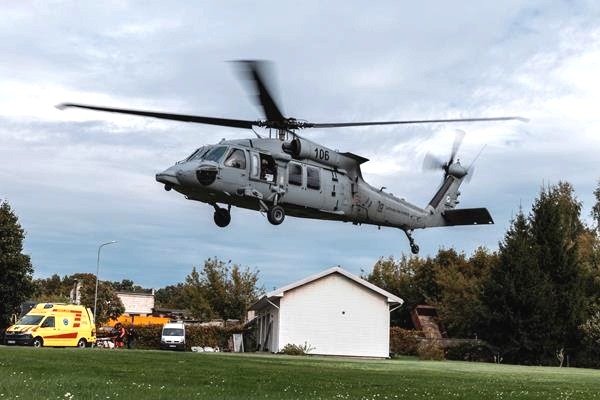
The difficulty is that DAC announcements place fundamentally different kinds of proposals beneath a single headline. The September package, for example, included relatively mature capabilities such as high-mobility vehicles, Advanced Light Helicopters, tank trawls and the Sarvatra bridge system. It also covered the “design and development and subsequent procurement” of indigenous marine gas turbines—a strategically important programme, but clearly not an immediately available warship-propulsion capability.
The July package displayed the same mixture. It included missiles, anti-drone electronic-warfare systems and unmanned platforms, alongside a land-based testing facility for naval electric-propulsion systems and high-altitude pseudo-satellites. A testing facility strengthens the technological base, but does not itself provide an operational platform to the fleet. Similarly, February’s ₹3.60 lakh crore package combined Rafale fighters and P-8I maritime-patrol aircraft with an airship-based pseudo-satellite and a 4 MW marine gas-turbine generator under the government-funded Make-I route.
None of these approvals is inherently misplaced. The Armed Forces require equipment for present contingencies as well as investment in future technologies. Indigenous development also needs early Service participation, assured requirements and a credible production pathway.
The problem is the opacity of the reporting format. A mature follow-on purchase, an overhaul programme, a prototype awaiting trials and a laboratory or test facility are all described as “acquisition proposals”. The combined estimated value is then reported as a boost to combat capability. The terminology unintentionally compresses perhaps ten years of development, contracting and production into the impression of a single procurement decision.
This also makes independent assessment difficult. Individual proposal values, quantities, procurement categories, indigenous-content requirements and expected delivery periods are seldom disclosed. Consequently, it is impossible to calculate what percentage of a DAC package addresses an immediate operational shortfall and what percentage represents developmental investment carrying technological or schedule risk.
The official figures demonstrate why the stages matter. In March, the Ministry of Defence reported that 55 AoNs worth ₹6.73 lakh crore had been granted during financial year 2025–26, while capital contracts covering 503 proposals worth ₹2.28 lakh crore had been signed. These cannot be treated as a conversion ratio because contracts signed during one year may originate from AoNs granted years earlier. Moreover, even a contract does not establish that equipment has been delivered, accepted and fielded.
The DAC’s public format could therefore be revised without revealing sensitive operational information. Every announcement could classify proposals under four clear headings: proven equipment and repeat orders; upgrades and life-extension programmes; systems completing development or trials; and new design-and-development projects. Test facilities and technology demonstrators should be listed separately from equipment intended for operational units.
Each proposal could also carry a short “capability maturity statement”: whether the system is already in service, field-tested, under user trials, at prototype stage or still at the design stage. The estimated value should, wherever security permits, be divided by proposal or at least by maturity category. “Procurement from Indian industry” should also be distinguished from indigenous content, since an Indian supplier may still incorporate imported engines, sensors, weapons or critical components.
Finally, the Ministry could publish an annual capability-conversion statement linking AoNs to contracts, deliveries and operational acceptance. Such a document need not disclose unit locations, classified performance or war reserves. It could simply record how many aircraft, ships, weapons or systems were contracted, delivered and accepted during the year.
Developmental programmes need not be removed from DAC oversight. However, they should appear under a distinct “R&D and future acquisition” head, identifying the responsible agency—DRDO, NSTL, ADE, ADA, a public-sector undertaking or private industry—and the anticipated decision point for production.
The DAC performs an essential role in modernisation. A clearer reporting architecture would strengthen its credibility by distinguishing aspiration, contractual commitment and delivered combat power. India should certainly celebrate technological ambition—but military capability must ultimately be measured by tested equipment reaching operational formations.
Sources
• Ministry of Defence, DAC approvals of ₹3.60 lakh crore, 12 February 2026
• Ministry of Defence, DAC approvals of ₹2.38 lakh crore, 27 March 2026
• Ministry of Defence, DAC approvals of ₹52,000 crore, 3 July 2026
• Ministry of Defence, DAC approvals of ₹1.10 lakh crore, 7 September 2026