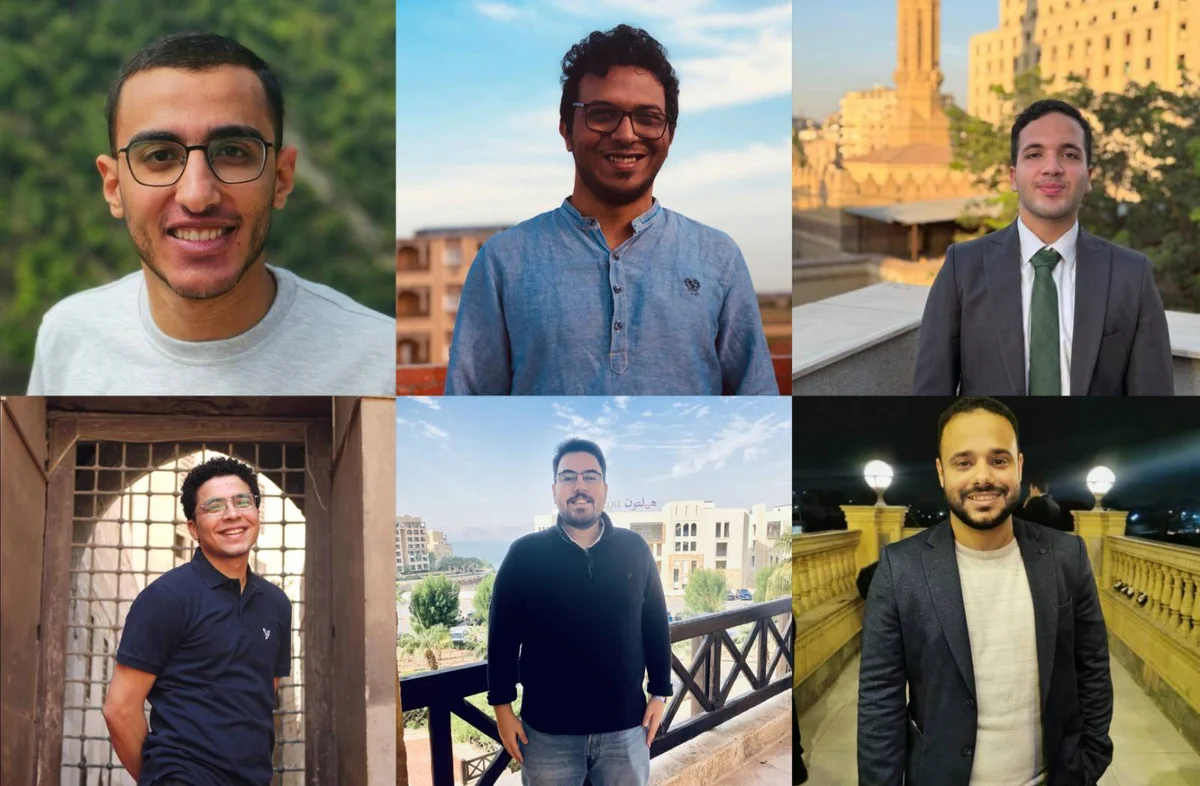
Egyptian authorities have arrested six journalists from fact-checking and investigative outlet Matsadaash, accusing them of links to the outlawed Muslim Brotherhood and producing fabricated news with foreign funding. Rights groups have condemned the arrests and called for the journalists’ release, saying their whereabouts remain unknown.
New York, Oct 2026 : Egyptian authorities have arrested the entire editorial team of Matsadaash, one of the country’s few independent media outlets, accusing six journalists of belonging to the outlawed Muslim Brotherhood and producing fabricated news in return for foreign funding.
The arrests, carried out earlier this week, have triggered criticism from international and regional rights organisations, which described the action as an alarming escalation in pressure on independent media and freedom of expression in Egypt.
Authorities have alleged that the journalists were members of a Muslim Brotherhood-linked media committee and prepared false reports for publication by the outlet. Matsadaash co-founder Abdelrahman Mansour, who is currently outside Egypt, rejected the allegations.
“The claims are false,” Mansour said, disputing the authorities’ accusations against the journalists and the organisation.
Matsadaash was founded in 2018 as a fact-checking platform and later expanded its operations into investigative journalism covering Egypt and other Arab countries. The outlet has built a substantial audience despite operating in an environment where independent media face restrictions and its website remains blocked inside Egypt.
Mansour said two Matsadaash editors had previously been arrested in 2023 but were released without charge after State Security investigators found no evidence linking them to the Muslim Brotherhood.
“It’s very difficult for us to understand why this is happening,” he said.
According to the US-based Committee to Protect Journalists, Egypt remains among the countries with the highest number of journalists in prison. The Egyptian Initiative for Personal Rights has said that 26 journalists are currently behind bars in the country.
Journalists’ whereabouts remain unknown
Egypt’s Interior Ministry on Thursday described Matsadaash as an unlicensed media page operated from abroad by what it called a “fugitive Brotherhood member”, identifying Mansour in its statement.
The ministry alleged that the six detained journalists were part of a Brotherhood “media committee” that produced fabricated and misleading reports for Mansour to publish. It said only one of the six journalists was a member of the national Journalists’ Syndicate.
The ministry said legal measures had been taken against those detained but did not specify the charges filed against them.
Mansour said the first arrest took place on Monday night, when authorities went to the home of Abdallah Qadry. Five other members of the Matsadaash team were arrested on Tuesday.
Mohamed Abu Emaira was reportedly taken from his home in the early hours of Tuesday. Mansour said Abu Emaira’s library and internet router were destroyed during the arrest.
Omar Helal was arrested in Port Said, while Islam Barakat was detained in Gharbia Governorate. Two other members of the newsroom, Mohamed Mahmoud and Mohamed Adel, were arrested in Cairo.
The authorities also confiscated the journalists’ mobile phones and computers.
The Egyptian Initiative for Personal Rights said the whereabouts of all six journalists remained unknown. The organisation said they had not been permitted to contact their families or legal representatives.
It described the arrests as the first known instance in which an entire newsroom had been detained in Egypt.
Rights organisations demand release
The arrests have prompted a wider campaign by rights organisations and independent media groups. More than 80 international and regional rights groups, civil society organisations and independent media outlets have called on Egyptian authorities to release the journalists.
The organisations said Matsadaash had operated openly for years and developed a reputation for reporting and fact-checking on public-interest issues across Egypt.
Human Rights Watch and Reporters Without Borders were among the organisations associated with the appeal.
The groups argued that restrictions on independent journalism undermine commitments to transparency, public dialogue and accountability.
Despite its website being blocked in Egypt, Matsadaash has developed a significant social-media presence, with its Facebook page having more than one million followers.
Muslim Brotherhood allegations
The arrests have also drawn attention to Egypt’s long-running conflict with the Muslim Brotherhood. Egyptian authorities designated the organisation a terrorist group in 2013, following the military’s removal of then-President Mohamed Morsi, a senior Brotherhood figure.
Since then, Egyptian authorities have repeatedly accused journalists, activists and critics of having links to the organisation or spreading false information. Such accusations can carry serious legal consequences in the country.
Founded in Egypt in 1928, the Muslim Brotherhood began as a social and religious movement opposed to British colonial rule. Over subsequent decades, it developed into one of the most influential Islamist movements in the Sunni Muslim world, establishing branches in several countries.
Egyptian authorities have alternated between periods of tolerance and repression of the group. At various times, Brotherhood-affiliated candidates were permitted to participate in elections.
The organisation is now banned in Jordan, while branches or affiliates have been designated terrorist organisations by several countries.
The detention of the Matsadaash journalists has therefore renewed concerns among rights groups over the space available for independent journalism in Egypt, particularly for outlets reporting on politically sensitive and public-interest issues.
(Disclaimer :The content of this article is sourced from a news agency and has not been edited by the Mavericknews30 team.)