
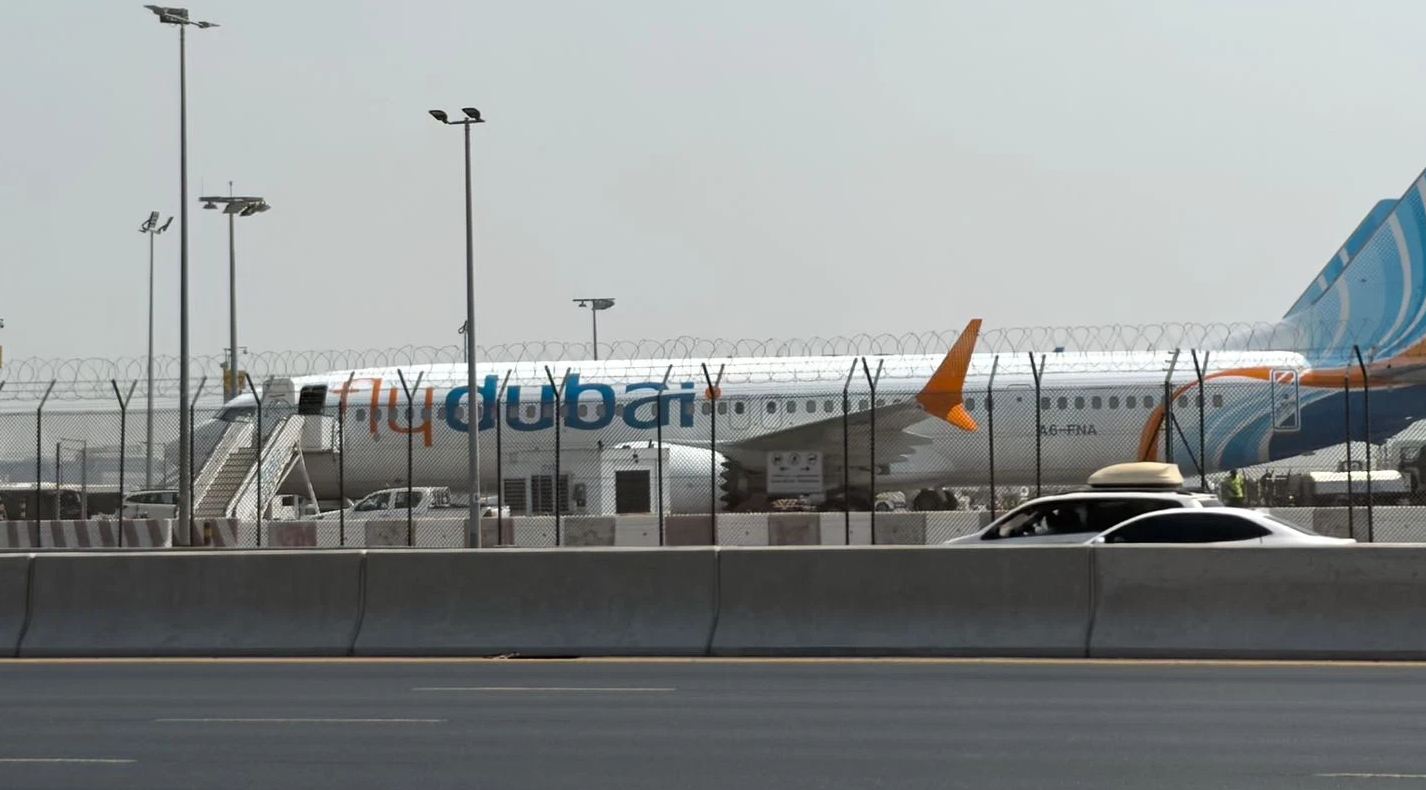
Investigations into the September 30 attack aboard a Flydubai flight from Dubai to Tel Aviv are examining the co-pilot’s background, possible ideological radicalisation and whether anyone else was involved. Reports say pro-Palestinian material was found among his belongings, while Israeli officials have alleged a terror motive. The injured Indian captain, Smit Machchhar, has been transferred to the UAE and is recovering.
Tel Aviv, Oct 2026 : International investigations into the mid-air security crisis aboard a Flydubai flight from Dubai to Tel Aviv have widened, with authorities examining the background and possible motives of the Omani co-pilot accused of attacking the Indian captain and attempting to seize control of the aircraft.
Israeli media reports said investigators are examining whether the co-pilot had been influenced by extremist ideology and whether he acted alone. According to i24 News, an Emirati source said leaflets and publications linked to “Free Palestine” groups, along with other pro-Palestinian material, were found among the co-pilot’s belongings.
The report also said the co-pilot had repeatedly expressed support for Palestinians and hostility towards Israel. These claims have not been independently established, and the UAE investigation has urged the public and media to avoid speculation while investigators establish the facts. The UAE attorney general has ordered a specialist investigation into whether the incident involved terrorist activity, prior planning or outside direction.
The incident took place on September 30 aboard Flydubai flight FZ1073, which was travelling from Dubai to Tel Aviv. According to Israeli officials, the co-pilot allegedly attacked Captain Smit Machchhar inside the cockpit, stabbing him during the flight.
The aircraft subsequently entered a steep descent. Reuters reported that the plane dropped nearly 14,000 feet in less than 30 seconds before a hijacking distress signal was transmitted. Passengers and crew members eventually intervened, allowing the aircraft to regain control and divert to Tabuk, Saudi Arabia, where it landed safely.
Machchhar suffered serious injuries but managed to fight back and open the cockpit door. This enabled passengers and other crew members to enter the flight deck and restrain the attacker. Two off-duty pilots who were travelling on the aircraft subsequently helped operate the plane during the emergency landing.
The incident has drawn international attention because the alleged threat came from within the cockpit rather than from a passenger. Questions are also being raised about how the co-pilot was cleared to operate a flight into Israel, given reports that he was an Omani national and that Oman does not have diplomatic relations with Israel.
The co-pilot’s identity has not been publicly disclosed. Israeli officials have described him as an Omani citizen, while Oman, the UAE and Flydubai have not publicly provided full confirmation of his identity. The National reported that authorities were initially cautious about publicly confirming details surrounding the suspect, while an investigation was launched in the UAE.
Netanyahu cites possible terror motive
Israeli Prime Minister Benjamin Netanyahu has described the incident as appearing to be an attempted attack on the aircraft. He said information gathered during the investigation indicated that the co-pilot may have undergone what he described as “Islamist radical indoctrination”.
Israeli Defence Minister Israel Katz separately characterised the incident as an attempted jihadist terror attack and referred to the attacker as a terrorist. However, the UAE investigation remains ongoing, and authorities have yet to publicly establish a definitive motive.
Netanyahu also said investigators were examining the possibility that the incident was intended to bring down the aircraft. David Mencer, a spokesperson for the Israeli Prime Minister, said testimony from a passenger who entered the cockpit suggested the attacker was interfering with the aircraft’s controls while assaulting Machchhar.
According to Israeli accounts, the attacker was eventually restrained using improvised measures after passengers and crew entered the cockpit.
US President Donald Trump also raised the possibility of an Iranian connection, saying investigators were examining whether the attacker had links to Tehran. However, Israeli officials have said it was too early to establish such a connection. A report by Ynet said an Israeli official later indicated that no Iranian link had been established at that stage.
The differing assessments underscore the fact that investigators have yet to establish whether the attack was independently planned or involved an external organisation.
Captain Machchhar recovering in UAE
Machchhar’s actions during the emergency have drawn praise from Indian and Israeli officials. After the aircraft landed in Tabuk, the injured captain was taken for medical treatment before being transferred to the United Arab Emirates.
India’s Ambassador to the UAE, Deepak Mittal, visited Machchhar at the hospital and said the pilot was recovering well. The ambassador said Machchhar was in good spirits, speaking openly and even smiling and laughing during the visit.
Machchhar later spoke with Prime Minister Narendra Modi from his hospital bed. According to Reuters, he described how he managed to open the cockpit door after being attacked, enabling passengers and crew members to intervene. Modi praised his courage and presence of mind.
The captain’s actions were also praised by Israeli officials, who credited him with helping prevent a potentially catastrophic outcome.
The aircraft was carrying 174 people, according to Reuters, and all those aboard were able to leave the plane safely after the emergency landing.
Investigations shift to UAE
After the emergency landing, the suspect was detained in Saudi Arabia. Saudi authorities subsequently transferred the suspect and Machchhar to the UAE after their medical conditions improved, with an Emirati security team accompanying them.
The UAE has taken the lead in investigating the incident. Authorities are examining whether the attack involved terrorist activity, whether it was planned in advance and whether any other individuals or organisations were involved.
The UAE attorney general has also called for caution over unverified information, reflecting the uncertainty surrounding several details that emerged in the immediate aftermath of the incident.
The investigation is expected to focus on the co-pilot’s personal background, professional history, ideological influences and contacts, as well as the circumstances under which he was authorised to serve on the flight.
Flight disruption and stranded passengers
The incident has also had consequences for air travel between Dubai and Israel. Flydubai suspended its Israel services following the incident, while Israeli passengers stranded in Dubai faced difficulties returning home.
Israel’s flag carrier El Al announced on Friday that it had cancelled planned rescue flights from Dubai after Israeli airlines lost permission to land in the UAE. The airline said it would resume the planned repatriation flights once official approval was granted.
The cancellations came after Israeli authorities had initially indicated that rescue flights would operate from Dubai. Reports said the landing permissions were withdrawn after discussions between Israeli and Emirati officials failed to produce final authorisations.
The disruption has left a large number of Israeli travellers seeking alternative routes home. Israeli authorities have been working with regional partners to address the situation and restore repatriation arrangements.
As the investigation continues, the central questions remain the co-pilot’s motive, the extent of any ideological influence, whether he acted alone and whether any outside party directed or supported the attack. While Israeli officials have raised the possibility of terrorism and radicalisation, investigators have not yet publicly released a complete account establishing those conclusions.
The incident has nevertheless prompted renewed scrutiny of aviation security, particularly the challenge of identifying potential threats originating from members of an aircraft’s own crew. For Machchhar and the passengers aboard Flight FZ1073, the immediate crisis ended safely in Tabuk. The broader investigation into how and why the cockpit assault occurred is now continuing in the UAE and across the countries involved.
(Disclaimer :The content of this article is sourced from a news agency and has not been edited by the Mavericknews30 team.)